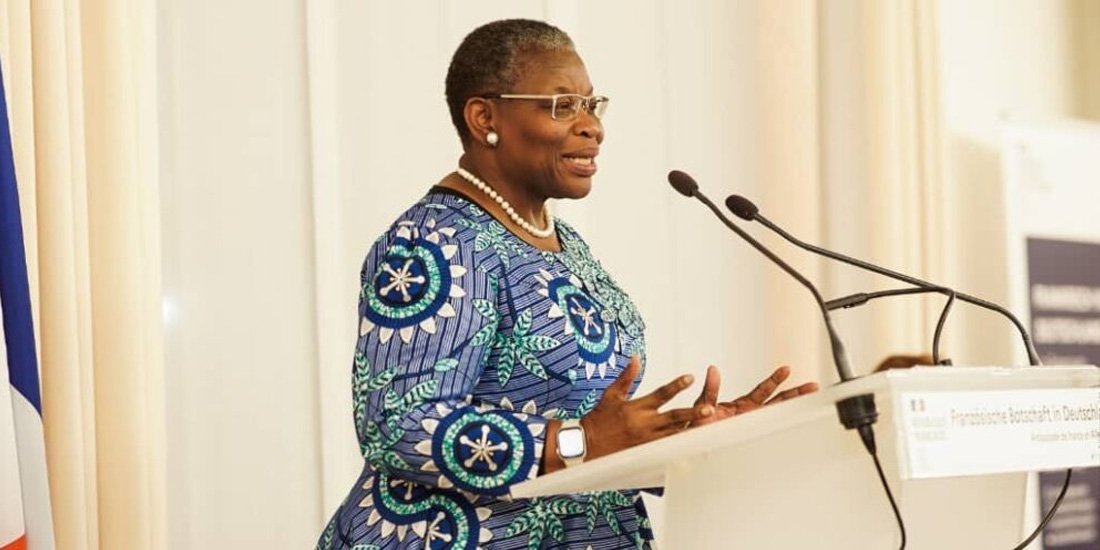
Former Minister of Education, Dr Oby Ezekwesili, has said the major achievement of President Bola Ahmed Tinubu’s administration so far is its progress in achieving macroeconomic stability, arguing that the benefits of the reforms have yet to translate into improved living conditions for Nigerians.
Ezekwesili made the remarks during an interview with News Central TV at the weekend, where she assessed the state of the Nigerian economy under the Tinubu administration.
She acknowledged that the government had made progress in reducing volatility in the foreign exchange market by adopting more market-driven policies.
However, she argued that improvements in macroeconomic indicators should not be confused with an improvement in the welfare of ordinary Nigerians, noting that the cost of living remains high.
“The only thing that, as I said at the beginning, we can give to them is they are getting a handle on macroeconomic stability,” she said.
According to her, while official inflation figures may have improved, Nigerians continue to experience significant pressure from high prices of food and other essential commodities.
Ezekwesili also described the sharp rise in inflation experienced in the country as avoidable, attributing it to what she described as poor management and a combination of policy decisions.
“The inflation that spiked did not have to happen. It was a poor management of a combination of policies that led to that runaway kind of inflation that we had,” she said.
The former minister stressed that Nigeria’s economic challenges were fundamentally linked to low productivity and structural weaknesses, arguing that macroeconomic stability alone could not deliver sustainable prosperity.
She said Nigeria must improve its productivity to become competitive globally and create more jobs and opportunities for its citizens.
“What do you have? You have a complete lack of productivity in yours compared to the others. So without productivity, you can’t even be competitive globally,” she said.
Ezekwesili also criticised the Federal Government’s approach to budget management, expressing concern over the simultaneous operation of multiple budget cycles.
“The other thing is you look at the budget. You see that there is a problem. You have budgets within budgets,” she said.
She compared Nigeria’s budget execution process with that of China, arguing that the country should operate clearer and more disciplined annual budget cycles.
Describing the situation as “recklessness in terms of fiscal choices and decisions,” Ezekwesili said improved fiscal discipline was necessary to strengthen economic management.
She further criticised the administration for what she described as inadequate disclosure of its performance records, saying Nigerians should have access to information that would enable them to assess the government’s achievements.
She also cautioned against claims that Nigeria had emerged from its economic difficulties, arguing that macroeconomic stability was only one component of a healthy economy.
Beyond the economy, Ezekwesili identified institutional weakness, insecurity, poor public-service delivery and declining social cohesion as major challenges confronting the country.
She said Nigeria’s position among countries considered vulnerable to state fragility reflected weaknesses in areas such as territorial control, institutional effectiveness, public-service delivery, economic opportunities and social cohesion.
According to her, strong institutions are critical to sustainable economic growth because they provide the predictable rules and systems required for citizens and businesses to thrive.
“The reason that research tells us that institutional quality is at the centre of it is because, of course, we know that if you want to generate growth, you want to generate development in any society, you need institutions,” she said.
Ezekwesili maintained that Nigeria’s challenges could not be addressed solely by pointing to improvements in selected economic indicators, stressing the need for deeper structural reforms that would raise productivity, strengthen institutions, improve security and ultimately translate economic growth into better living conditions for Nigerians.