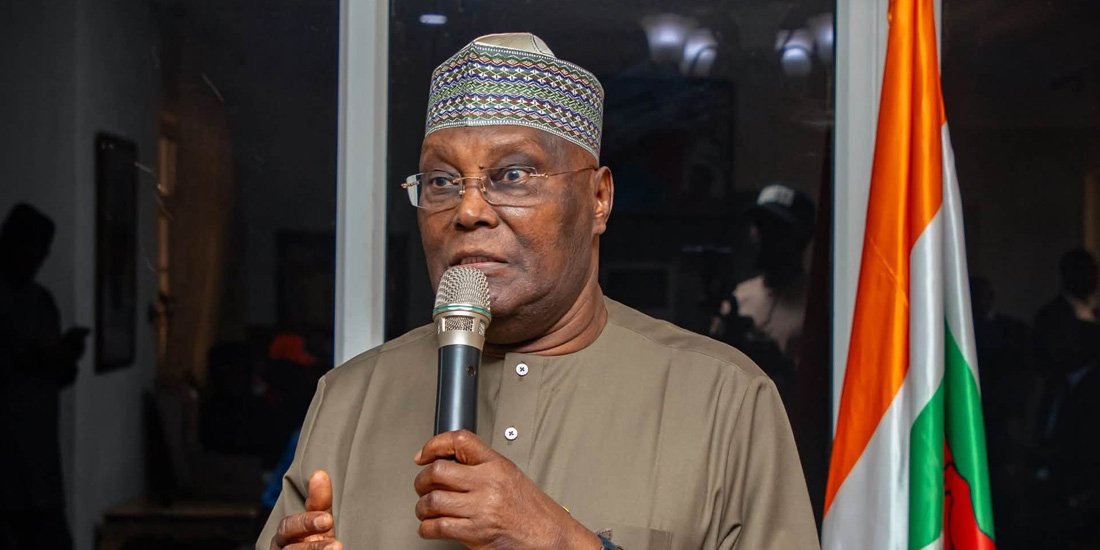
Former Vice President and African Democratic Congress (ADC) presidential candidate for the 2027 general election, Atiku Abubakar, has accused the administration of President Bola Tinubu of fiscal recklessness following reports of more than N210 billion in alleged duplicated allocations in the proposed 2026 Appropriation Act.
In a statement issued on Saturday by his Senior Special Assistant on Public Communication, Phrank Shaibu, Atiku described the reported budget irregularities as evidence of poor governance and weak fiscal discipline, arguing that Nigeria’s economic challenges stem from mismanagement of public resources rather than a lack of revenue.
The former vice president said the alleged duplication of budgetary allocations raises serious concerns about the credibility of the Federal Government’s economic reform programme, which has seen Nigerians endure the effects of fuel subsidy removal, exchange rate reforms, tax adjustments and increased tariffs.
“For more than three years, Nigerians have been subjected to relentless hardship. They were told that the removal of fuel subsidies, exchange rate unification, higher taxes and rising tariffs were bitter pills that would eventually restore economic stability. Yet today, the same government cannot explain how more than N210 billion found its way into duplicated and overlapping budget provisions,” Atiku said.
According to him, any government asking citizens to make sacrifices must demonstrate transparency and accountability in the management of public finances. He argued that reports of duplicated allocations and questionable budget insertions undermine confidence in the government’s efforts to reform the economy.
Atiku further alleged that the latest revelations are part of a broader pattern of irregular budget practices, including provisions for projects outside the statutory mandates of certain government agencies and controversial allocations running into billions of naira.
He maintained that the reported irregularities point to a systemic problem in the budgeting process rather than isolated administrative errors.
“The national budget is the single most important economic policy document of any government. It should reflect national priorities, inspire investor confidence and assure citizens that every naira borrowed or earned will be spent wisely. When that document itself becomes contaminated by duplication and overlapping allocations, confidence in the entire machinery of government is undermined,” he said.
The ADC presidential candidate also linked the alleged fiscal lapses to the country’s worsening economic conditions, noting that many Nigerians continue to grapple with rising living costs, unemployment, business closures and insecurity.
He said families and small businesses are struggling under the weight of economic pressures despite government assurances that ongoing reforms are beginning to yield positive results.
“A nation cannot budget for waste and expect prosperity. It cannot institutionalise inefficiency and hope for development,” Atiku stated.
The former vice president questioned the government’s continued resort to borrowing despite improvements in oil prices, arguing that the reported duplicated allocations have intensified concerns over the management of public finances.
He called on the National Assembly to undertake a comprehensive forensic review of the 2026 budget, identify all duplicated allocations, hold responsible officials accountable and recover any funds improperly appropriated.
Atiku also urged the Auditor-General of the Federation, anti-corruption agencies and civil society groups to independently scrutinise the budget and make their findings public.
“The days when budget manipulation could be dismissed as mere clerical errors must come to an end. Every duplicated allocation represents a classroom not built, a hospital not equipped, a road left abandoned and a community denied development,” he said.
The former vice president pledged that an ADC-led administration, if elected in 2027, would introduce reforms including transparent budgeting, zero-based expenditure planning, digital tracking of public spending, stronger legislative oversight and stricter accountability mechanisms for public officials.
“Nigeria’s greatest problem is not the absence of wealth. It is the absence of discipline in the management of that wealth. A government that cannot protect the integrity of its budget cannot protect the future of its people,” he added.
Atiku concluded his remarks with an African proverb, saying: “When the owner of the barn invites goats to keep watch over his harvest, he should not be surprised when hunger follows abundance. Nigeria deserves custodians of her commonwealth, not caretakers of waste.”
As of the time of filing this report, the Federal Government had not issued an official response to the allegations.