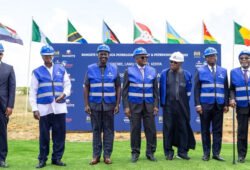
BUA Foods Chairman Abdul Samad Rabiu told shareholders at the company’s 2025 Annual General Meeting that its aggressive expansion drive is aimed squarely at supporting Nigeria’s long term economic growth, arguing the company’s responsibility extends beyond shareholder returns to building a stronger indigenous industrial base capable of competing globally, as shareholders approved a final dividend of N504 billion.
We have a responsibility not only to create value for shareholders, but also to help build a stronger, more competitive industry that contributes to Nigeria’s long term growth, Rabiu said, describing that philosophy as the logic behind one of the largest expansion programmes in the company’s history, one expected to make BUA Foods the largest player in its sector once ongoing projects complete next year. He was careful to frame the expansion as driven by competitive necessity rather than scale for its own sake, noting that four companies currently control almost 90 percent of the market, with BUA Foods the only indigenous Nigerian company among the leading operators. Our objective is straightforward, to build sufficient scale to compete effectively with every player in the market, he said, we believe Nigeria benefits when there are strong indigenous companies capable of competing at the highest level, investing for the long term and challenging established market positions, arguing a more competitive industry is ultimately a healthier one, good for consumers, investors and Nigeria alike.
Rabiu pointed to the company’s own five year track record as proof of what disciplined execution can achieve regardless of size, recalling that BUA Foods was significantly smaller than established competitors when it listed, yet consistently delivered stronger profitability and better returns, a performance he attributed to efficient operations, disciplined management, prudent capital allocation and relentless execution rather than market dominance, adding that this track record also reset investor expectations across the industry by showing what transparent governance and efficient management could unlock. He said those same principles will guide the company as it becomes the sector’s largest player, with the expansion itself covering a significant increase in flour milling capacity, an integrated feed mill business, a planned noodles launch and completion of edible oils operations, all expected to substantially raise domestic manufacturing capacity when the projects come online next year. The company said the investments are meant to increase availability of essential food products to help address food inflation, support local manufacturing, create jobs and reinforce industrial development, part of a longer term vision of building one of Africa’s most integrated food manufacturing businesses.
For the 2025 financial year, BUA Foods posted revenue of N1.77 trillion, up 16 percent year on year, while profit after tax rose 95 percent to N518.4 billion, a performance the company attributed to disciplined execution, operational efficiency and a resilient business model despite a challenging operating environment. Responding to questions after the AGM, Non Executive Director Kabiru Rabiu said the company remains confident of hitting its strategic targets despite persistent inflation, energy costs and global supply chain disruption, crediting improved operational efficiency, optimised procurement, a diversified energy mix, deeper local sourcing and stronger supply chain resilience, rather than price increases, for sustaining growth. He said the company is doubling capacity across its wheat based product portfolio while expanding into noodles and edible oils to meet rising demand, with affordability remaining central to operations as management continues absorbing cost pressures through productivity gains, procurement optimisation, energy efficiency and economies of scale before considering price adjustments. He acknowledged recent improvements in foreign exchange stability and planning visibility have strengthened investor confidence and the company’s long term investment outlook, crediting government policies promoting domestic food production and responsible import substitution with supporting BUA Foods’ expansion strategy, and disclosed that ongoing investment across the company’s sugar, flour, pasta, rice, edible oil and noodles businesses is expected to lift overall production capacity by more than 50 percent as the company pursues becoming Nigeria’s leading indigenous publicly listed food manufacturer.