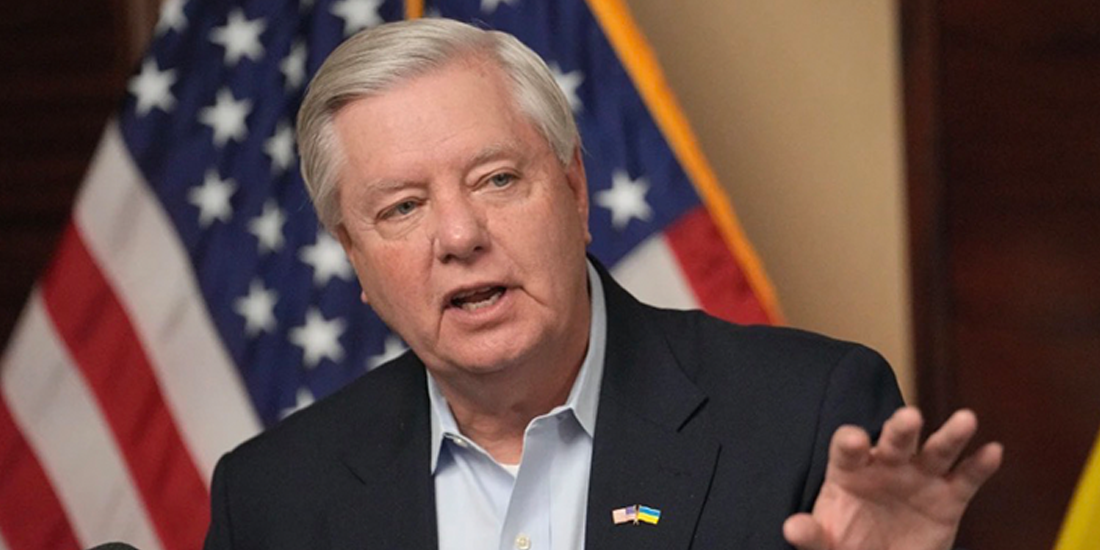
The United States political establishment has been thrown into mourning following the death of veteran Republican Senator Lindsey Graham, one of President Donald Trump’s closest allies and among the most influential conservative voices in Washington.
Graham, who represented South Carolina in the U.S. Senate for more than two decades, died on Saturday evening after what his office described as a “brief and sudden illness.” He was 71. No further details regarding the illness or the immediate cause of death were disclosed, while his family requested privacy as they grieve.
The sudden passing of the veteran lawmaker marks the end of one of the most consequential political careers in modern Republican politics. Known for his outspoken positions on national security, defense, judicial appointments and foreign affairs, Graham remained one of the Senate’s most recognizable figures until his death.
President Donald Trump led tributes to the late senator, describing him as a “true American patriot” whose loyalty to the country and dedication to public service would never be forgotten.
“Lindsey was one of the greatest Senators I have ever known and one of my closest friends,” Trump said in a statement, adding that the nation had lost “an extraordinary public servant.”
South Carolina Governor Henry McMaster also expressed profound sadness, praising Graham for decades of unwavering service to both his state and the nation. He described the late senator as a fearless leader whose influence extended far beyond South Carolina.
Born on July 9, 1955, in Central, South Carolina, Graham built an extensive career in public service before entering national politics. He earned a law degree from the University of South Carolina and later served as an attorney in the U.S. Air Force Judge Advocate General’s Corps, eventually retiring as a colonel in the Air Force Reserve.
He entered elective office in 1994 when he won a seat in the U.S. House of Representatives, serving four terms before successfully contesting for the U.S. Senate in 2002. Graham took office in January 2003 and was subsequently re-elected four times, becoming one of South Carolina’s longest-serving senators.
Throughout his Senate career, he held several high-profile leadership positions, including chairman of the Senate Judiciary Committee and chairman of the Senate Budget Committee. He played a central role in confirming federal judges and Supreme Court justices while shaping major legislation on immigration, defense and national security.
One of the defining chapters of Graham’s political life was his evolving relationship with Donald Trump.
During the 2016 Republican presidential primary, Graham was one of Trump’s sharpest critics, openly questioning his suitability for the presidency. The two frequently exchanged public attacks.
However, following Trump’s election victory, the relationship transformed dramatically. Graham became one of the president’s most trusted allies in Congress, defending many of the administration’s domestic and foreign policy initiatives and serving as an influential adviser on Capitol Hill.
In recent years, he emerged as one of the Republican Party’s strongest advocates for a robust U.S. military posture, continued support for Israel, increased sanctions against Russia and a tougher approach toward Iran. He also remained actively involved in international diplomacy and foreign policy discussions until shortly before his death.
News of Graham’s sudden death prompted an outpouring of tributes from lawmakers across party lines, diplomats and world leaders who praised his decades of public service.
Many colleagues described him as a passionate legislator who combined sharp political instincts with a willingness to work across party lines on issues involving national security and judicial reform.
His death also creates an immediate vacancy in the United States Senate. Under South Carolina law, Governor Henry McMaster is expected to appoint an interim senator who will serve until a special election is held in accordance with state election procedures.
For more than twenty years, Lindsey Graham remained one of the defining figures of Republican politics. Whether admired or criticized, he was rarely absent from the center of America’s biggest political and foreign policy debates.
His death closes a remarkable chapter in American public life, leaving behind a legacy that will be debated for years and a vacancy that is likely to reshape South Carolina politics as Republicans move to select his successor.