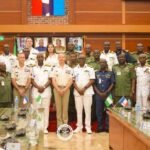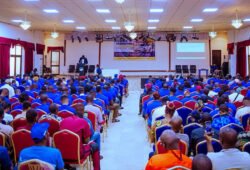
The National Drug Law Enforcement Agency (NDLEA) has destroyed 12.2 tonnes of illicit drugs and psychotropic substances in Kano State, reaffirming its resolve to dismantle drug trafficking networks and curb substance abuse across the country.
The public destruction exercise, conducted on Monday by the NDLEA Kano Strategic Command, involved 12,233.946 kilograms of narcotics recovered through intelligence-led operations, targeted raids and airport interceptions.
Speaking at the exercise, the Commander of the NDLEA Kano Strategic Command, CN Dahiru Yahaya Lawal, described the destruction as a major step toward protecting public health and improving security.
“We are gathered today for a purpose far greater than the burning of sacks and substances. We are here to destroy a direct threat to the health of our youth, the peace of our families and the future of our communities,” Lawal said.
He disclosed that 11,890.427 kilograms of the seized drugs were recovered across Kano State, while another 343.519 kilograms were intercepted at the Malam Aminu Kano International Airport.
The destroyed exhibits included 7,799.314 kilograms of cannabis sativa, 2,781.153 kilograms of psychotropic substances such as codeine, tramadol, pentazocine and diazepam, 375.641 kilograms of Exol-5, 367.870 kilograms of pregabalin, 270 kilograms of other controlled substances, 200 kilograms of herbal mixtures and 79 kilograms of expired drugs. Smaller quantities of heroin, cocaine, methamphetamine and other prohibited substances were also destroyed.
Lawal revealed that between January and June 2026, the Kano Strategic Command arrested 904 suspects—869 men and 35 women—seized more than 2.5 tonnes of illicit drugs and secured over 54 convictions, with some offenders receiving prison sentences of up to 15 years.
According to him, the achievements were driven by intelligence-led operations, including Operation Sharar Mafaka and Operation Ramadan Mubarak, which led to the dismantling of major drug distribution networks and the discovery of concealed tunnels and caves used by traffickers in the Rimin Kebe area.
While highlighting the agency’s enforcement successes, Lawal stressed that the fight against drug abuse cannot be won through law enforcement alone.
He called on security agencies, traditional and religious leaders, educational institutions, employers and families to strengthen efforts in drug prevention, public awareness and rehabilitation.
Representing the Chairman and Chief Executive Officer of the NDLEA, Brigadier General Mohamed Buba Marwa (Rtd), the agency’s Director of Operations and General Investigation, Alhaji Suleiman Ahmad Ningi, described the destruction exercise as a clear demonstration of justice and a strong warning to criminal networks.
In a message delivered on behalf of the NDLEA chairman, Marwa said every kilogram of drugs destroyed represented lives saved and communities protected.
“What you are witnessing today is not theatre. It is justice made visible. Every gram being destroyed represents suffering averted, a life protected and a family spared,” the statement read.
Marwa identified the diversion of controlled pharmaceutical products—including tramadol, codeine and pentazocine—from legitimate supply chains into illegal markets as one of Nigeria’s most pressing drug challenges.
To address the problem, he announced the establishment of joint oversight committees between the NDLEA and the Pharmaceutical Society of Nigeria (PSN) across the country to improve monitoring of controlled medicines and strengthen intelligence sharing.
He also highlighted the agency’s Alternative Development Initiative, which was launched in Ondo State to help former cannabis farmers transition to legitimate agricultural activities, adding that the programme would be expanded to other parts of the country.
Marwa further encouraged tertiary institutions in Kano State to adopt the NDLEA’s Drug Integrity Testing Programme as part of efforts to discourage substance abuse on campuses, while calling on the state government to sustain its political and financial support for the agency.
He commended Governor Abba Kabir Yusuf, the Federal High Court, other security agencies, civil society organisations and community leaders for their collaboration in the fight against illicit drugs.
“The flames that destroy these drugs today will not, by themselves, destroy the problem. What will defeat this problem is sustained will and collective action,” he said.
In his remarks, Governor Abba Kabir Yusuf, represented by the Secretary to the State Government, Alhaji Umar Farouk, reaffirmed his administration’s commitment to tackling insecurity and drug abuse.
The governor announced the deployment of 1,000 security personnel to 52 identified crime hotspots across Kano State as part of efforts to improve public safety and combat criminal activities linked to illicit drug use.
He expressed concern over the growing rate of substance abuse, noting that it has contributed significantly to violent crimes and insecurity in the state.
“This exercise sends a clear message to criminals that there is no hiding place for those who seek to destroy our society, especially our young people,” he said.
Governor Yusuf disclosed that the security operations had already led to the arrest of suspected criminals and the seizure of illicit drugs from several traffickers.
He also highlighted the state’s Kano Safe Corridor Initiative, a rehabilitation programme focused on counselling, empowerment and the reintegration of individuals affected by drug abuse.
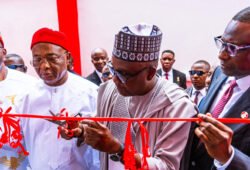
To further strengthen the agency’s operations, the governor announced the donation of three operational vehicles to the NDLEA, assuring that his administration would continue supporting security agencies in the fight against crime.
He reiterated that sustained collaboration among government institutions, communities and families remains essential to protecting future generations from the dangers of drug abuse and trafficking.