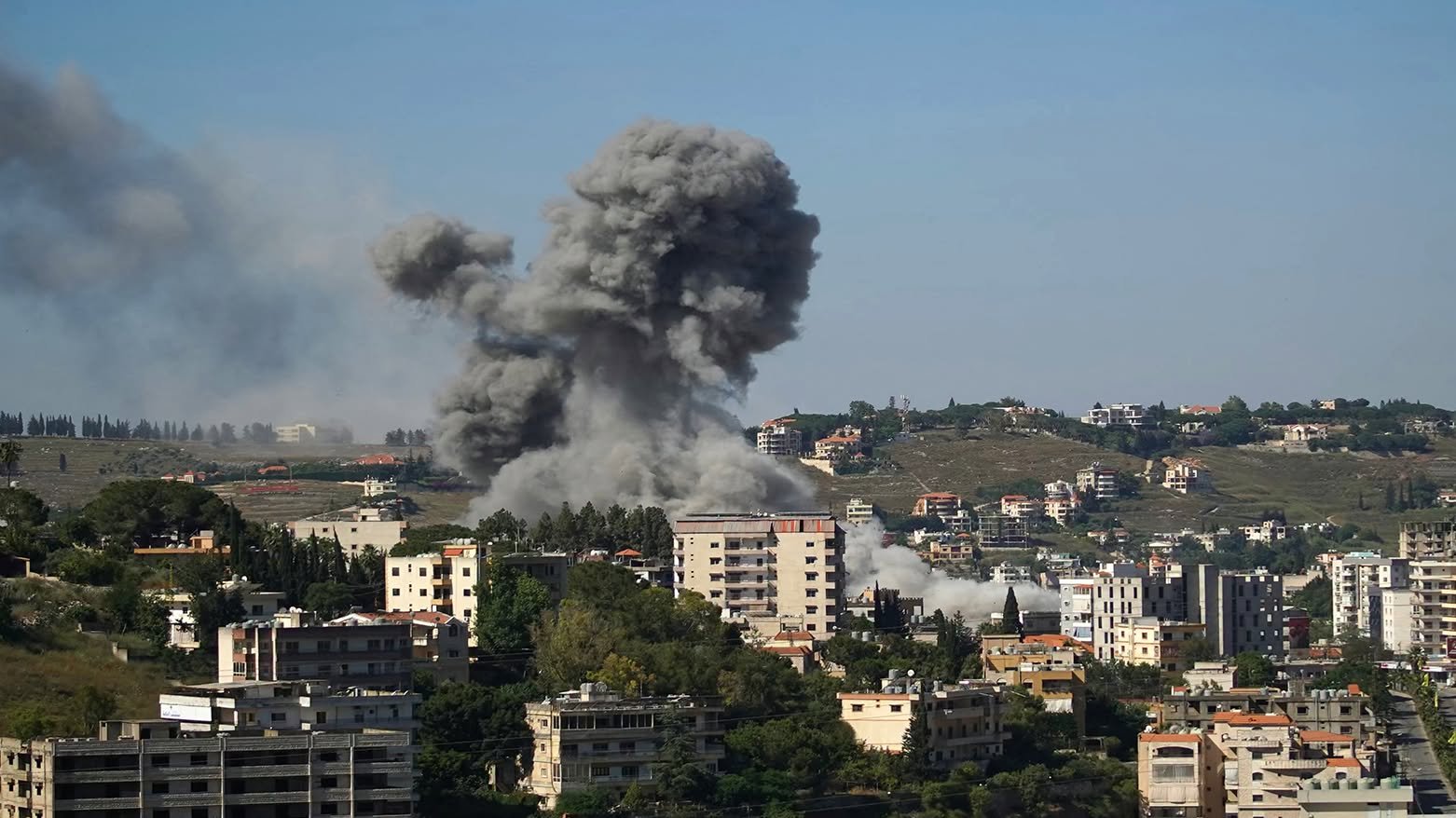
Israel carried out fresh airstrikes in southern Lebanon on Sunday, just two days after Israel and Lebanon signed a framework agreement aimed at ending decades of hostilities, raising concerns over the future of the fragile peace process.
Lebanon’s state-run National News Agency (NNA) reported multiple Israeli strikes across southern parts of the country, while the Israeli military confirmed that one of its soldiers had been killed in combat during operations in the area.
The latest attacks followed an Israeli strike on Saturday that killed one person in southern Lebanon, according to Lebanon’s Health Ministry. Israel said the strike targeted Hezbollah members operating near its self-declared “security zone,” which extends about 10 kilometres into Lebanese territory.
In a statement issued later on Sunday, Israeli military chief Eyal Zamir said he had approved plans for the continuation of military operations within the security zone in line with the ceasefire framework.
The renewed violence comes despite the signing of a US-brokered framework agreement in Washington on Friday after five rounds of negotiations between Israel and Lebanon. The agreement is intended to pave the way toward ending decades of conflict between the two neighbouring countries.
Lebanese President Joseph Aoun told US President Donald Trump on Saturday that Lebanon was prepared to fulfil its responsibilities under the agreement.
The framework reportedly conditions Israel’s withdrawal from occupied Lebanese territory on the Lebanese government’s successful disarmament of Hezbollah, the Iran-backed militant group that has long operated in southern Lebanon.
Israeli Prime Minister Benjamin Netanyahu described the agreement as “historic,” saying it represented a significant step toward regional stability.
However, Hezbollah has strongly rejected the deal.
The group’s leader, Naim Qassem, declared the agreement “null and void,” describing it as “a surrender of sovereignty.” He reiterated Hezbollah’s opposition to negotiations with Israel and vowed not to recognise the framework.
Supporters of the group staged protests in Beirut on Friday, while fresh demonstrations were reported on Sunday. Protesters burned signs bearing the slogan “Lebanon First” along the airport road near Hezbollah’s stronghold in the city’s southern suburbs after earlier banners thanking Iran had been removed.
Hezbollah lawmaker Hassan Fadlallah also condemned the agreement, describing it as “an agreement of humiliation and disgrace.”
He warned that the deal could deepen political divisions within Lebanon and shift the country’s confrontation with Israel into an internal conflict.
Iran, Hezbollah’s principal backer, has continued to call for a broader ceasefire across the Middle East. During a telephone conversation with Lebanese Parliament Speaker Nabih Berri, Iranian Parliament Speaker Mohammad Bagher Ghalibaf said Tehran remained committed to ending the war in Lebanon, facilitating the return of displaced residents, and securing Israel’s withdrawal from Lebanese territory.
According to the text of the framework agreement released by the US State Department, both Israel and Lebanon expressed their intention to permanently end the conflict, address its underlying causes, and formally conclude the state of war between them.
The agreement also provides for the Lebanese Armed Forces to re-establish full state authority across the country’s territory following the verified disarmament of non-state armed groups.
Despite the agreement, Israeli Defence Minister Israel Katz has maintained that Israeli troops will remain in southern Lebanon for as long as Hezbollah continues to possess weapons, underscoring the significant challenges facing implementation of the peace framework.