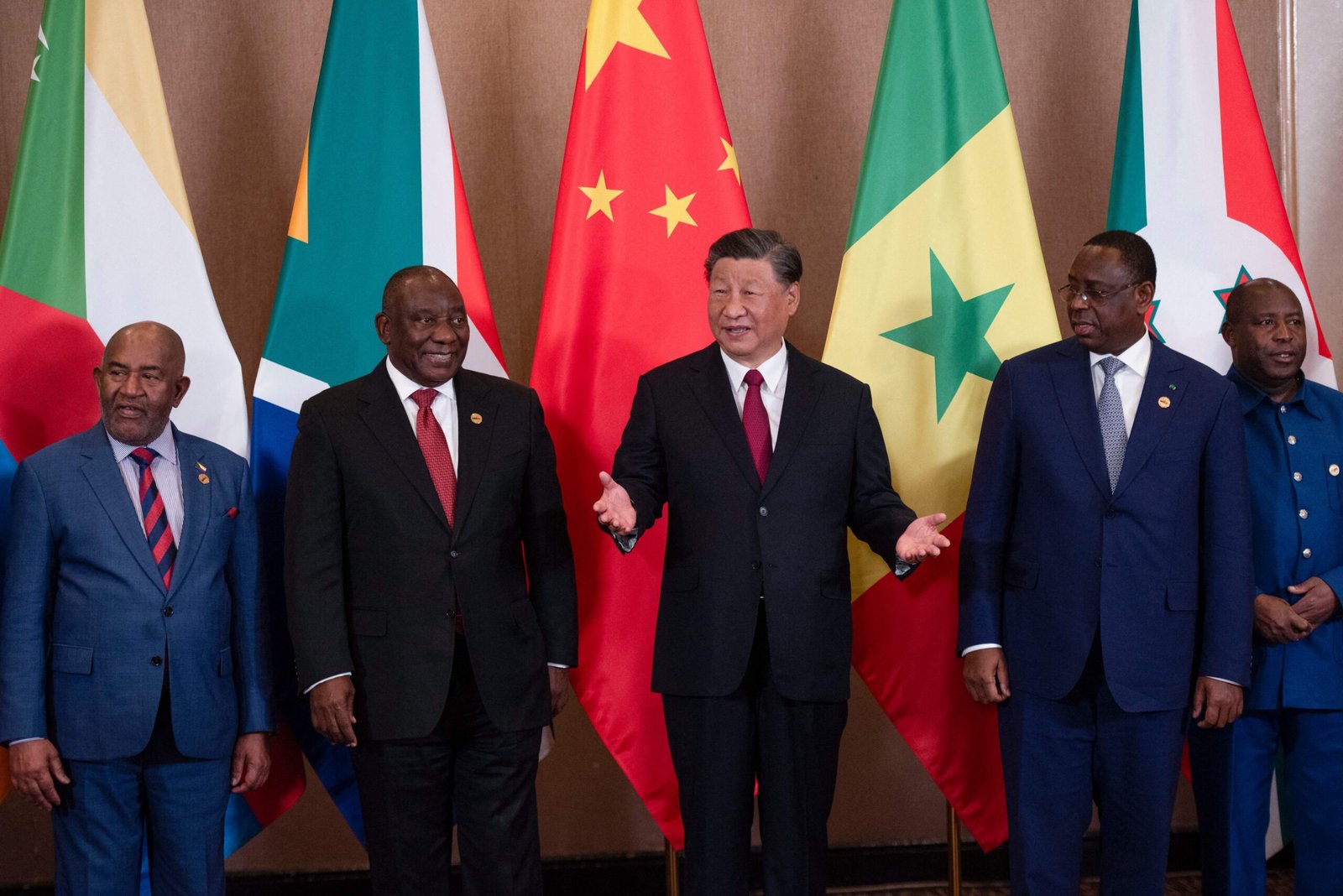
China has scrapped tariffs on imports from all African countries except Eswatini, which maintains ties with Taiwan, in a sweeping trade liberalization move that Beijing described as the most generous unilateral zero-tariff offer any major economy had ever extended to the African continent, expanding a policy that had previously applied only to 33 least-developed African nations to now cover 53 countries.
The policy will remain in effect until April 30, 2028, though what follows beyond that date remains undetermined. Beijing described itself as the first major economy to offer unilateral zero-tariff treatment to Africa at this scale, positioning the move as both an economic partnership gesture and a soft power statement at a time of heightened global trade tensions.
Analysts described the timing as strategically deliberate, with China positioning itself as the trade liberalizer and Africa-friendly economic partner in explicit contrast to the United States, which had imposed tariffs of up to 30 percent on some African nations, with most subsequently reduced to a 10 percent rate following a Supreme Court ruling.
The expansion of the zero-tariff regime could increase African agricultural exports, helping elevate rural incomes and reduce poverty, according to Lauren Johnston of the AustChina Institute. However, analysts cautioned that the practical impact would be uneven and concentrated in more industrialized African economies such as South Africa and Morocco, which have greater existing export capacity to take advantage of the access.
Africa’s trade deficit with China continues to widen, having grown by 65 percent last year to approximately $102 billion, with African exports dominated by raw materials including crude oil and metallic ores. Political analyst Jervin Naidoo of Oxford Economics Africa noted that structural constraints including limited industrial capacity, weak logistics, and raw commodity dependence meant tariff reductions alone could not address Africa’s fundamental trade imbalance with China.