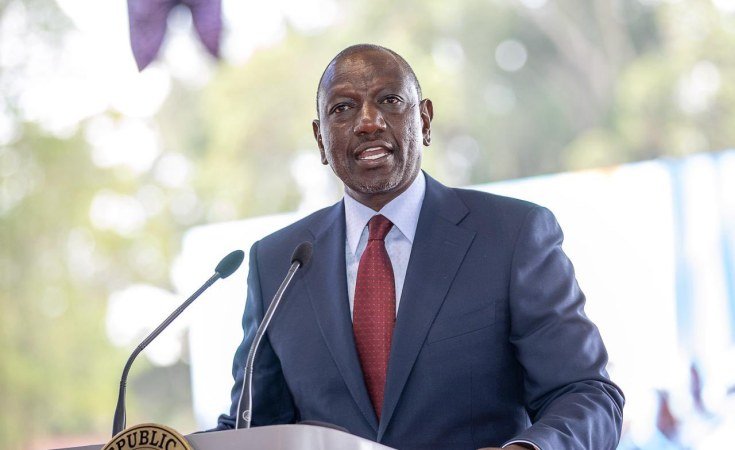
Kenyan President William Ruto has clarified his earlier comments suggesting that Nigerian-accented English was difficult to understand, stating that his remarks were misrepresented and taken out of context.
Ruto made the clarification at a mining conference in Nairobi, where Nigeria’s Minister of Solid Minerals, Dele Alake, humorously referenced the controversy during his remarks.
Responding, the Kenyan leader explained that the comments were made during what he described as a private conversation with fellow citizens and were not intended to disparage Nigerians.
“Somebody misrepresented the facts,” Ruto said, adding that his statement was meant to highlight the strong English proficiency across African countries, including Nigeria.
Alake, speaking at the event, reaffirmed Nigeria’s linguistic strengths, stating, “The people of Nigeria have mandated me to inform you and assure you that Nigerians speak good English.”
Ruto, who faced widespread criticism online following his earlier remarks, also struck a conciliatory tone, noting his personal ties to Nigeria. He described Nigerians as his “in-laws,” referencing his daughter’s marriage to a Nigerian businessman.
The controversy stemmed from comments Ruto reportedly made during an engagement with Kenyans in Italy, where he praised Kenya’s education system and suggested that Nigerian English could be difficult to understand without a translator.
However, in his latest remarks, the President emphasized that English proficiency across Africa remains strong, noting that variations in accent are shaped by linguistic diversity on the continent.
“The facts are that I was talking about how we in Africa speak very good English—all of us,” he said, adding that countries like Nigeria possess a high standard of spoken English influenced by their rich linguistic backgrounds.
Ruto expressed hope that the clarification would ease tensions, joking that he did not expect any “consequences” from Nigerians following the backlash.