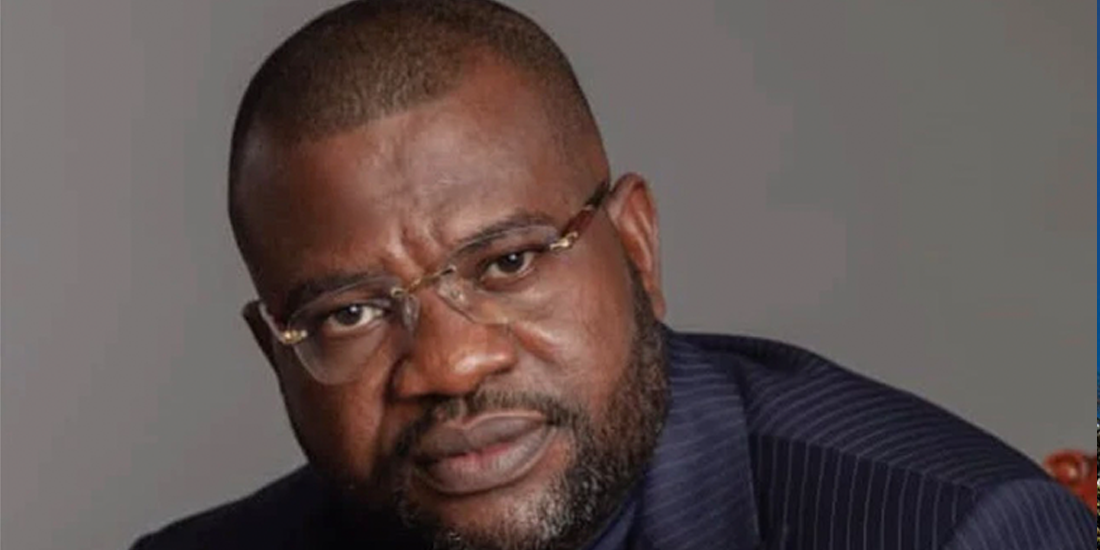
Nigeria’s 2027 election campaigns could be increasingly decided by the ability of candidates to build credible political brands, understand voters and effectively combine digital communication with grassroots mobilization, according to marketing communications expert Mike Dada.
Dada, Managing Director of PRM Africa Marketing and Communications Limited, said the changing demographic profile of Nigerian voters and rapid advances in technology were transforming the way political campaigns should be organized.
He argued that politicians who wait until the election season before attempting to establish their identity with voters risk allowing their opponents to define them first.
According to Dada, political branding should be viewed as a continuous process built around reputation, values, performance, credibility and public engagement rather than a collection of posters, television advertisements and campaign slogans produced shortly before an election.
He said candidates preparing for 2027 should already be defining what they represent and developing a consistent relationship with the electorate.
Dada, who is also Founder and Executive Producer of the All Africa Music Awards, said digital communication had moved from being an additional campaign tool to becoming one of the most important arenas of modern political competition.
Technology, artificial intelligence and data analytics, he explained, now allow campaign organizations to understand different groups of voters and develop messages that address their particular interests without abandoning the candidate’s central political identity.
A campaign could, for instance, communicate differently with a farmer in northern Nigeria and a technology professional in Lagos because their economic priorities and expectations may differ.
He said this capacity for targeted communication gives digital campaigns an advantage over traditional political advertising, particularly because responses can be measured and strategies adjusted as voter attitudes change.
Dada also stressed the importance of demographic research, voter segmentation, opinion polling, sentiment analysis and evaluation of digital behavior.
Rather than relying on assumptions about public opinion, he said campaign organizations should use credible data to determine whether their messages are gaining acceptance and where changes may be necessary.
However, he warned against treating social media popularity as a substitute for political organization.
According to him, digital engagement must be supported by physical mobilization in communities, wards and polling areas. A candidate may generate substantial online attention and still fail electorally without structures capable of converting public interest into actual votes.
Dada, whose company says it has handled 16 election campaigns from beginning to end, also extended his argument to government communication.
He said governments frequently underestimate the importance of professional public communication, sometimes treating it as propaganda rather than a mechanism for explaining policies, listening to citizens and building public trust.
Poor communication, he argued, could create a situation where a government believes it is delivering results while citizens feel disconnected from its programmes.
For political candidates and governments alike, Dada said communication should therefore be treated as a central component of leadership, with credibility and public confidence built consistently rather than hurriedly manufactured when elections approach.