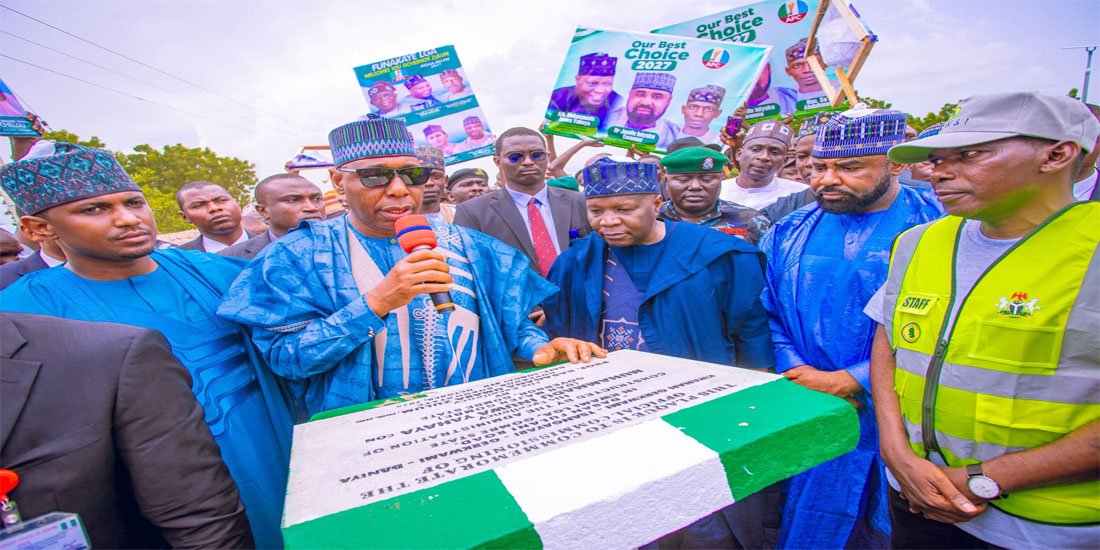
Borno State Governor Babagana Zulum has commissioned more than 86 kilometres of roads and bridges in Gombe State, praising Governor Muhammadu Inuwa Yahaya for expanding infrastructure and improving links between rural communities and major economic centres.
Among the projects opened was the 41 kilometre Shango, Sarkin Yaki, Abuja, Bula, Bomala, Dinawa, Alagarno, Kalajanga and Tappi road in Kwami Local Government Area. The corridor connects several communities and terminates at Tappi on the Gombe to Kano highway.
Other projects included the 30 kilometre Kwanan Gerkwami, Tsangayari, Gerkwami, Daniya and Daban Fulani road, the 15 kilometre Kurba, Titi and Tsangayari road with a spur to Kundulum, and the three span Titi Kurba Bridge.
State officials said the new infrastructure would improve access to farms, markets and public services while reducing travel difficulties for rural communities.
Zulum said road connections between urban and rural areas could expand agricultural activity and strengthen local livelihoods. He described the scale of infrastructure development he observed in Gombe as significant and urged residents to support efforts aimed at sustaining the projects.
Yahaya said the roads were designed to connect communities, improve mobility and unlock economic opportunities along the affected corridors.
The projects form part of the state government’s Network 1100 programme, which targets about 1,100 kilometres of roads across Gombe’s 11 local government areas.
According to the governor, more than 1,000 kilometres had already been constructed as his administration entered its final phase. He said the expanded network would improve the movement of agricultural produce, increase access to markets and services and strengthen economic activity across the state.
The commissioning formed part of a wider push by the Gombe administration to use transport infrastructure to connect rural production areas with commercial centers and public facilities.