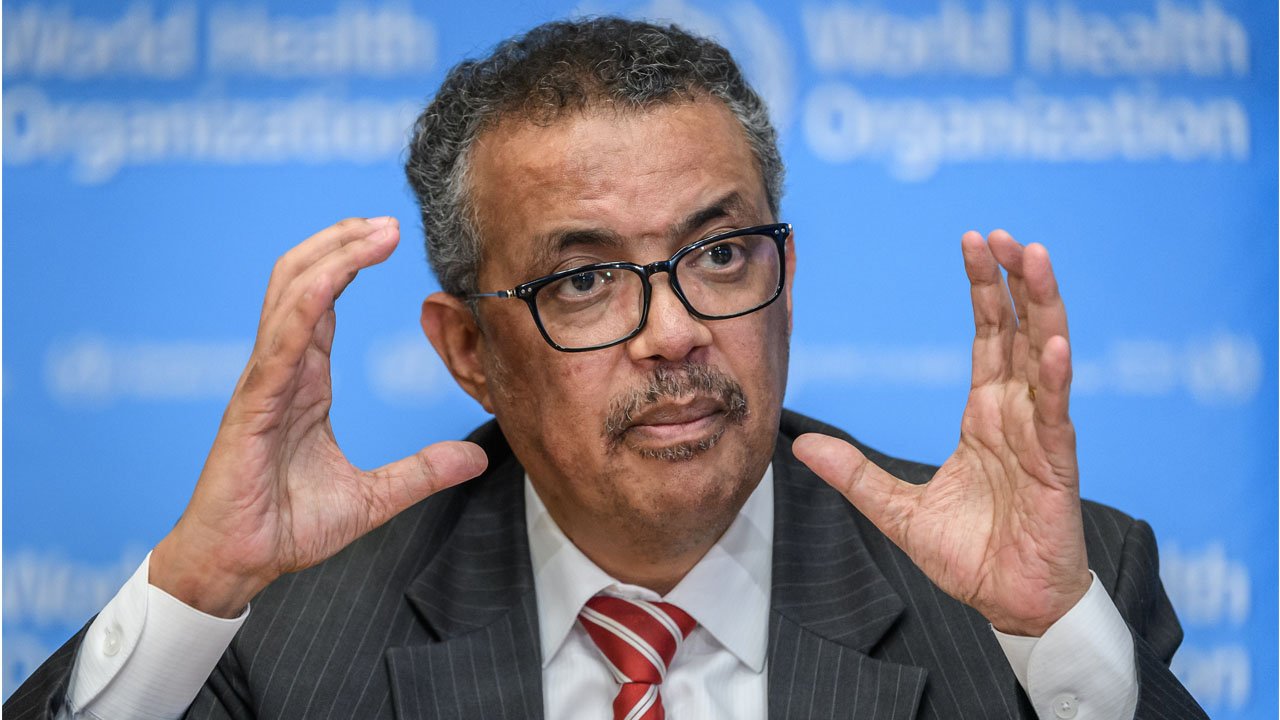
The World Health Organization has declared an international health emergency following a deadly Ebola outbreak in the Democratic Republic of the Congo that has killed more than 80 people.
According to the Africa Centres for Disease Control and Prevention, the outbreak has so far resulted in 88 deaths and 336 suspected cases of the highly contagious haemorrhagic fever.
The WHO announced on Sunday that the outbreak, caused by the Bundibugyo strain of the Ebola virus, now constitutes a “public health emergency of international concern,” the second-highest alert level under international health regulations.
Health authorities warned that the scale of the outbreak may be significantly larger than currently reported, citing rising suspected cases and evidence of cross-border transmission.
The outbreak was first confirmed in Ituri Province in northeastern DR Congo, a region bordering Uganda and South Sudan.
Congolese Health Minister Samuel-Roger Kamba said there is currently no approved vaccine or specific treatment for the Bundibugyo strain.
“This strain has a very high lethality rate, which can reach 50 percent,” Kamba said.
Authorities disclosed that the first identified patient was a nurse who visited a health facility in Bunia, the provincial capital of Ituri, on April 24 with symptoms linked to Ebola.
The virus causes symptoms including fever, vomiting, bleeding, and organ failure.
Medical charity Médecins Sans Frontières, also known as Doctors Without Borders, said it is mobilising a large-scale emergency response amid fears of rapid transmission.
MSF Emergency Programme Manager Trish Newport described the outbreak as “extremely concerning,” citing the growing number of cases across several health zones and the confirmation of infections beyond DR Congo’s borders.
Local residents in affected communities reported shortages of isolation facilities, forcing many infected persons to remain at home where family members are exposed to the virus.
The WHO warned that poor transportation and communication infrastructure in DR Congo could further complicate containment efforts in the country of more than 100 million people.
The current outbreak marks the 17th Ebola outbreak recorded in DR Congo since the virus was first identified in the country in 1976.
The deadliest Ebola outbreak in the country occurred between 2018 and 2020, claiming nearly 2,300 lives.
Health experts say Ebola spreads through direct contact with bodily fluids or blood from infected individuals, while infected persons only become contagious after symptoms appear. The incubation period can last up to 21 days.
The WHO and regional health authorities have urged neighbouring countries to strengthen surveillance and preparedness measures as fears grow over the possibility of wider regional spread.