The Economic Community of West African States has approved implementation of the $27 billion Nigeria Morocco Gas Pipeline, a 6,900 kilometer project designed to move up to 30 billion cubic meters of natural gas annually from Nigeria through 13 West African countries to Morocco, with a further link to Europe.
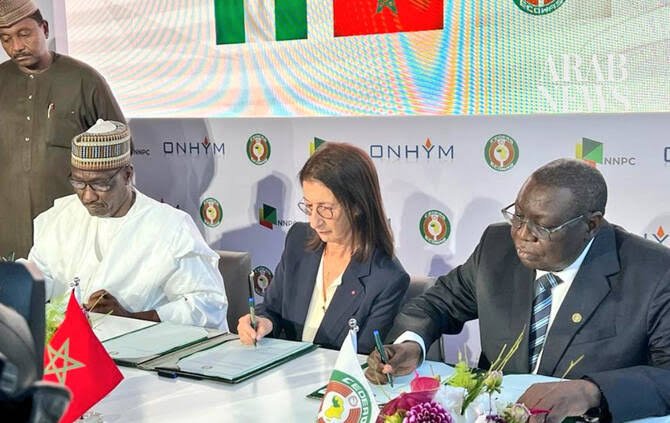
Heads of state and government of the regional bloc signed the Inter Governmental Agreement for the project over the weekend in Lungi, Sierra Leone, during the 69th Ordinary Session of the ECOWAS Authority, formally moving the project from planning into implementation.
Nigeria’s Minister of State for Petroleum Resources in charge of gas, Ekperikpe Ekpo, who was part of the Nigerian delegation led by Vice President Kashim Shettima, described the unanimous endorsement by member states as a major breakthrough for regional energy cooperation and a defining shift from vision to delivery.
He said the pipeline will unlock Nigeria’s gas resources, strengthen regional energy security, expand export opportunities and accelerate industrial growth across the sub region, noting that the country holds about 215.19 trillion cubic feet of proven natural gas reserves, the largest in Africa, and views gas as central to its economic transformation and energy security strategy.
He said the agreement builds momentum for Nigeria’s ambition to move from being merely a gas rich country to a gas powered economy and reliable regional energy partner, adding that the project would also drive investment, create jobs and support power generation, fertilizer production, petrochemicals and manufacturing across participating countries. He reaffirmed the Tinubu administration’s commitment to expanding gas production and infrastructure, and thanked ECOWAS member states for their unanimous support.
ECOWAS Chairman and President of Sierra Leone, Julius Maada Bio, confirmed the formal signing of the agreement and expressed confidence that the pipeline would become a reality.
Morocco’s National Office of Hydrocarbons and Mines and the Nigerian National Petroleum Company Limited said the project aims to connect West Africa’s gas resources to key regional markets while creating a development corridor linking West Africa, the Sahel, Morocco and Europe. The next phase will involve establishing a project company in Casablanca and a governing authority in Abuja before bringing in investors and reaching a final investment decision.
First proposed during a 2016 visit by Morocco’s King Mohammed VI to Abuja, the pipeline has gained renewed relevance since Algeria suspended gas supplies to Spain through Morocco in 2022 amid deteriorating diplomatic relations. Construction is expected to begin in 2028, with first gas targeted for 2031, a timeline officials say will improve energy access, strengthen regional security, deepen integration and provide an alternative export route for Nigerian gas to Europe.