A federal judge in California has blocked the administration of U.S. President Donald Trump from carrying out arrests at immigration courts across the United States, dealing a setback to one of the government’s immigration enforcement strategies.
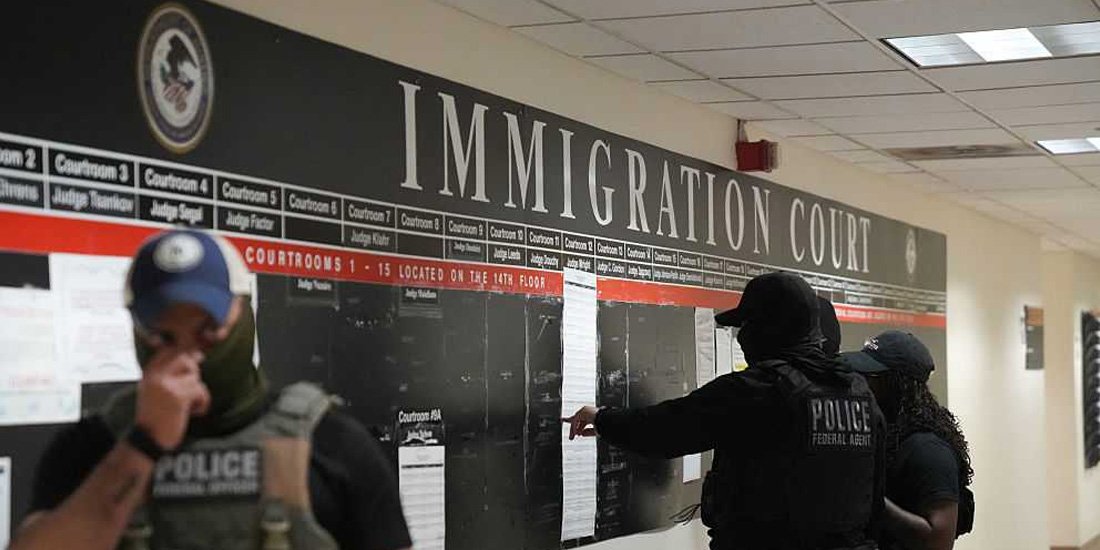
The ruling, issued on Tuesday by U.S. District Judge P. Casey Pitts, prevents federal immigration authorities from continuing a practice in which agents waited outside immigration courts and arrested migrants after their asylum hearings.
Since Trump’s return to the White House, agents from the Department of Homeland Security have reportedly adopted the tactic at immigration courts nationwide, targeting migrants as they exited court proceedings.
The policy placed many migrants in a difficult position, as failure to attend immigration court hearings can, in certain circumstances, result in legal penalties and increase the risk of deportation.
In his decision, Judge Pitts ruled that the policy violated the Administrative Procedure Act, describing it as “arbitrary and capricious.” He stated that both Immigration and Customs Enforcement (ICE) and the Executive Office for Immigration Review (EOIR) failed to provide adequate justification for the practice.
The judge further noted that the presence of immigration enforcement officers at courthouses had a “chilling effect,” potentially discouraging migrants from attending hearings or participating fully in legal proceedings.
Reacting to the ruling, Homeland Security General Counsel James Percival criticised the decision, arguing that individuals ordered deported by immigration judges should be treated similarly to criminal defendants who are subject to lawful enforcement actions.
In a statement posted on social media, Percival described the ruling as judicial activism and defended the administration’s immigration enforcement policies.
The Trump administration has pursued a tougher stance on illegal immigration, with the president repeatedly arguing that stronger measures are necessary to address undocumented migration and protect national security.
The latest court ruling is expected to intensify the legal and political debate surrounding immigration enforcement as the administration continues to face challenges to several of its policies in federal courts.