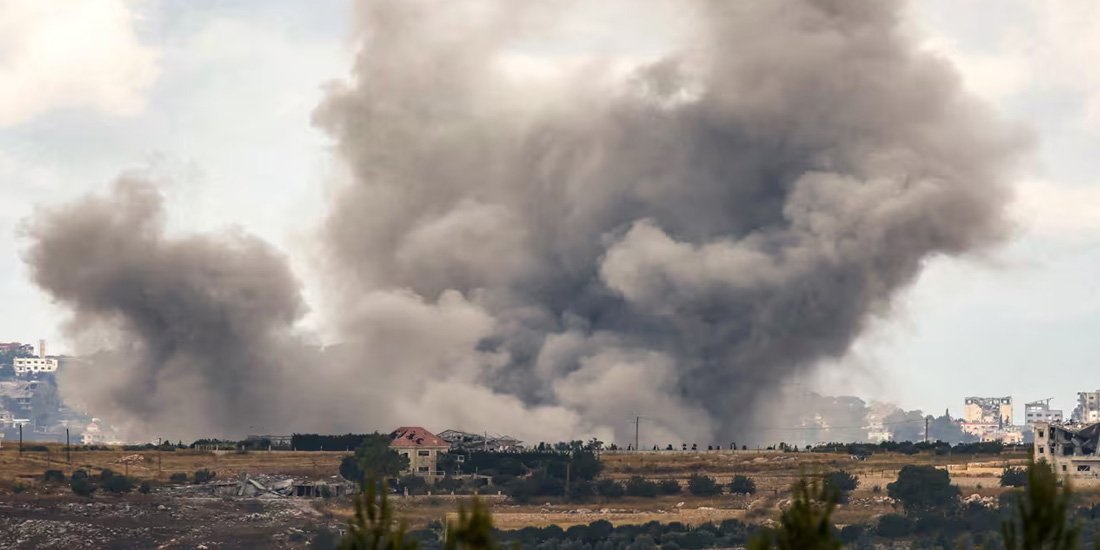
The fragile ceasefire between the United States and Iran unraveled further yesterday as both nations launched fresh missile and drone strikes, escalating fears of a renewed conflict in the region and its potential impact on the global oil market.
The latest hostilities coincided with the funeral of Iran’s Supreme Leader, Ayatollah Ali Khamenei, which attracted thousands of mourners. This resurgence of violence poses a significant setback for diplomatic efforts aimed at resolving the ongoing war, with both sides trading accusations of violating the truce shortly after it was established.
In a decisive military response, the U.S. targeted approximately 90 sites across Iran, citing Iranian attacks on shipping in the strategic Strait of Hormuz as justification. President Donald Trump stated that he no longer considered the ceasefire valid, leading to intensified military operations.
Iran retaliated with strikes on U.S. allies in the Middle East, triggering alerts in Qatar, Bahrain, Kuwait, and later, Jordan. This two-day exchange of fire cast doubt on both Washington and Tehran’s commitment to reaching a final agreement to end the conflict, which began in February following U.S. and Israeli actions.
The U.S. military confirmed its airstrikes were aimed at key Iranian military infrastructure, including air defense systems, coastal surveillance assets, and missile storage sites. A U.S. official also denied targeting the Bushehr nuclear power plant, despite reports from Iranian officials suggesting otherwise. The Iranian Health Ministry reported at least 14 fatalities and 78 injuries from the U.S. attacks.
Iran’s response included targeting installations in Qatar and Jordan, with Jordanian officials claiming to have intercepted eight Iranian missiles. The Islamic Revolutionary Guard Corps (IRGC) announced the launch of 10 ballistic missiles aimed at a U.S. command center and an airbase in Jordan.
This escalation leaves the peace process in a precarious state. Following a memorandum of understanding signed by Trump and Iranian leaders in mid-June, a 60-day negotiation period was initiated to seek a final resolution. However, discussions have been paused as Iran commemorates Khamenei’s death, who was killed in U.S.-Israeli strikes at the onset of the conflict.
Trump, fresh from a NATO summit in Turkey, had hinted at impending military action, declaring, “This is in retribution for yesterday’s bombing of ships by Iran. If it happens again, it will get much worse!” He dismissed ongoing peace efforts and condemned Iranian leaders but indicated he would allow negotiations to continue, downplaying the likelihood of “long-term” military engagement.
In the financial markets, oil prices saw a decline on Thursday as investors awaited further developments. Brent crude prices fell 2.2% to $76.30 per barrel, down from $78.02 the previous day but still higher than last week’s closing price of $71.80. A return to full-scale conflict could disrupt oil shipments through the Strait of Hormuz, exacerbating inflation concerns that had begun to ease.
As the situation evolves, uncertainty remains regarding the future of U.S.-Iran relations and the broader implications for regional stability and global oil supply.