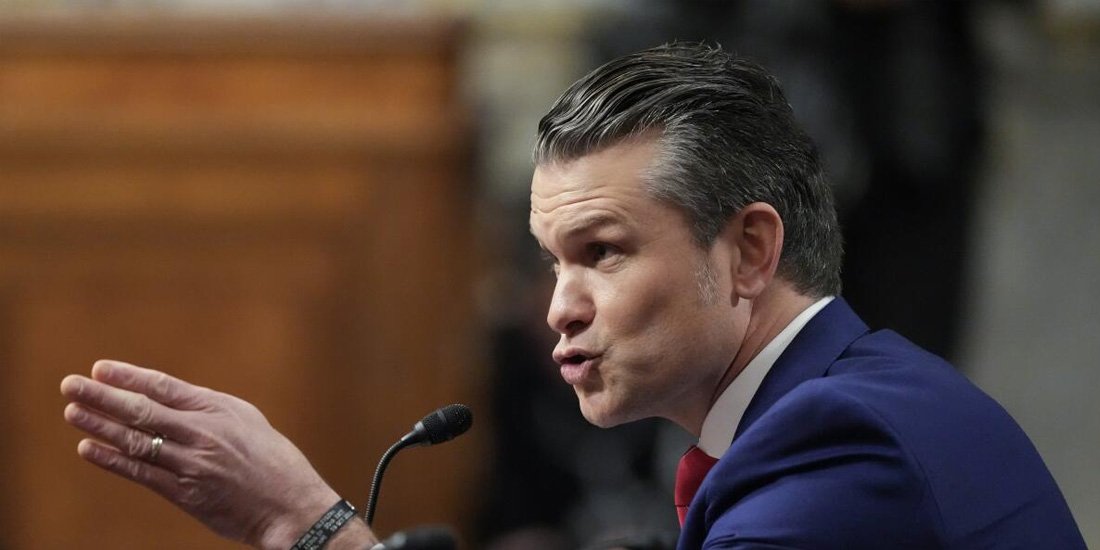
United States Secretary of Defense Pete Hegseth has praised the American military’s recent counter-terrorism operations in Nigeria, describing them as a fulfilment of President Donald Trump’s personal directive to protect Nigerian Christians who had been systematically targeted by Islamic State fighters.
Hegseth said Trump had approached him approximately a year ago and asked the Defense Department to do everything possible to protect Christians in Nigeria, which the US estimates account for roughly half of the country’s population. He said forming the partnerships necessary to act on that directive had taken time but that the president had remained persistent until the required assets were in place.
He disclosed that within the past month, American forces had killed the second in command of ISIS, Abu-Bilal al-Minuki, described as the director of global operations for ISIS and the individual most responsible for targeting Christians in Nigeria and planning attacks against the United States homeland. The operation, conducted on May 16, also killed other senior ISIS leaders. On May 16, US Africa Command confirmed via a press release that the operation had been carried out at the direction of the president and secretary of defense, and that no American service members were harmed.
AFRICOM Commander Air Force General Dagvin Anderson said the operation underscored the value of the US-Nigeria partnership and had been made possible through the cooperation and coordination of forces in recent months.
A separate report by the United States Commission on International Religious Freedom revealed that approximately 30,000 armed Fulani militants were currently operating across Nigeria, conducting deadly attacks, kidnappings, and widespread violence that had displaced more than 1.3 million people, particularly in the Middle Belt region. The commission said the groups, though lacking centralized leadership, had caused more deaths across religious communities in the past year than organized insurgent groups or criminal gangs. It said some factions had developed links with bandit groups and other armed actors.
The commission criticized the Nigerian government’s response as insufficient to stem the scale of violence, while acknowledging that the Tinubu administration had taken steps to strengthen counterterrorism measures and that authorities faced enormous operational and logistical challenges across multiple security fronts. The report cautioned against viewing the violence solely through a religious lens, saying it was driven by a complex combination of religion, ethnicity, competition over land and water resources, criminality, and environmental degradation.