Tensions between the United States and Iran escalated on Wednesday as President Donald Trump and senior Iranian officials traded fresh threats following a new round of military strikes between the two countries.
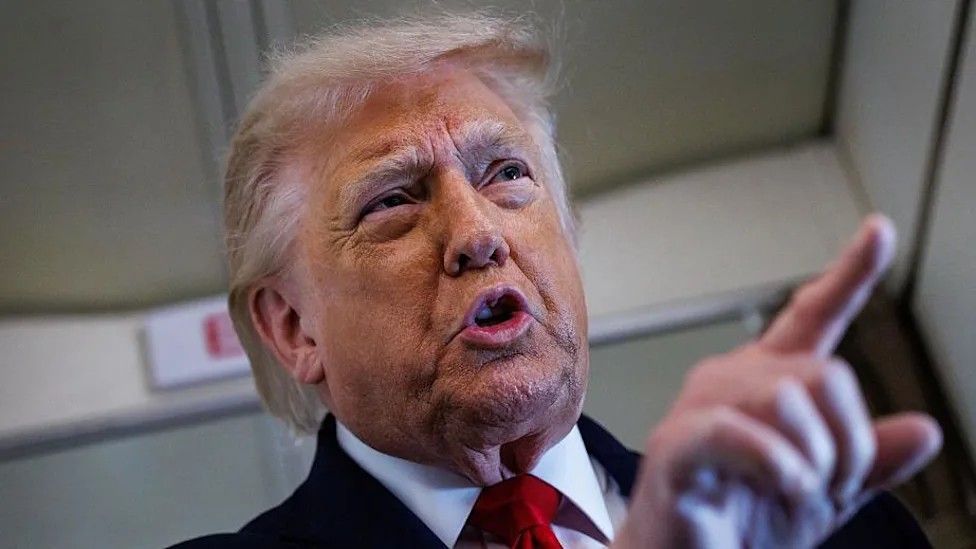
Trump warned that Tehran would face consequences for delaying negotiations, declaring that Iran had been “completely defeated” and accusing its leadership of failing to act despite its rhetoric.
“Iran’s military is a complete and total mess,” Trump wrote on his Truth Social platform. “They’ve taken too long to negotiate a deal that would have been great for them. Now they will have to pay the price.”
The remarks came hours after Iran’s Foreign Minister, Abbas Araghchi, vowed that Tehran would respond decisively to any aggression.
“Iran will leave no attack or threat unanswered,” Araghchi said, while claiming that the United States had suffered “defeats on the battlefield.”
US, Iran Launch Reciprocal Strikes
The latest exchange followed US military strikes on Iranian targets on Tuesday. Washington said the operation was carried out in response to the downing of a US Army Apache helicopter in the Gulf region.
According to the US military’s Central Command (CENTCOM), the strikes targeted Iranian air defence systems, radar installations and ground control facilities near the strategically important Strait of Hormuz.
Iran responded by launching attacks against US military facilities across the Middle East. The Islamic Revolutionary Guard Corps (IRGC) said it targeted 21 locations, including bases in Bahrain and Jordan. Kuwait’s military also reported intercepting incoming projectiles.
US officials later stated that nearly all Iranian missiles and drones were intercepted and that no casualties were reported.
Diplomatic Efforts Under Strain
Despite the renewed hostilities, Trump had earlier suggested that a diplomatic breakthrough remained possible.
Speaking to reporters on Tuesday, he said the US and Iran were “in the final throes of what will be a very, very good deal.”
However, Iranian officials accused Washington of undermining ongoing peace efforts.
Iranian Foreign Ministry spokesman Esmaeil Baqai said the United States had damaged diplomatic progress through inconsistent messaging, shifting demands and repeated ceasefire violations.
He stressed that Tehran would reassess its participation in negotiations, noting that meaningful diplomacy required stability and trust.
Helicopter Incident Deepens Crisis
The latest confrontation was triggered by the downing of a US Apache helicopter near the Strait of Hormuz on Monday.
Trump said the aircraft was struck while conducting patrol operations in the waterway, a vital global shipping route that has faced severe disruptions since the conflict erupted earlier this year.
According to US officials, an Iranian drone was involved in the incident, although it remains unclear whether the aircraft was deliberately targeted. The two crew members survived and were rescued by an American maritime drone.
Iranian media outlets reported that Tehran had not formally claimed responsibility for the helicopter’s downing.
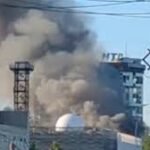
The IRGC said subsequent US strikes hit areas including Jask, Sirik and Qeshm Island, damaging a telecommunications tower and water infrastructure.
Conflict Continues Despite Ceasefire
The current conflict began on February 28 after coordinated US and Israeli strikes on Iran, an operation that reportedly killed the country’s supreme leader.
Iran retaliated with attacks against Israel and US-aligned countries in the Gulf, triggering a broader regional conflict that later spread to Lebanon.
Although Washington and Tehran agreed to a temporary ceasefire in April, both sides have continued to exchange sporadic attacks while pursuing difficult diplomatic negotiations.
Recent talks, including meetings held in Pakistan, have sought to secure a lasting settlement, but the latest military exchanges have raised fresh concerns about the prospects for peace in the region