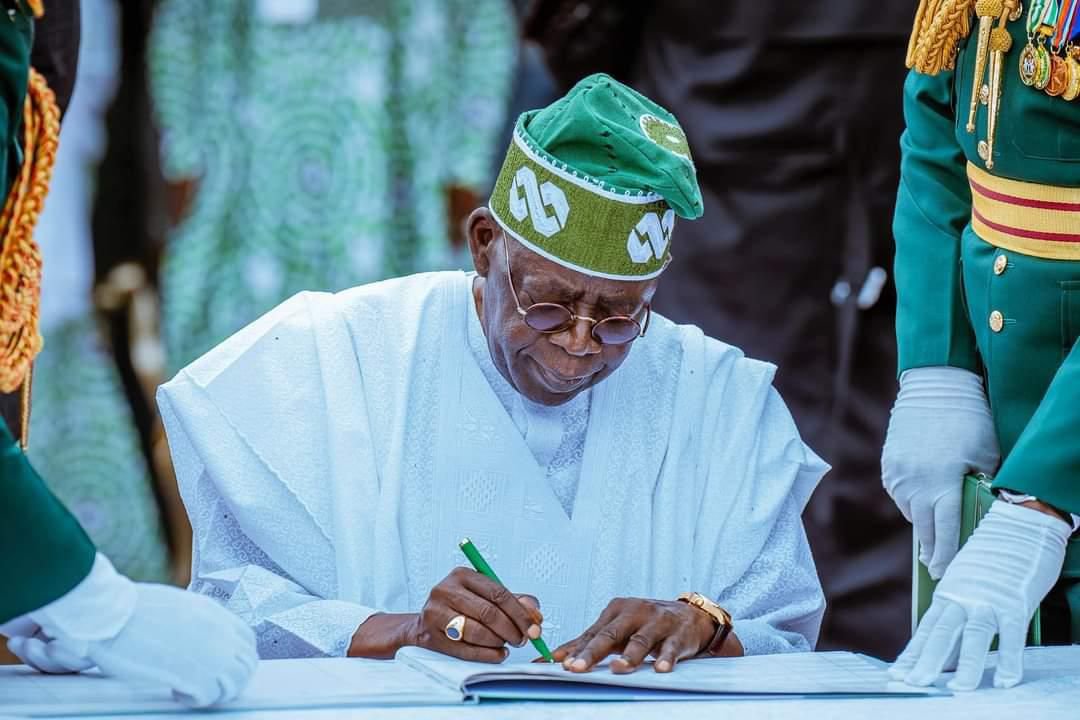
President Bola Ahmed Tinubu has signed the 2026 Appropriation Bill into law, approving a total expenditure of ₦68.32 trillion while extending the implementation of the 2025 capital budget to June 30, 2026.
The extension shifts the earlier deadline from March 31, giving Ministries, Departments and Agencies (MDAs) additional time to complete ongoing capital projects nationwide, particularly those at advanced stages of execution.
A breakdown of the 2026 budget shows ₦4.799 trillion allocated for statutory transfers, ₦15.8 trillion earmarked for debt servicing, and ₦15.4 trillion set aside for recurrent (non-debt) expenditure. Capital expenditure accounts for ₦32.2 trillion, representing nearly half of the total budget size.
The spending plan underscores the administration’s emphasis on infrastructure development, economic stability, and inclusive growth, while also addressing statutory obligations and rising debt commitments.
According to the Presidency, the decision to extend the 2025 capital budget is aimed at ensuring optimal utilisation of funds and improving project completion rates across sectors.
Special Adviser to the President on Information and Strategy, Bayo Onanuga, said the additional three-month window would allow MDAs to consolidate ongoing projects and enhance value for public spending.
With the 2026 Appropriation Act taking effect from April 1, full implementation is expected to proceed in line with the government’s fiscal and development priorities.
President Tinubu directed all MDAs to ensure prudent, transparent, and efficient use of public resources, stressing the need for accountability, value for money, and timely delivery of projects.
He also commended the National Assembly for its cooperation in the timely passage of the budget, noting that effective collaboration between the executive and legislative arms remains critical to national development.
The president reaffirmed his administration’s commitment to fiscal reforms, improved revenue mobilisation, and increased investment in economic growth, job creation, and social protection programmes, as Nigeria continues efforts to stabilise its economy and drive long-term development.