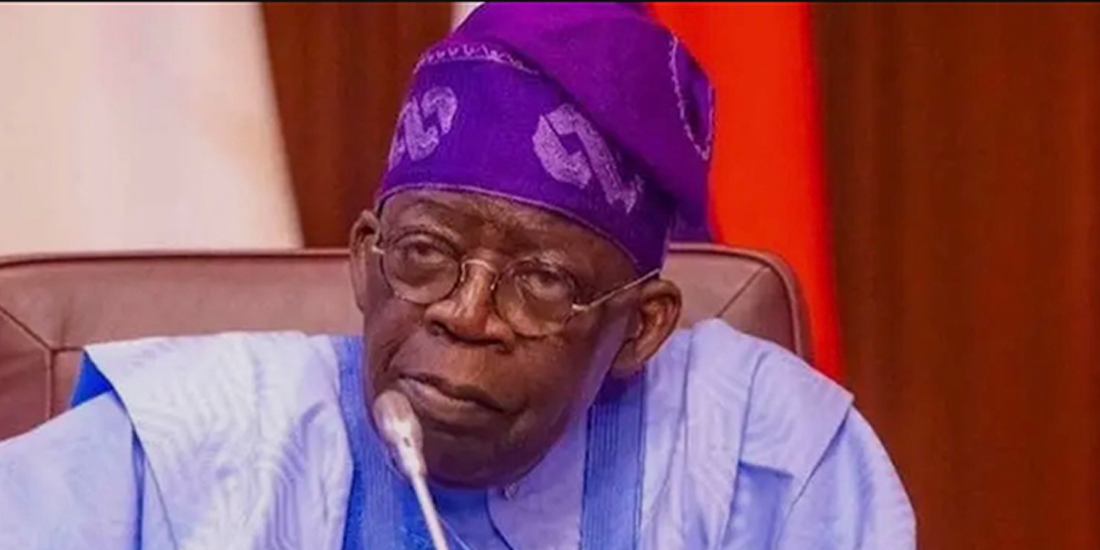
President Bola Tinubu has outlined a new compact with Nigerian manufacturers built around reliable energy, affordable capital, stronger markets for locally made goods, improved security and measurable implementation of the Nigeria Industrial Policy.
Tinubu said the objective was to move Nigeria away from dependence on imported products and position the country as a major production base for Africa. He spoke in Lagos at the sixth Adeola Odutola Lecture organized by the Manufacturers Association of Nigeria during its 54th Annual General Meeting. He was represented by the Minister of State for Industry, Trade and Investment, Senator John Owan Enoh.
The President said industrial growth would remain difficult without dependable electricity and pledged continued efforts to prioritize gas for industry and improve power supply to industrial clusters. He also said the government would work with the Bank of Industry and the wider banking system to expand access to patient and affordable long term financing for productive businesses.
On market access, Tinubu said implementation of the Nigeria First policy would give greater consideration to Nigerian goods that meet required standards in public procurement. He added that trade reforms, including the National Single Window, were intended to reduce the time and cost involved in moving goods through ports and borders.
The President also promised greater protection for industrial corridors, highways and supply routes, arguing that insecurity directly increases production and logistics costs. On accountability, he directed the Federal Ministry of Industry, Trade and Investment, through the Industrial Revolution Work Group, to hold quarterly delivery meetings with MAN so manufacturers could assess implementation of the industrial policy.
Tinubu challenged manufacturers to expand capacity, deepen backward integration and treat the wider African market as a natural destination for Nigerian products. He said government could improve the operating environment, but manufacturers would still have to invest, meet international standards and build competitive businesses.
He argued that Nigeria must extract more value from its natural resources rather than continuing a pattern in which raw commodities are exported and finished products imported. The administration, he said, wants more Nigerian agricultural and mineral resources to feed domestic factories and export industries.
Delivering the Adeola Odutola Lecture, former Director General of the United Nations Industrial Development Organisation, Dr Kandeh Kolleh Yumkalla, said Nigeria needed a clear energy policy tied directly to its industrial strategy. He warned that unreliable and expensive electricity remained one of the biggest threats to manufacturing competitiveness.
Yumkalla said manufacturers spent an estimated N1.3 trillion on self generated power in 2025, compared with N781 billion in 2023, and said energy could account for 35 to 40 per cent of production costs for some firms. He urged government to connect energy, agriculture, finance and industrial policies around a coherent national production strategy.