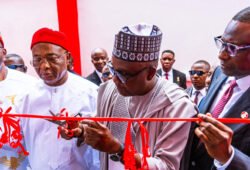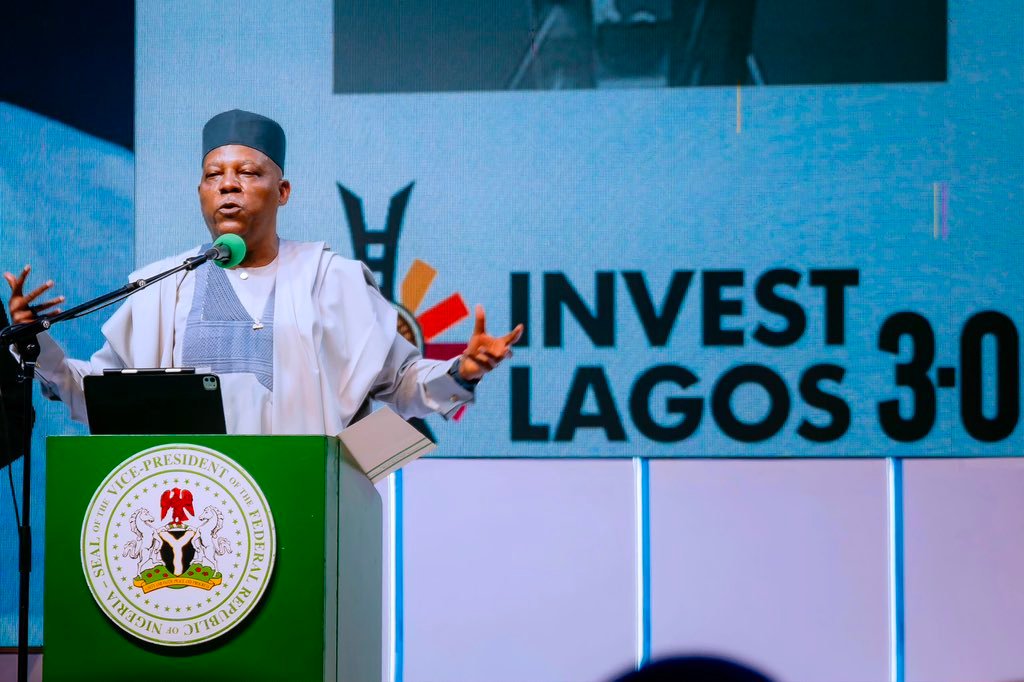
President Bola Tinubu has positioned Lagos as a leading destination for business, innovation and economic growth on the African continent, describing the state as Africa’s gateway to its economic future and a strategic hub for global investment and trade.
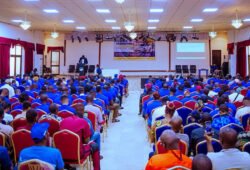
Declaring open the Invest Lagos 3.0 Summit, the President, represented by Vice President Kashim Shettima, said Nigeria’s ambition to build a $1 trillion economy would be driven by enterprise, investment and coordinated reforms across all tiers of government. Governor Babajide Sanwo-Olu echoed the message, branding Lagos the business gateway to Africa while highlighting the state’s investment opportunities. Governors Hope Uzodimma of Imo, Alex Otti of Abia, Caleb Mutfwang of Plateau and Abdullahi Sule of Nasarawa also used the platform to promote the prospects in their states.
Tinubu singled out Lagos as the clearest example of how subnational leadership can accelerate national economic transformation. Addressing policymakers, global investors, entrepreneurs and development institutions, he described the city as more than a commercial capital, calling it a testing ground for ideas, governance and execution. He said Lagos remained the doorway through which Nigeria continues to greet the future, and credited its growth to sustained long term planning and governance reforms since the return to democratic rule.
Shettima praised Tinubu for laying the foundation of the Lagos development model and commended Sanwo-Olu for maintaining the state’s momentum. Reflecting on the summit theme, the Vice President said cities increasingly shape production systems, supply chains, innovation networks and investment flows, and noted that Lagos continues to attract investors through its markets, infrastructure, talent and financial opportunities. He reaffirmed that the administration’s macroeconomic reforms were designed to restore confidence, improve fiscal sustainability and unlock large scale private investment, acknowledging that some decisions had been difficult but necessary. Shettima added that Nigeria’s demographic profile and its position within the African Continental Free Trade Area offer aunique platform for industrial expansion. With the country projected to be among the world’s most populous by 2050 and AfCFTA opening a market of more than 1.4 billion people, he said Nigeria was poised to become Africa’s leading production, logistics, innovation and investment hub. He stressed, however, that the federal government cannot deliver transformation alone.
Sanwo-Olu outlined his administration’s gains in agriculture, health, human capital, transport, energy, technology and trade, and called for greater private investment in rail transport, energy, agriculture and agro processing. He said solving Lagos’ mobility challenges, particularly through rail and waterways, would unlock significant economic potential by cutting travel times and boosting productivity. He also courted investors into the state’s expanding technology ecosystem, pointing to ongoing work on data centers and fibre connectivity and describing Lagos as a rising technology hub in need of more private capital.
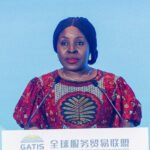
Oyedele, the finance minister, said one outcome of the administration’s reforms was the re emergence of Lagos as a model of subnational development. Uzodimma said Imo had abandoned government run enterprises for private sector led growth, noting that the state now generates, transmits and distributes electricity through a public private partnership while its Energy Free Trade Zone attracts investment in petrochemicals, fertilizer, gas processing and related industries. In her welcome address, Lagos Commissioner for Commerce, Cooperatives, Trade and Investment, Mrs. Folashade Bada, said the summit affirmed that Lagos was open for business and partnership. Goodwill messages came from Commonwealth Secretary General Shirley Botchwey, Commonwealth Enterprise and Investment Council ChairmanLord Marland, Afreximbank’s representative Dr. Gainmore Zanamwe, and AfCFTA Secretary General Wamkele Mene, all of whom affirmed confidence in Lagos and Nigeria’s capacity to drive Africa’s economic future.
New Power Minister Promises Steady Gains in Electricity Supply, Rules Out Quick Fixes
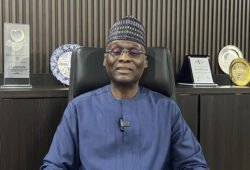
The new Minister of Power, Mr. Joseph Olasunkanmi Tegbe, has pledged a gradual but consistent improvement in electricity supply across the country, tempering expectations of an overnight transformation.
Speaking to journalists after his swearing in by President Bola Tinubu at the State House, Abuja, Tegbe said he was not offering a magic solution or round the clock power, but promised visible and steady progress. He said Nigerians had already reported improved supply over the previous four weeks, crediting the President’s backing, the commitment of ministry officials and the cooperation of agencies in the sector.
Tegbe said he had engaged key stakeholders including the Transmission Company of Nigeria, the Rural Electrification Agency and the Nigerian Electricity Regulatory Commission since his confirmation, securing commitments that were beginning to show results. He outlined plans to address challenges across generation, transmission and distribution, while urging patience as reforms take hold.
He cited recent operational successes, including the rapid restoration of a feeder station in Katampe within 24 hours and the return of the Niger Delta Power Holding Company after three years offline, as evidence of renewed commitment within the sector. He appealed to Nigerians to support the President and remain hopeful as the ministry works through the sector’s peculiar challenges.The President had earlier administered the oath of office on Tegbe and the new Minister of State for Foreign Affairs, Ambassador Sola Enikanolaiye, at a short ceremony in the Council Chambers. The appointments followed the resignations of former Foreign Affairs Minister Yusuf Tuggar and former Power Minister Chief Adebayo Adelabu, who left to pursue political ambitions. The Senate cleared both nominees on Wednesday, May 6, 2026.
Tegbe, an Ibadan native, is a fiscal, economic and institutional reform strategist with more than 35 years of experience across the public and private sectors. He holds a first class degree in Civil Engineering from Obafemi Awolowo University, an MBA from Switzerland and a master’s in Public Administration from Birmingham. He previously served as Senior Partner and Head of Advisory Services at KPMG in Africa, leading major reform initiatives and working with organizations such as the Nigerian Communications Commission, the Nigerian Electricity Regulatory Commission, Shell, Huawei, General Electric, MTN and the Odu’a Group.Enikanolaiye, a native of Igbagun in Kogi State, holds a first class degree in Political Science from Ahmadu Bello University, Zaria, and a distinction in International Law and Diplomacy from the University of Lagos. A career diplomat, he joined the Ministry of Foreign Affairs in 1982, rose to Director and was appointed Permanent Secretary in 2016 before retiring in 2017. He served in Nigerian missions in Addis Ababa, Belgrade, Ottawa, London and New Delhi, and most recently worked as Senior Special Assistant to the President on Foreign Affairs and International Relations.