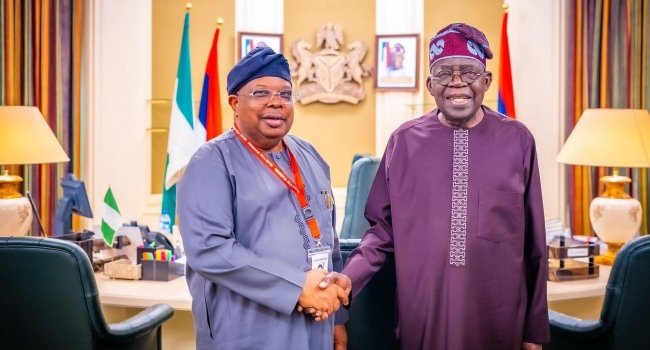
President Bola Tinubu has nominated fiscal and economic reform specialist Olasunkanmi Tegbe as Minister of Power, transmitting his name to the Senate for screening and confirmation, while simultaneously creating a Presidential Task Force on Power Sector Reset and Restoration headed by former minister Rilwan Babalola, in a two-track intervention designed to address Nigeria’s persistently underperforming electricity sector with the urgency the crisis demanded.
The nomination followed the resignation of Adebayo Adelabu, who stepped down to pursue the Oyo State governorship. Presidential spokesperson Bayo Onanuga confirmed that Tegbe’s nomination had been transmitted to the Senate in accordance with the 1999 Constitution.
Tegbe, from Oyo State, brings over 35 years of experience spanning the public and private sectors, including his tenure as Senior Partner and Head of Advisory Services at KPMG Africa, where he led extensive work in fiscal policy reform, institutional transformation, and governance. He currently serves as Director-General and Global Liaison for the Nigeria-China Strategic Partnership. His specific power sector experience includes work in regulatory and institutional reform involving the Nigerian Electricity Regulatory Commission and the Nigerian Bulk Electricity Trading Company.
Babalola, a former Power Minister with deep sectoral expertise, was appointed both as Special Adviser to the President on Power and as Chairman of the Presidential Task Force, which would operate under a direct presidential mandate as a high-level, delivery-focused body charged with restoring discipline, efficiency, and commercial viability across the power sector while ensuring effective coordination among all relevant ministries, departments, and agencies.
The task force was charged with driving a comprehensive system reset of the electricity sector, implementing a Performance Before Expansion framework, reducing technical, commercial, and collection losses, strengthening cost discipline and tariff integrity, enhancing revenue assurance and sector liquidity, restoring grid discipline and market integrity, promoting productive use of electricity, developing Electricity Growth Zones, reducing fiscal exposure, and delivering a 90-day implementation blueprint within its first weeks of operation.
The presidency also redesignated the Office of the Special Adviser on Energy as Special Adviser on Oil and Gas, a restructuring intended to clarify roles and eliminate duplication within the energy governance framework.