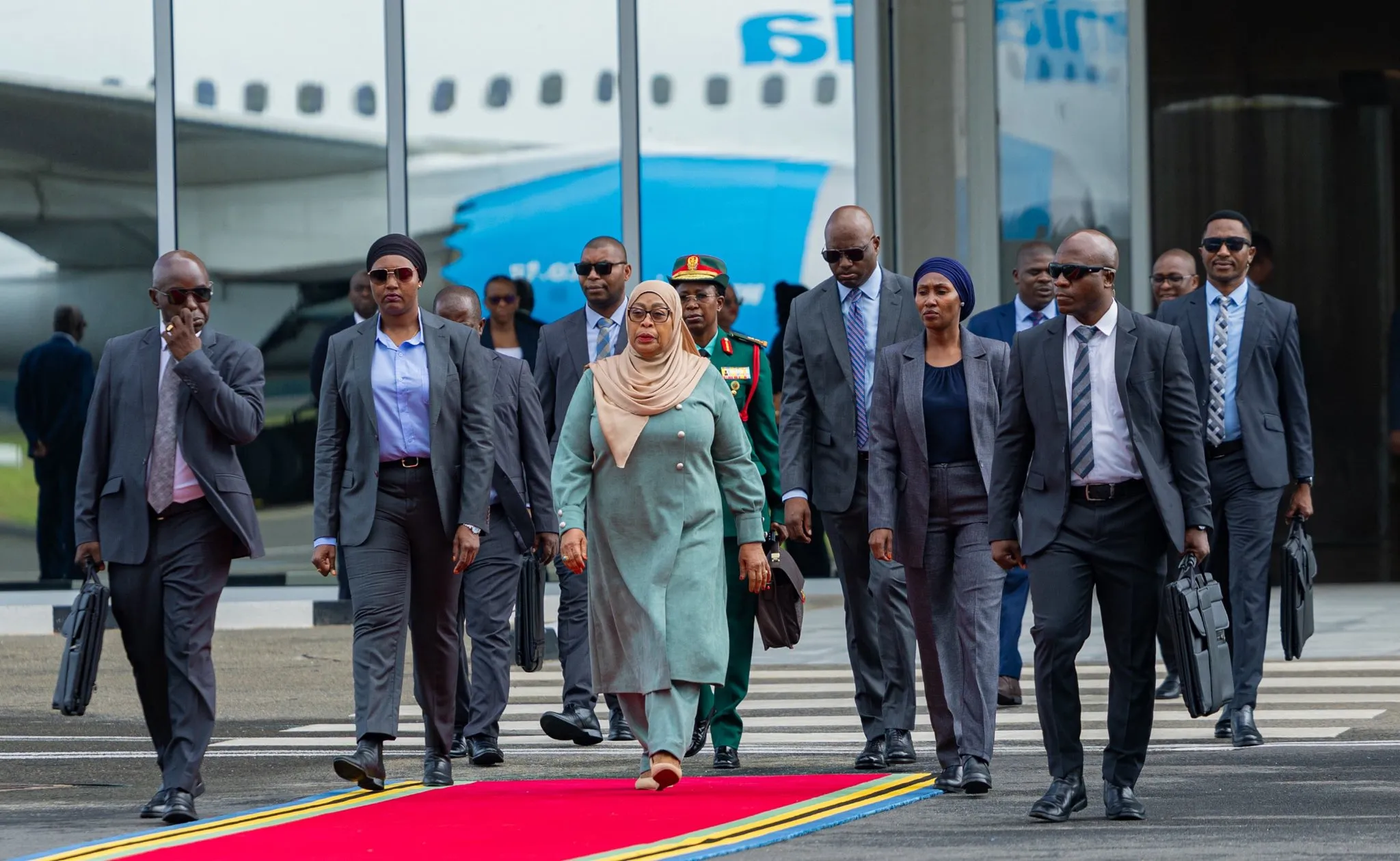
Tanzanian President Samia Suluhu Hassan begins a three-day state visit to Russia on Wednesday, meeting Russian President Vladimir Putin in Moscow amid growing diplomatic tensions with Western countries.
The visit comes at a time when Tanzania’s relations with Western governments have deteriorated following allegations of human rights abuses linked to last year’s election unrest.
Western diplomats and rights organisations have accused the government of carrying out mass killings during post-election protests in October, as well as a pattern of abductions and targeted attacks on government critics in the lead-up to the vote. The Tanzanian government has denied wrongdoing.
The United States has said it is reviewing its diplomatic relationship with Tanzania following the violence and recently imposed sanctions on a senior police official over alleged torture of activists.
In contrast, Moscow has moved to strengthen ties with Dar es Salaam. President Vladimir Putin was among the first world leaders to congratulate Hassan on her disputed re-election, in which she reportedly secured 98 percent of the vote.
Bilateral relations have expanded in recent months, including the establishment of a Russia–Tanzania Business Council in January and plans by Air Tanzania to launch direct flights between Dar es Salaam and Moscow later this year.
President Hassan is travelling with a business delegation aimed at securing agreements in trade, tourism and mineral development during the first visit by a Tanzanian head of state to Russia since independence-era leader Julius Nyerere visited in 1969.
Current trade between both countries stands at just over $307 million annually, with cooperation largely limited to a long-delayed uranium mining project.
Analysts say Russia may also be seeking diplomatic support from Tanzania in international forums, particularly regarding votes on the war in Ukraine at the United Nations.
A former political science lecturer at the University of Dar es Salaam, speaking anonymously due to security concerns, said Moscow could benefit from even limited Tanzanian backing in global diplomatic disputes.
Another analyst, Fergus Kell of the UK-based Chatham House think tank, described Russia’s engagement as opportunistic, noting that Moscow was taking advantage of Tanzania’s weakened international standing.
A government-commissioned report into last year’s unrest estimated that 518 people were killed, though it did not assign responsibility, and critics say there has been little accountability for the violence.