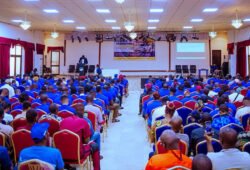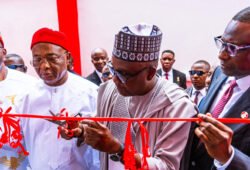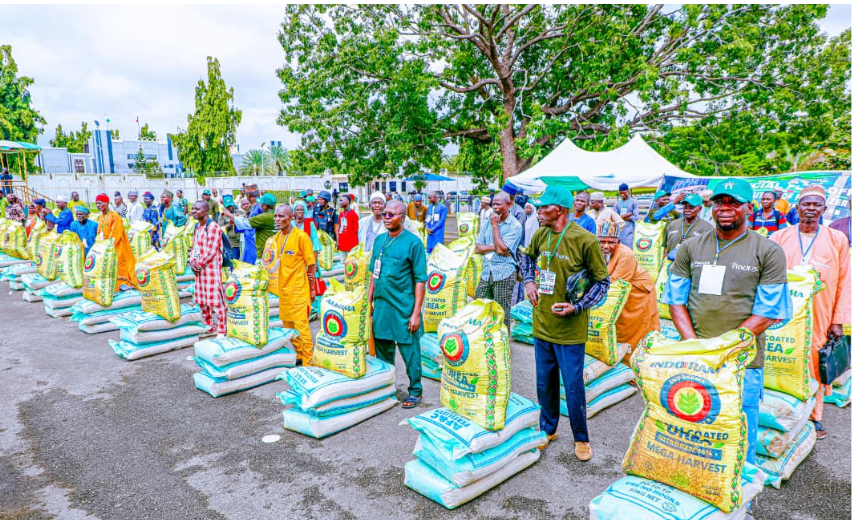
Just in time for the 2026 wet season, 20,160 registered smallholder farmers across Imo, Enugu, Anambra and Ebonyi states are splitting 80,640 bags of fertiliser under the federal government’s Renewed Hope Farm Input Support Programme, launched in Owerri under the National Agricultural Development Fund.
Minister of Agriculture and Food Security Abubakar Kyari, represented by Senior Special Adviser Ibrahim Tanimu, called the rollout a strategic step toward food self sufficiency, one meant to cut input costs for farmers and lift yields through direct support, backed by a memorandum of understanding among the Imo State Government, the All Farmers Association of Nigeria and the fund meant to keep the distribution transparent and accountable.
National Agricultural Development Fund Executive Secretary Mohammed Ibrahim, represented by General Manager for Technical Services Ernest Ihedigbo, said the programme targets a specific gap, the farm input shortages that hold back productivity and resilience among smallholders, with every one of the 20,160 registered beneficiaries receiving a direct grant. He said the effort also aims to strengthen the domestic fertiliser manufacturing base as part of a broader value chain push, structured around three goals: stabilising food prices through targeted input support, lifting productivity by widening access to essentials, and growing rural economies by deepening value chain links, work he said the fund will continue in partnership with state governments and development partners.
Imo State Governor Hope Uzodimma, represented by Deputy Governor Chinyere Ihuoma Ekomaru, called the rollout a major boost for regional agriculture, urging beneficiaries to use the fertiliser only for cultivation and warning against reselling it, framing the initiative as an investment in food security, jobs and the region’s future. All Farmers Association of Nigeria National President Mohammed Magaji welcomed the timing right alongside planting season, saying reliable input access lowers costs and lifts yields, and praised both the transparent, data driven selection process and the state’s broader investment in agricultural infrastructure, agribusiness and rural roads.