
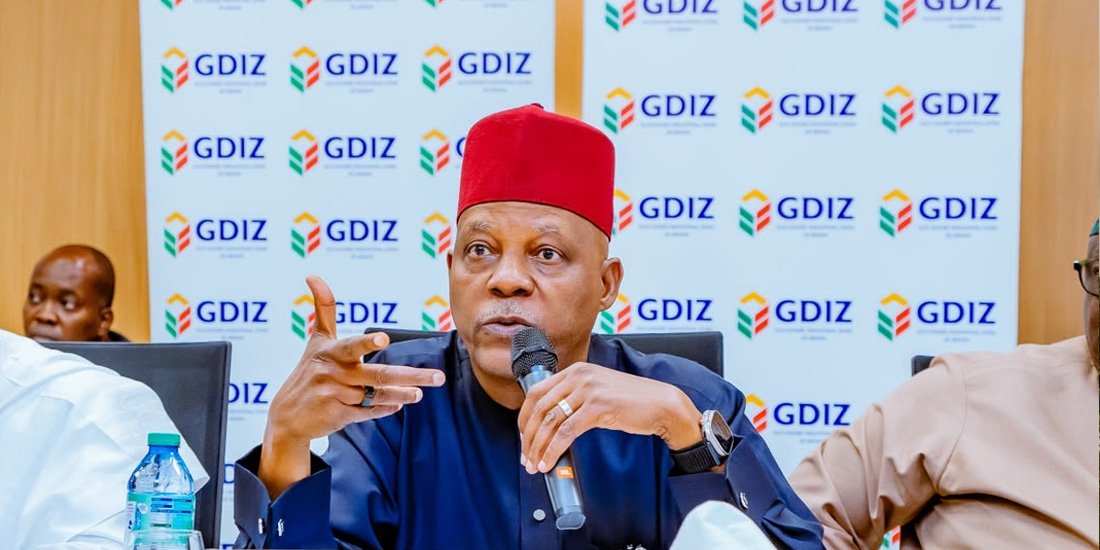
Vice President Kashim Shettima has urged state governments to take advantage of the Electricity Act 2023 to establish functional electricity markets, attract private investment and reduce dependence on the Federal Government for solutions to local power challenges.
Shettima said Nigeria’s ambition to develop a competitive industrial economy would remain constrained unless electricity reforms translated into reliable power supply for businesses, households and public institutions.
He spoke while declaring open the National Stakeholders’ Workshop on the Electricity Act 2023 at the Banquet Hall of the State House, Abuja.
The workshop, themed “Unlocking the Opportunities of the Electricity Act 2023 for Sustainable Energy Development and Economic Growth in Nigeria,” brought together federal and state government institutions, regulators and other stakeholders to discuss the implementation of the legislation.
Represented by the Deputy Chief of Staff to the President, Senator Ibrahim Hassan Hadejia, the vice president said the law provided an opportunity for states to decentralise electricity governance and develop power markets tailored to their economic needs and available resources.
He noted that the legislation empowered states to establish and regulate intrastate electricity markets within the applicable constitutional and statutory framework.
According to him, Nigeria’s size, diversity and energy resources make decentralised electricity management necessary for improving access to power.
“Electricity supply must become a shared responsibility, pursued with innovation and accountability across the federation. Our states must shed the habit of waiting for Abuja to provide every answer,” he said.
Shettima identified solar energy potential in Sokoto, Borno and Katsina, gas resources in Delta, Rivers and Bayelsa, and hydropower opportunities in Niger and Kebbi states as examples of resources that could support state-level electricity development.
He urged state governments to convert these natural advantages into investments capable of powering agriculture, manufacturing, healthcare and education.
The vice president, however, warned that the passage of legislation alone would not guarantee improved electricity supply, urging states yet to establish regulatory institutions to begin the process without delay.
“Legislation cannot implement itself. States yet to act must begin their legislative and institutional preparations promptly,” he said.
He stressed the need for technically competent electricity regulatory bodies capable of overseeing market operations, attracting investment and protecting consumers.
To strengthen implementation, Shettima proposed a National Electricity Reform Peer Review and Implementation Framework involving the Nigerian Electricity Regulatory Commission (NERC), the Federal Ministry of Power, the Nigeria Governors’ Forum and state electricity regulators.
He said the voluntary framework would enable states to share experiences, strengthen regulatory capacity and assess progress in electricity market development, investment readiness, consumer protection and access to power.
“No state needs to purchase with failure the knowledge another state has already acquired,” he said.
According to him, annual reviews could help identify implementation challenges, provide technical assistance and encourage practical solutions without undermining the constitutional powers of individual states.
Shettima also stressed the importance of private sector participation, noting that government funding alone could not meet the country’s extensive electricity infrastructure requirements.
He said investors needed transparent licensing processes, predictable regulation, commercially viable markets, investment safeguards and credible dispute-resolution mechanisms.
The vice president reaffirmed President Bola Tinubu’s commitment to expanding electricity access through policies designed to encourage investment, strengthen institutions and improve service delivery.
He also called for stronger consumer protection against arbitrary billing, poor service and unfair commercial practices, insisting that electricity providers must be held accountable for the quality of services delivered.
“The final verdict on this law will be delivered wherever a Nigerian reaches for a switch,” he said, adding that businesses needed dependable electricity, young Nigerians needed employment and investors required transparent operating conditions.
Earlier, the Permanent Secretary in the Federal Ministry of Power, Mahmuda Mamman, who represented the Minister of Power, said the success of the Electricity Act would depend on the ability of states to establish credible institutions and commercially sustainable electricity markets.
Mamman explained that state-level electricity planning would enable governments to respond more effectively to local demand and infrastructure requirements.
Similarly, the Director-General of the Nigeria Governors’ Forum, Dr Abdulateef Shittu, said the forum was working to improve coordination between federal and state institutions in implementing the law.
Shittu disclosed that efforts were underway to develop a standard tariff framework for states to protect consumers while supporting investment and commercial sustainability.
He urged stakeholders to ensure that any amendments to the existing legal framework strengthened the progress already made in electricity regulation.
Also speaking, NERC’s Deputy General Manager and Head of Compliance, Hauwa Yakubu, said the commission had issued regulatory transfers to 17 states, with Akwa Ibom being the latest.
Yakubu added that NERC was supporting emerging state electricity regulators through technical engagement and peer-to-peer training.
She said the Electricity Act 2023 had ushered in a new era of multilevel electricity regulation, bringing regulatory responsibilities closer to consumers and giving states greater opportunities to address their specific power challenges.