
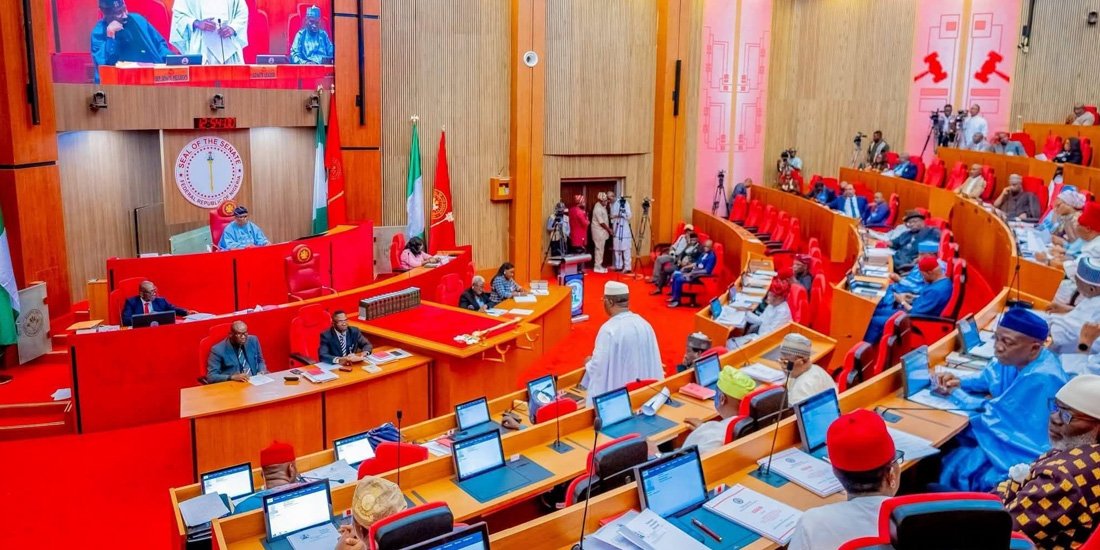
The Senate has passed for third reading a bill that would give the Central Bank of Nigeria power to designate and supervise systemically important fintech companies and other non bank financial institutions, bringing firms whose size and reach could threaten financial stability under closer oversight.
The proposed amendment to the Banks and Other Financial Institutions Act, 2020, is titled a bill to provide for the designation, registration, and enhanced supervision of systemically important institutions. Its sponsor, Senator Mukhail Abiru, who represents Lagos East, presented the committee report during plenary presided over by Senate President Godswill Akpabio.
Under the framework, qualifying non bank institutions would be identified as Systemically Important Institutions and placed under enhanced prudential supervision, with clear criteria and procedures for designation. The bill also provides for stricter corporate governance, cybersecurity safeguards, technology risk management, operational resilience, stress testing, data integrity checks, enhanced reporting, and greater transparency over ownership and control. It includes sanctions for institutions that breach the rules.
The committee said the bill drew broad support at a public hearing held on March 4. The CBN backed stronger supervision of large fintech operators, citing their transaction volumes, customer bases, and interconnectedness. The Federal Competition and Consumer Protection Commission supported oversight but urged a clear line between prudential regulation, competition enforcement, and consumer protection to avoid duplication. The Nigeria Deposit Insurance Corporation, the Nigerian Communications Commission, the Ministry of Finance Incorporated, the Federal Ministry of Industry, Trade and Investment, the Bank of Industry, and the Economic and Financial Crimes Commission also backed the proposal, as did several banks.
The committee said the bill was designed to protect financial stability, encourage responsible digital innovation, improve regulatory coordination, and protect users. The Senate passed it at the committee of the whole after clause by clause consideration, having first passed it for second reading on December 4, 2025.