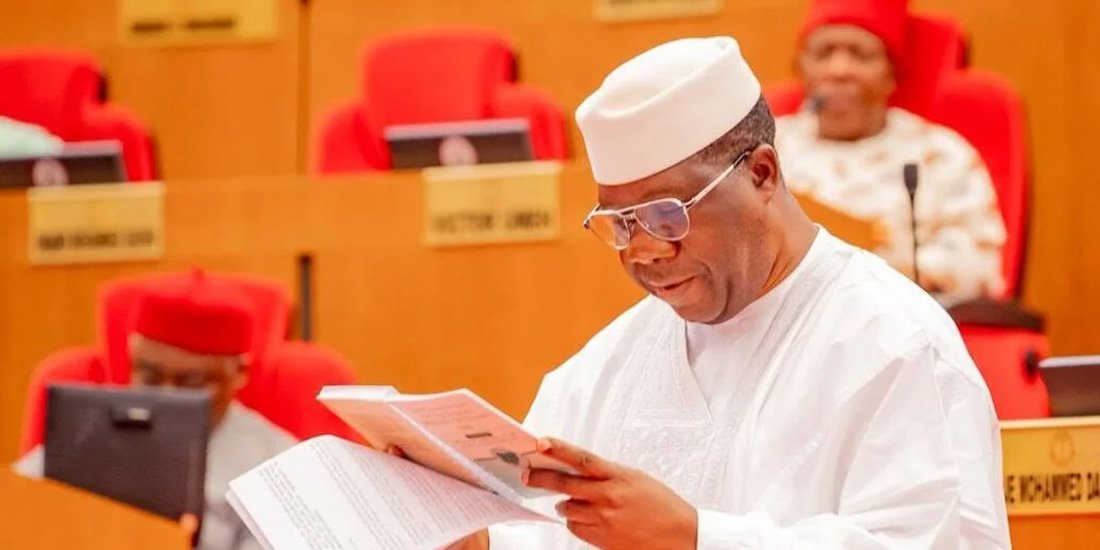
The Leader of the Senate, Senator Opeyemi Bamidele, has defended the proposed State Police Bill, insisting that the legislation contains robust constitutional safeguards to prevent abuse by state governors while strengthening Nigeria’s security architecture.
In a statement issued in Abuja, Bamidele said the bill was designed to address the country’s worsening security challenges, including terrorism, banditry, kidnapping and other violent crimes, through a more decentralised policing system.
He argued that the existing centralised policing structure had become overstretched and lacked the operational capacity to effectively respond to growing security threats across the country.
According to him, the push for state police is driven by national security needs rather than political considerations, adding that the National Assembly embarked on extensive consultations with key stakeholders before proposing the constitutional amendment.
Bamidele noted that Nigeria’s growing population and evolving security challenges make the establishment of state police necessary to improve the protection of lives and property.
“The present police structure often limits the ability of sub-national authorities to respond effectively and promptly to security challenges within their jurisdictions,” he said.
He warned that retaining the current policing arrangement would further compound the country’s security challenges.
The Senate Leader also highlighted the economic and humanitarian impact of insecurity, citing estimates that violent extremism in the North-East alone has resulted in losses of about $100 billion. He added that continued insecurity threatens economic growth through reduced business activities, destruction of investments and declining national productivity.
Beyond the economic losses, Bamidele said insecurity has displaced thousands of families, disrupted education, weakened local economies and increased the number of internally displaced persons across the country.
He observed that despite increased funding for the Nigeria Police Force, recruitment of additional personnel and acquisition of security equipment, the current centralised system has not delivered the level of security Nigerians expect.
Explaining the proposed framework, Bamidele said the bill clearly defines the responsibilities of the federal and state police services to avoid jurisdictional conflicts.
Under the proposal, the federal police would continue to handle counter-terrorism, border security, organised crime, cybercrime, arms trafficking, protection of federal institutions and other national security matters, while state police would enforce state laws, maintain public order and protect lives and property within their respective states.
Addressing concerns that governors could misuse state police for political purposes, Bamidele said the bill establishes an independent State Police Service Commission that would regulate state police operations without interference from governors.
He explained that the commission would independently oversee police administration and formulate operational guidelines, preventing the use of state police for partisan, ethnic, religious or personal interests.
The Senate Leader added that the bill also guarantees financial autonomy for the State Police Service Commission by providing for direct funding, thereby shielding it from undue influence by state governments.
On the appointment of state commissioners of police, Bamidele said governors would only nominate candidates, while appointments would require recommendations from the National Police Council and approval by a two-thirds majority of the State House of Assembly.
He noted that the removal or suspension of a state commissioner of police would also require due process, including recommendations from the National Police Council and approval by two-thirds of the state legislature.
According to him, governors would only be permitted to issue lawful written directives on matters relating to public safety and policy but would be prohibited from directing police officers to arrest, detain, investigate or deploy against specific individuals, political parties or groups outside the provisions of the law.
Bamidele further disclosed that the National Assembly would establish minimum national standards for recruitment, training, discipline, promotions, use of force, accountability and operational procedures, while states could adopt higher standards without falling below the national benchmark.
He added that federal intervention in state policing would only occur under clearly defined constitutional conditions, including a formal request by the affected state government and written approval by the President in cases involving a breakdown of public order, collapse of state policing capacity, serious human rights violations, electoral violence or threats to national security.
The Senate Leader said the proposed State Police Bill was the outcome of years of constitutional review and extensive consultations involving the Executive, the Nigeria Governors’ Forum, the Conference of Speakers of State Legislatures and the leadership of the Nigeria Police Force.
He added that public hearings held across the six geopolitical zones in July 2025 recorded overwhelming support for the establishment of state police.