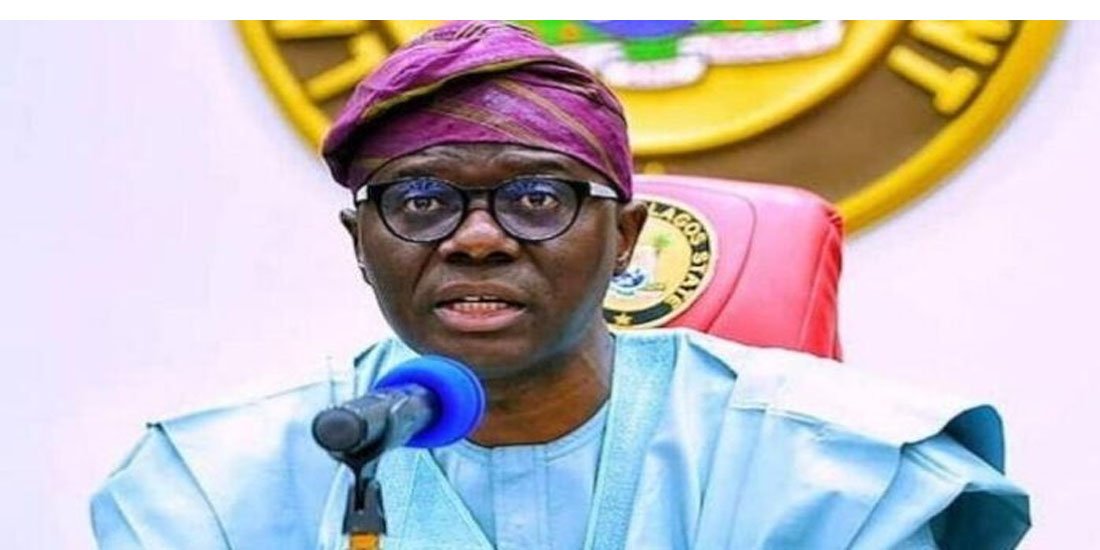
Lagos State Governor Babajide Sanwo-Olu has urged political leaders to move beyond four-year electoral calculations and embrace long-term development planning capable of surviving changes in administration.
Sanwo-Olu said governments should be prepared to undertake projects whose full benefits may emerge after the officials who initiated them have left office.
He spoke at the centenary anniversary lecture of the Yoruba Tennis Club in Lagos under the theme, “Democracy, Governance and the Lagos Spirit: A Century of Excellence.”
The governor identified vision, self-reliance, partnership and citizen-focused governance as the four habits underpinning what he described as the Lagos development model.
Sanwo-Olu said successive administrations in Lagos had largely retained the long-term development blueprint introduced after the return to civilian rule in 1999 rather than discarding it whenever a new government came into office.
He cited the Blue and Red rail lines as examples of projects that required continuity across multiple administrations before becoming operational.
According to him, long-term infrastructure and institutional development were impossible where every administration abandoned the work of its predecessor.
The governor also pointed to Lagos’ internally generated revenue system as an example of self-reliance.
He said the state strengthened tax administration and modernized its fiscal architecture during periods when federal transfers were withheld.
Sanwo-Olu said Lagos now generated more internally collected revenue than any other state and argued that the state’s ability to finance development depended heavily on residents’ willingness to contribute through taxes.
He also stressed the importance of partnerships involving the private sector, professional bodies, civic associations and community institutions.
The governor described the Yoruba Tennis Club as part of Lagos’ civic infrastructure, saying longstanding social organizations had historically provided platforms for mentorship, networking, dispute resolution and civic participation.
He urged the club to preserve its archives and institutional culture while opening more opportunities for younger members.
Sanwo-Olu also challenged young Lagosians to identify gaps in the city and build solutions rather than remain passive observers. He said the responsibility of leadership was not merely to win elections but to leave behind institutions and infrastructure capable of serving future generations