The Presidency and the Niger Delta Development Commission have finalised plans to raise a $500 million agribusiness investment fund aimed at driving large scale commercial agriculture across the Niger Delta, positioning the oil rich region as Nigeria’s next major agricultural investment destination.
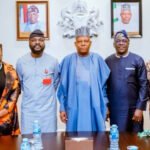
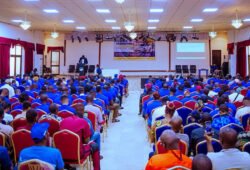
The initiative, being organised jointly by the Office of the Vice President and NDDC, will be formally unveiled at the inaugural Niger Delta Agriculture Development and Investment Summit on July 15 at the State House Conference Centre in Abuja. Briefing reporters after updating Vice President Kashim Shettima, Deputy Chief of Staff to the President Ibrahim Hadejia said the summit, themed Unlocking Investment for Sustainable Agricultural Transformation in the Niger Delta, carries President Bola Tinubu’s full endorsement and is designed to draw about 500 participants, including international investors, development finance institutions, agribusiness firms, donor agencies and policymakers from across the region, reflecting Tinubu’s determination to diversify Nigeria’s economy by unlocking the Niger Delta’s largely untapped agricultural potential. He described the summit as a strategic shift from potential to performance, from conversation to capital and from fragmentation to coordination, arguing the region possesses enormous agricultural assets and comparative advantage in several food and cash crops capable of strengthening national food security and export earnings, despite its historical association with hydrocarbons alone.
NDDC Managing Director Samuel Ogbuku said the commission is targeting the $500 million fund as a catalyst for commercial agriculture across the nine Niger Delta states, describing the July 15 event as an investment marketplace rather than another policy conference, one where investors, financiers, agribusiness operators and development institutions will negotiate concrete financing deals instead of simply discussing proposals. He said Abuja was deliberately chosen as the venue because it offers easier access to diplomatic missions, international financial institutions and donor organisations already based there, effectively bringing the Niger Delta to where the capital already sits and cutting logistics costs for participants, with the Office of the Vice President’s involvement providing strategic coordination since Shettima already supervises several federal food security and economic development programmes.
Ogbuku said the commission is shifting from traditional intervention programmes toward sustainable financing models capable of drawing substantial private investment while delivering long term economic benefit, with the proposed fund to be professionally managed according to international best practice, combining equity investment with direct capital mobilisation rather than relying solely on conventional government lending. He pointed to the Niger Delta Chamber of Commerce, which NDDC established and has already provided N5 billion to support small and medium enterprises through a transparent, repayable funding structure, and said the commission is promoting out grower schemes linking farmers to guaranteed buyers while partnering private investors on modern storage facilities to cut post harvest losses and raise farmer incomes. Agricultural development only works when every link in the value chain functions together, Ogbuku said, recalling that a commission supported rice mill in Rivers State fell short of its potential output simply because of inadequate paddy supply, a reminder that processing facilities cannot be built without first guaranteeing the raw materials to run them.