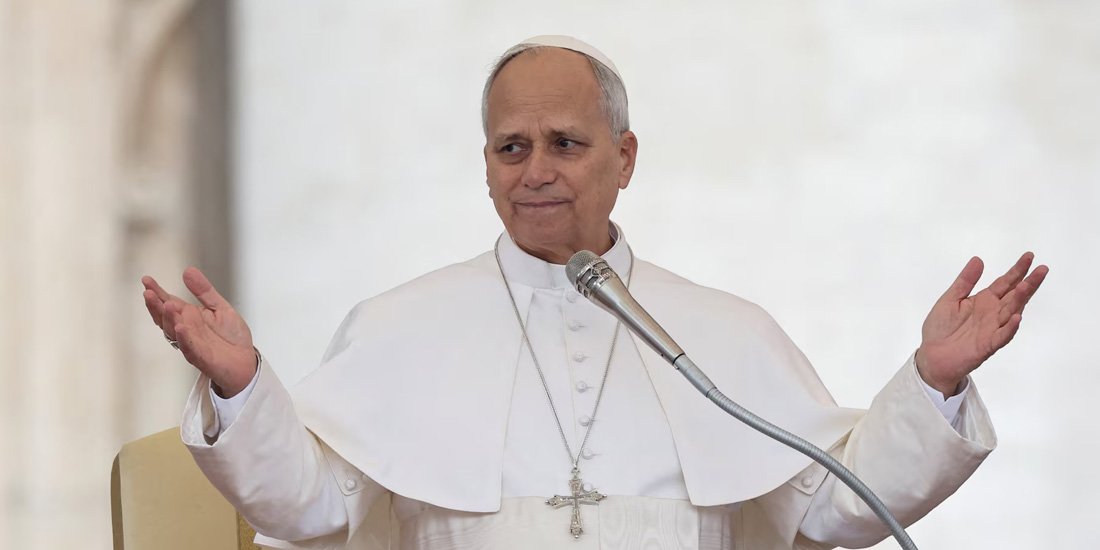
Pope Leo XIV has issued a historic apology for the Vatican’s past role in legitimising slavery, describing the Church’s delayed condemnation of the practice as “a wound in Christian memory.”
The apology was contained in a major document titled Magnifica Humanitas (“Magnificent Humanity”), released on Monday, in which the Pope also warned about the emergence of “new forms of slavery” linked to the digital economy and modern systems of exploitation.
In the document, Leo acknowledged that Church institutions owned slaves until the Middle Ages and admitted that the Vatican had, at different periods, sanctioned forms of subjugation.
“In the early modern period, the Apostolic See of Rome, responding to requests from sovereigns, intervened several times in order to regulate and legitimize forms of subjugation, and, in certain cases, the enslavement of ‘infidels’,” the Pope wrote.
He noted that it was not until the 19th century that the Catholic Church clearly adopted a “formal, absolute and universal condemnation of slavery.”
“For this, in the name of the Church, I sincerely ask for pardon,” Leo stated.
The apology marks one of the strongest acknowledgements by a pope of the Vatican’s direct involvement in the historical justification of slavery.
Previous popes have apologised for the actions of Christians involved in the transatlantic slave trade and other injustices. Pope John Paul II condemned slavery in 1992 and later issued a broad request for forgiveness in 2000 for historical wrongs committed by members of the Church.
Similarly, Pope Francis frequently denounced modern forms of slavery, including human trafficking and labour exploitation.
However, Leo’s statement went further by directly acknowledging the Vatican’s role in legitimising slavery during earlier centuries.
“It is true that past events cannot be judged anachronistically, as though the moral criteria that matured over time had always been available,” the Pope wrote.
“Yet neither can we deny or diminish the delay with which both society and the Church came to denounce the scourge of slavery. This constitutes a wound in Christian memory, one from which we cannot consider ourselves detached.”
The document is expected to spark renewed debate about the Catholic Church’s historical relationship with slavery and colonialism, while also drawing attention to contemporary forms of exploitation that continue to affect millions worldwide.