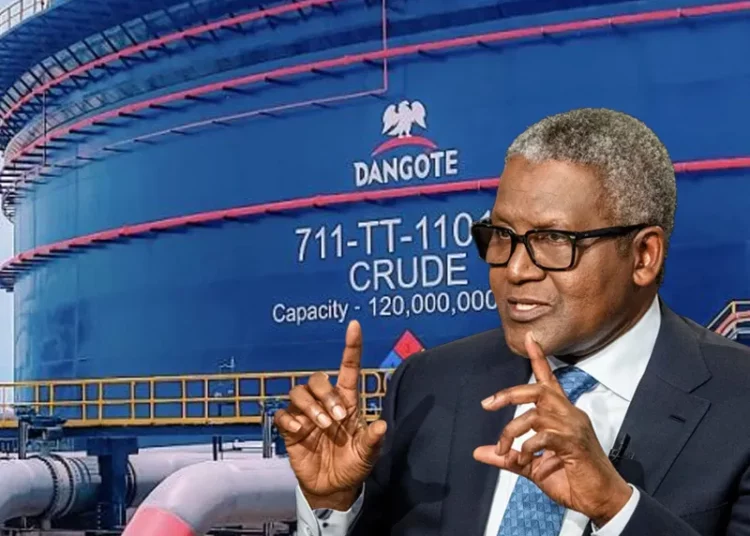
The Organization of Petroleum Exporting Countries has projected that Nigeria and other African nations will require approximately $92 billion in refining investments through 2050 to meet rising fuel demand and reduce the continent’s structural dependence on petroleum product imports, identifying Nigeria and Angola as the principal drivers of the next wave of African refining expansion and singling out the Dangote Petroleum Refinery as Africa’s most important greenfield refining project in decades.
In its 2026 World Oil Outlook, OPEC said the Dangote facility, which reached its full design capacity of 650,000 barrels per day in February 2026 in what the organization described as the first refinery globally to achieve full nameplate capacity in a single-train configuration of that scale, had increased Africa’s overall distillation capacity by 8.2 percent compared to January 2025 and had boosted the continent’s secondary processing capability by 13.5 percent.
OPEC said medium-term refining capacity additions in Africa were expected at around 800,000 barrels per day, driven mostly by modular and small-scale projects alongside larger greenfield investments. Nigeria’s future expansion was expected to include the BUA Group’s proposed 200,000 barrels per day Akwa Ibom refinery, which OPEC listed among key African projects sufficiently advanced in planning, financing, and engineering to be included in its medium-term forecast.
The organization cautioned that even with the projected investments, Africa’s overall refining capacity would remain substantially below the continent’s growing fuel requirements, and that delays in planned projects could tighten markets and force higher product imports. It said realizing Africa’s long-term ambition of capturing more value from its hydrocarbon resources would require coordinated policy action, expanded capital markets, improved public-private partnerships, and large-scale development of modular refineries across multiple markets.