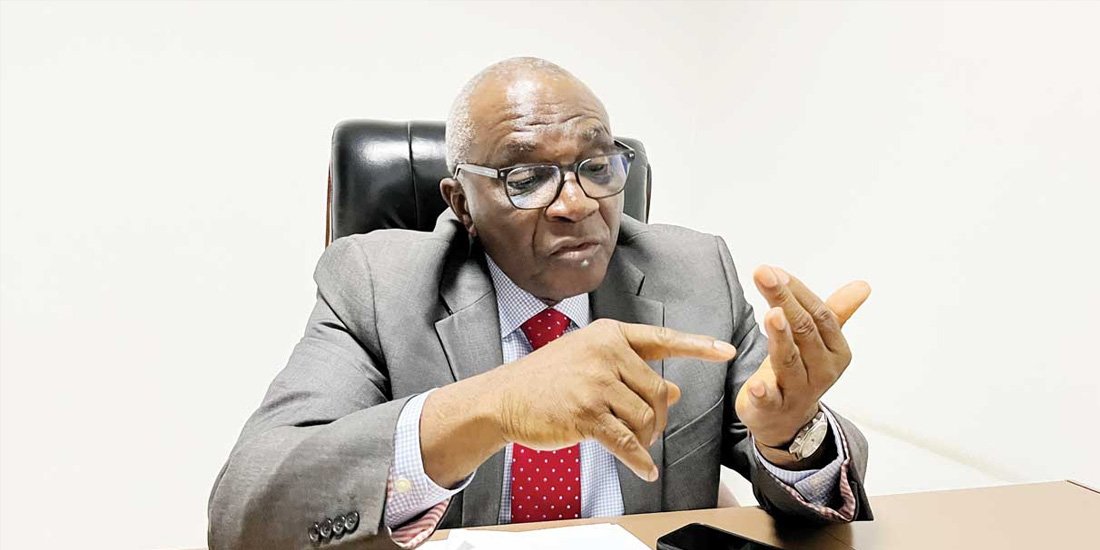
Special Adviser to the President on Information and Strategy, Bayo Onanuga, has criticised former Vice-President Atiku Abubakar’s proposal to restore petrol subsidy, describing it as a reversal of a major petroleum-sector reform.
Onanuga, in a statement titled “Restoring Petrol Subsidies: Atiku’s Volte-Face and Desperation for Power,” argued that reinstating the subsidy would be fiscally unsustainable and incompatible with the changes that have taken place in Nigeria’s petroleum industry since 2023.
He acknowledged Atiku’s constitutional right to propose alternative economic policies and seek the support of Nigerians but said any proposal to restore subsidy should be subjected to rigorous scrutiny, particularly regarding its cost, funding and legal implications.
According to Onanuga, the petrol subsidy regime that existed before May 2023 was dismantled under the Petroleum Industry Act (PIA), which provided for the removal of the subsidy by the end of June 2023.
He argued that President Bola Ahmed Tinubu merely accelerated the implementation of the reform by a few weeks after assuming office.
Onanuga said restoring the former arrangement would require a new legal, fiscal and administrative framework, including identifying a sustainable source of funding.
He also challenged the notion that subsidy represented funds simply set aside by government to make petrol cheaper, describing it instead as the difference between the regulated pump price and the actual cost of supplying the product.
The presidential aide said the subsidy regime had imposed significant financial burdens on government and, at various times, contributed to increased borrowing and other public-sector financing arrangements.
He argued that Nigeria’s petroleum industry had also changed considerably since the removal of the subsidy, particularly with the emergence of domestic refining capacity.
According to him, the Dangote Refinery has become a major source of locally refined petrol, while increased domestic refining capacity presents opportunities for energy security, foreign-exchange conservation, industrial development and job creation.
Onanuga argued that a return to a heavily subsidised petrol market could undermine investments in local refining and reverse some of the gains recorded in the downstream petroleum sector.
He also claimed that funds previously used to subsidise petrol had become available to the three tiers of government for infrastructure and other public expenditure.
He cited the July distribution from the Federation Account, which he said amounted to about ₦3 trillion, describing it as evidence of improved government revenues following the removal of the petrol price subsidy and reforms to the foreign exchange regime.
The presidential aide said Nigerians should therefore demand clear answers from any political candidate proposing a return to subsidy.
“If the subsidy is restored, who pays for it? What will the new pump price be? N200 or N500?” he asked, arguing that if petrol were sold below its economic cost, the government would have to finance the difference.
Onanuga said such financing could ultimately come at the expense of infrastructure, social services and allocations to state and local governments, or result in increased borrowing and public debt.
He acknowledged that the removal of petrol subsidy had increased pressure on households and businesses through higher energy and transportation costs.
However, he said the government was pursuing alternative measures to reduce the burden, including promoting the use of compressed natural gas (CNG), which he claimed could be significantly cheaper than petrol for transportation.
He urged transport operators and businesses to pass the benefits of lower energy costs to consumers.
Onanuga maintained that sustainable economic relief should not involve recreating what he described as an opaque and financially burdensome subsidy regime.
He said the focus should instead be on using Nigeria’s growing domestic refining capacity, improved regulation and increased competition to achieve more stable and affordable energy prices.
The presidential aide challenged Atiku and other political actors proposing a return to subsidy to provide detailed answers on the projected annual cost, funding sources, possible borrowing requirements and whether amendments to existing petroleum-sector laws would be necessary.
He also questioned how subsidy payments would be verified and protected from the abuses that characterised the previous system.
“Political promises must be backed by fiscal arithmetic,” Onanuga said, insisting that Nigeria should not return to policies whose costs could eventually emerge as increased debt, reduced public spending and further pressure on the naira.
He called for a robust national debate on the cost of living and the direction of Nigeria’s economic policy but insisted that such discussions must reflect the realities of the country’s current petroleum industry rather than the conditions of the past.
Onanuga urged all political actors, including Atiku Abubakar, to present Nigerians with the full fiscal and legal implications of any proposal to restore petrol subsidy.