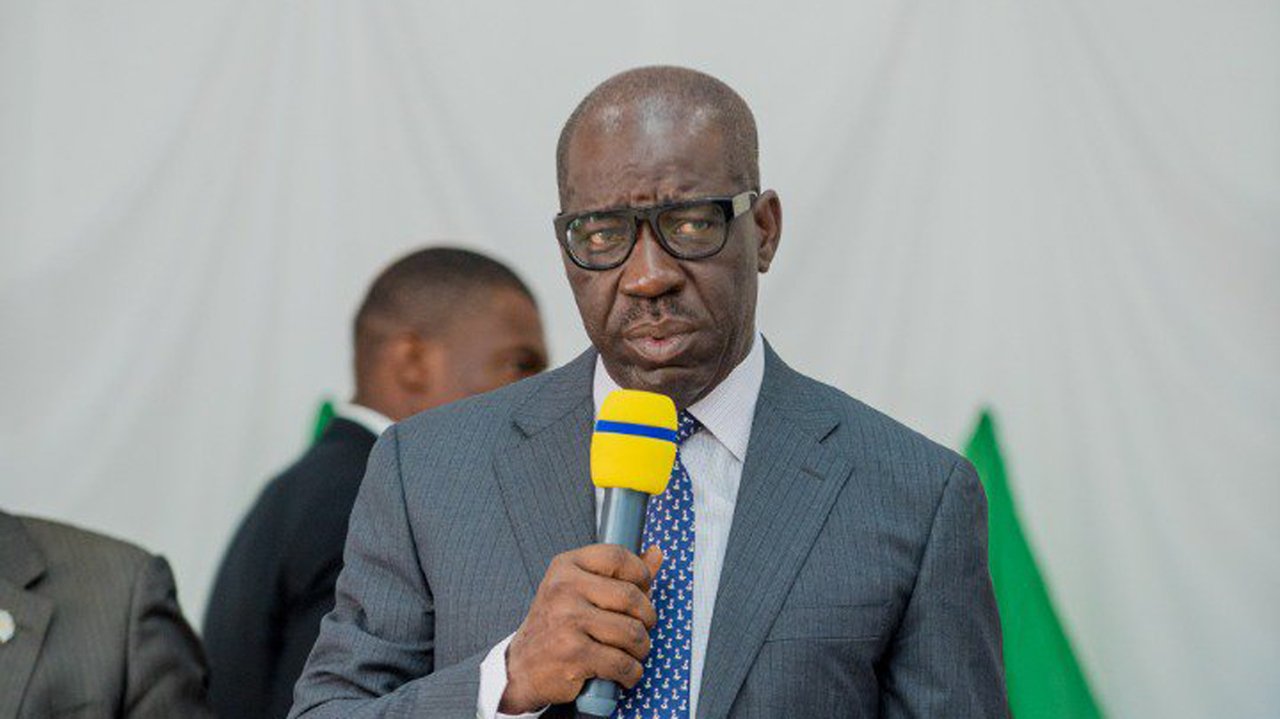
Former Edo State Governor Godwin Obaseki has warned that Africa’s projected population of 2.82 billion by 2060 could trigger a severe socioeconomic crisis unless governments urgently overhaul their education, skills development, and employment systems, telling an international forum in London that the continent’s current institutions were structurally unprepared for the scale of the challenge ahead.
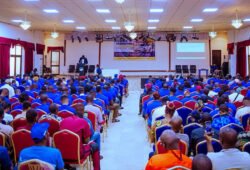
Obaseki, now a visiting researcher at Boston University’s School of African Studies, delivered the warning as the keynote speaker at the third ICESCO Dialogue in London, where ministers, policymakers, education experts, and development partners gathered to examine how countries could achieve practical gains in foundational education beyond policy declarations.
He said Africa was entering a decisive period in which nearly two billion additional people would need education, employment, and integration into productive economies over the next three decades. More than 89 percent of children in Sub-Saharan Africa were already in what he described as learning poverty, while an estimated 15 million Nigerian children remained entirely outside the school system. Without urgent investment in foundational learning, he warned, the continent risked producing a workforce that was large but chronically under skilled.
At the center of the discussion was the Edo Basic Education Sector Transformation program, which Obaseki initiated during his governorship to rebuild the state’s crumbling basic education system using technology and structured pedagogy. The program has since attracted global recognition including from the World Bank, and ICESCO member states at the London dialogue explored it as a replicable model for tackling learning poverty across the organization’s 1.7 billion population.
In his address, Obaseki described how EdoBEST evolved from a political commitment into a functioning classroom reality, raising teacher attendance to 82 percent and expanding structured learning to more than 400,000 pupils across Edo State. He said the program had come at a deliberate opportunity cost: every naira invested in it could have gone into roads, hospitals, or public ceremonies. He said choosing long-horizon investment over short-horizon spectacle was a decision that had to be actively defended through every budget cycle.
He argued that successful education reforms required governments to build strong institutions, establish credible financing mechanisms, and create public expectations robust enough to prevent future administrations from reversing progress. He also stressed that reforms must outlive the governments that launched them.
The summit additionally examined the role of artificial intelligence in education transformation, with presentations covering how AI tools were already being used by governments in lesson design, learning analytics, system monitoring, and accountability frameworks.