The Nigerian national electricity grid has been built out to a capacity that significantly exceeds the country’s current power generation output, but that technical achievement is being systematically undermined by infrastructure vandalism, outdated tariff policy, funding shortfalls, and the absence of the political will needed to address problems that engineers and policymakers have understood and documented for years.
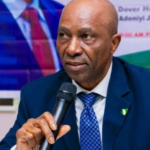
Transmission Company of Nigeria Managing Director and Chief Executive Sule Abdulaziz delivered that sobering assessment to a parliamentary stakeholders’ summit in Lagos convened by the House of Representatives committee probing power sector reforms and expenditure covering the period from 2007 to 2024, saying the national debate about electricity supply had for too long misidentified transmission as the sector’s primary bottleneck when the evidence pointed clearly elsewhere.
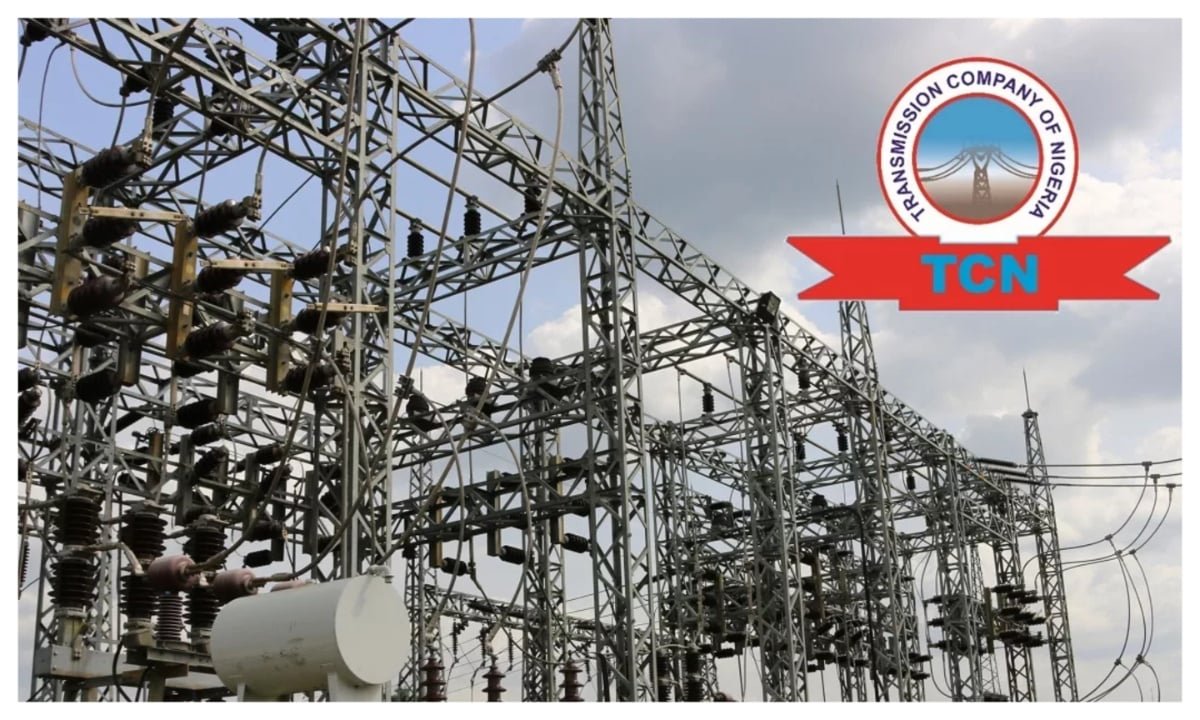
He presented data showing that TCN’s wheeling capacity had been expanded to 8,700 megawatts through sustained federal government and development partner investments, while the highest power ever actually generated and delivered to the national grid stood at 5,801 megawatts, a record set on March 4, 2025. Against Nigeria’s installed generation capacity of 13,625 megawatts, the gap between potential and actual output was stark, and the transmission network could not be held responsible for a shortfall it was technically prepared to handle.
The expansion of transmission capacity involved commissioning 82 new transformers between January 2024 and November 2025, adding approximately 8,500 MVA of transformation capacity to the national infrastructure, and drawing on $1.4 billion in international development financing mobilized from the World Bank, the African Development Bank, the Japan International Cooperation Agency, and the French Development Agency. Each of those financing relationships, Abdulaziz noted, reflected the confidence of international partners in Nigeria’s transmission reform program and created obligations that the sector had a responsibility to honor through effective implementation.
The company was also advancing a nationwide Supervisory Control and Data Acquisition system deployment that would enable real-time monitoring and control of grid operations, accelerate the detection and resolution of faults, and lay the technical foundation for smart-grid operations capable of managing an increasingly complex and distributed energy landscape.
Despite those gains, Abdulaziz was direct about the obstacles that continued to erode progress. Vandalism and deliberate sabotage of transmission infrastructure remained the sector’s most damaging and costly recurring threat, he said, driving up operational expenses, triggering avoidable outages, and destroying the confidence of the investors the sector needed to attract. He called for legislation with meaningful deterrent force, stronger security deployments around critical assets, and deeper community engagement around transmission corridors as interlocking responses to a problem that enforcement alone had not solved.
He also addressed what he described as the structural unsustainability of the current tariff environment, arguing that electricity prices that bore no relationship to the actual cost of generation, transmission, and distribution were not a form of consumer protection but a guarantee of chronic underinvestment that ultimately served nobody. Long-term sector viability, he said, required honest tariff policy, disciplined revenue collection, and a regulatory environment that gave investors the predictability they needed to commit capital at the scale the sector demanded.
Abdulaziz told lawmakers that the solutions were neither unknown nor technically complex but required a level of coordinated political commitment that had so far been inconsistently applied. With the right legislative backing and policy environment, he said the transmission network was ready to serve as the backbone of a modern, reliable electricity system capable of supporting the economic ambitions the country had articulated across multiple national development frameworks.