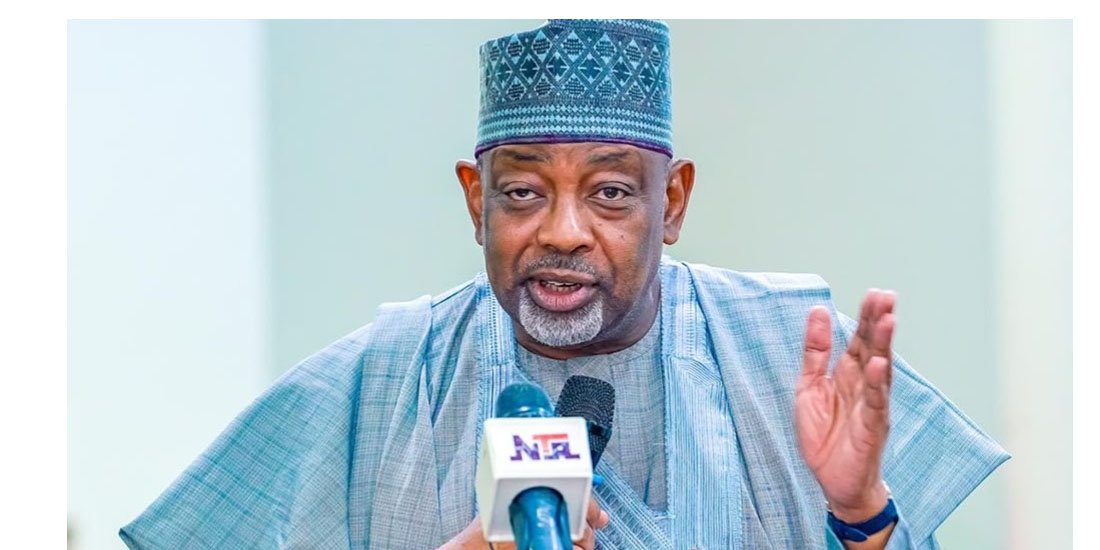
Minister of Agriculture and Food Security Abubakar Kyari has unveiled Nigeria’s ten year Agrifood System Strategy and Action Plan, describing it as a shift away from fragmented agricultural interventions toward an integrated approach capable of guaranteeing food sovereignty and reducing poverty.
Speaking at the Agrifood System Working Group meeting in Abuja, Kyari said the strategy, developed under the continental Kampala Declaration covering 2026 to 2035, addresses the entire agrifood chain from production and processing to markets, nutrition and governance, and reflects President Bola Tinubu’s directive to treat food security as a matter of national security. He said the plan, shaped through consultations across Nigeria’s six geopolitical zones, will be presented to the Federal Executive Council for approval to ensure government agencies align their budgets with the country’s agricultural transformation goals.
He noted that Nigeria’s agrifood system supports more than 70 percent of the population and that the Kampala Declaration commits African countries to tripling intra African agricultural trade, halving post harvest losses, mobilizing 100 billion dollars in investment and narrowing the gender productivity gap by 2035.
ActionAid Nigeria’s Azubike Nwokoye warned that weak agricultural investment at federal and state levels could undermine the strategy’s implementation, citing an analysis showing 16 states recorded very low performance in agricultural capital spending in 2025, with the combined national agricultural budget allocation for 2026 standing at just 4.58 percent, far below the 10 percent benchmark under continental commitments. He said full implementation of state agricultural budgets could generate about 1.4 million jobs, with federal spending potentially adding another 2.1 million.
Minister of Budget and Economic Planning Atiku Bagudu said Nigeria’s food security depends on strengthening its more than 42 million agricultural households, citing recent reforms including the creation of the Ministry of Livestock Development and the National Agricultural Development Fund. Minister of Women Affairs Imaan Sulaiman Ibrahim said closing the gender productivity gap in agriculture is a formal obligation under the declaration rather than a symbolic goal, noting that millions of women farmers remain under resourced due to limited access to land, credit and mechanization. Minister of Livestock Development Idi Mukhtar Maiha called for stronger investment in livestock as a strategic economic sector in its own right.
Federal Ministry of Agriculture Permanent Secretary Marcus Ogunbiyi described food sovereignty as the ultimate goal of the strategy, defined as Nigerians eating what they grow and building a food system that guarantees every citizen access to safe and affordable food. IFAD Country Director Dede Ekoue said the initiative positions Nigeria at the forefront of Africa’s agricultural transformation agenda, noting that the strategy was developed in collaboration with the African Development Bank, the Food and Agriculture Organization and the World Bank, among other partners.