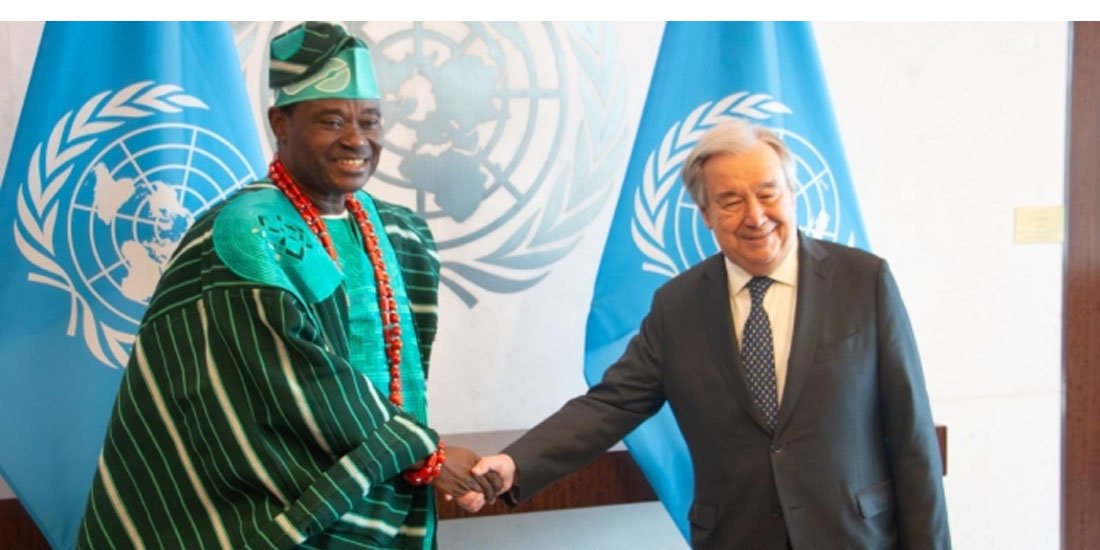
Nigeria has assumed the chairmanship of the United Nations General Assembly’s Fifth Committee, with Permanent Representative Jimoh Ibrahim promising a stronger focus on transparency, accountability and administrative reform.
The Fifth Committee oversees the financial and administrative affairs of the United Nations and plays a central role in decisions concerning budgets, staffing, oversight and institutional efficiency.
Ibrahim said Nigeria would use the chairmanship to push for a more results-oriented approach to the use of UN resources.
He argued that budgetary decisions should be justified by measurable outcomes for the organization’s 193 member states rather than by administrative tradition.
The envoy said the United Nations needed to examine whether too much spending was being absorbed by top-heavy structures within the Secretariat.
He said institutional efficiency and job creation would be among the areas receiving attention.
Ibrahim also identified the United Nations Joint Staff Pension Fund, with assets he estimated at about $110 billion, as an important governance issue.
He said the fund should be managed with strong transparency, sustainability and accountability.
The Fifth Committee does not directly manage the pension fund, but its broader budgetary and oversight role gives it significant influence over administrative and financial governance.
Ibrahim said Nigeria’s leadership of the committee reflected the country’s relevance within the financial architecture of the multilateral system.
He pledged to use consultation and consensus-building to ensure that smaller and larger member states felt included in the committee’s decisions.
The chairmanship comes at a time when the UN faces significant financial pressures, expanding humanitarian demands and wider debate over institutional reform.
Nigeria said its priority would be to ensure that limited resources were directed toward areas with the greatest impact rather than being disproportionately absorbed by bureaucracy.
Nigeria Takes Chair of UN Budget Committee as Jimoh Ibrahim Pledges Transparency Reforms
Nigeria has assumed the chairmanship of the United Nations General Assembly’s Fifth Committee, with Permanent Representative Jimoh Ibrahim promising a stronger focus on transparency, accountability and administrative reform.
The Fifth Committee oversees the financial and administrative affairs of the United Nations and plays a central role in decisions concerning budgets, staffing, oversight and institutional efficiency.
Ibrahim said Nigeria would use the chairmanship to push for a more results-oriented approach to the use of UN resources.
He argued that budgetary decisions should be justified by measurable outcomes for the organization’s 193 member states rather than by administrative tradition.
The envoy said the United Nations needed to examine whether too much spending was being absorbed by top-heavy structures within the Secretariat.
He said institutional efficiency and job creation would be among the areas receiving attention.
Ibrahim also identified the United Nations Joint Staff Pension Fund, with assets he estimated at about $110 billion, as an important governance issue.
He said the fund should be managed with strong transparency, sustainability and accountability.
The Fifth Committee does not directly manage the pension fund, but its broader budgetary and oversight role gives it significant influence over administrative and financial governance.
Ibrahim said Nigeria’s leadership of the committee reflected the country’s relevance within the financial architecture of the multilateral system.
He pledged to use consultation and consensus-building to ensure that smaller and larger member states felt included in the committee’s decisions.
The chairmanship comes at a time when the UN faces significant financial pressures, expanding humanitarian demands and wider debate over institutional reform.
Nigeria said its priority would be to ensure that limited resources were directed toward areas with the greatest impact rather than being disproportionately absorbed by bureaucracy.