Nigeria has recorded zero piracy incidents within its territorial waters for four consecutive years, the Minister of Marine and Blue Economy announced at a graduation ceremony for 492 newly trained maritime security personnel in Rivers State, citing the achievement as evidence of a fundamental transformation in the country’s maritime security landscape since the launch of the Deep Blue Project in 2021.
The minister made the disclosure at the 2026 Graduation Ceremony of the Advance Combat Training Program at the 5 Battalion Nigerian Army Barracks in Elele, where graduates drawn from the Nigerian Army, Air Force, and Navy completed specialized training that took them to facilities in Syria, Italy, Swaziland, Australia, and Nigeria, exposing them to global best practices in maritime security operations.
The 492 graduates included maritime security unit operatives, armoured vehicle drivers and mechanics, special mission helicopter pilots and technicians, special mission aircraft pilots and technicians, special mission vessel crew, interceptor boat mechanics and drivers, Command Control Communication Computer and Intelligence operators, and unmanned aerial systems operators.
The minister recalled that before the Deep Blue Project was established, the Gulf of Guinea was one of the most dangerous maritime corridors in the world, accounting for more than 45 percent of reported global piracy incidents and over 90 percent of global crew kidnappings at sea during peak years. The region had been widely regarded as the world’s most unsafe maritime domain for shipping and international trade, with serious consequences for economic activity and regional stability.
Since the project’s commissioning, piracy incidents across the Gulf of Guinea have been reduced by more than 70 percent. The minister said these achievements had restored global confidence in Nigeria’s maritime domain, improved insurance premiums for vessels operating in the region, and strengthened Nigeria’s standing as a responsible maritime nation. Ongoing efforts to have Nigeria removed from the list of countries classified as war-risk nations by international shipping and insurance stakeholders had been materially supported by the sustained suppression of piracy.
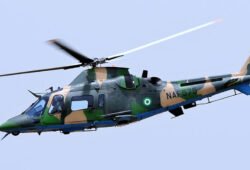
The NIMASA director-general described the technological architecture underpinning the project’s success, noting that it integrated two special mission aircraft equipped with advanced surveillance sensors, two special mission helicopters, two special mission vessels, eight unmanned aerial vehicles for real-time intelligence gathering, 16 fast interceptor boats, and 15 armoured coastal patrol vehicles, all coordinated through a central Command Control Communication Computer and Intelligence hub.