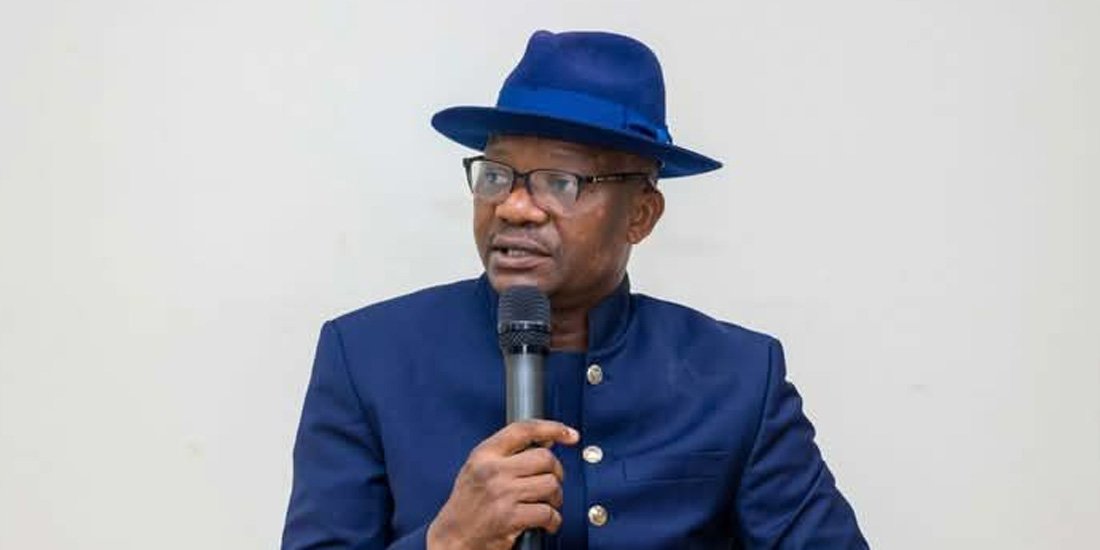
Delta Commissioner defends primary outcome,s attributes landslide to grassroots strength
Delta State Commissioner for Works (Rural Roads) and Public Information, Mr. Charles Aniagwu, has stepped forward to defend the outcome of the All Progressives Congress senatorial primary election in Delta North, describing the result as a clean and undisputed expression of grassroots democracy, one that incumbent Senator Ned Nwoko, by his own political miscalculations, walked straight into. Aniagwu made the remarks during an appearance on the Morning Brief programme on Channels Television, where he addressed growing controversy surrounding the primary and firmly pushed back against allegations of manipulation.
A Landslide That Spoke for Itself
The numbers were hard to argue with. Former Delta State Governor, Dr. Ifeanyi Okowa, swept across all nine local government areas in the district, amassing 113,309 votes to Senator Nwoko’s paltry 2,612. The gulf between the two figures, more than 110,000 votes, was so wide that the commissioner said it alone should settle any debate about the integrity of the process. Aniagwu was emphatic that those who expected party primaries to mirror general elections were fundamentally misreading the nature of internal democracy. In his view, what drives party members at the polls is not public sentiment or media image but something far more personal, the depth of relationships built over years, direct empowerment, and a candidate’s consistent presence among the people who will eventually cast their votes.
Okowa Showed Up; Nwoko Did Not
The commissioner painted a vivid picture of two starkly different campaign strategies. On one side was Okowa, who reportedly threw himself into an intensive district wide consultation, moving from one local government to another, sitting with party leaders, engaging ward executives, and maintaining the kind of steady contact that internal party politics demands. On the other side was Nwoko, who Aniagwu described as conspicuously absent from the very political structures that would determine his fate. According to the commissioner, Nwoko made no meaningful attempt to reach party leaders across the 98 wards that make up Delta North. He neither sought out nor cultivated the support of commissioners, House of Assembly members, local government chairmen, or ward leaders. In a contest where every handshake counts, Aniagwu suggested that Nwoko simply was not doing the work. He also poured cold water on the notion that the crowd visibly surrounding Nwoko during the exercise was a sign of genuine electoral muscle, alleging that a significant portion of those present were students affiliated with the senator’s sports university and not organic political supporters.
“Ned Nwoko Went to the Senate on Scholarship”
The most arresting moment of Aniagwu’s interview came when the conversation turned to history. Casting his mind back to the 2023 elections, the commissioner made a declaration that is already reverberating across Delta State’s political landscape. He alleged that Nwoko did not arrive in the Senate through his own political sweat. Rather, it was Okowa himself who cleared the path for him at the time, directing his loyalists and political network to throw their weight behind the businessman turned politician. In Aniagwu’s blunt formulation, Nwoko went to the Senate on scholarship, meaning he was sponsored into office by the goodwill of a man he has since, in the commissioner’s telling, failed to honour. The irony was not lost on observers. The same Okowa who allegedly gifted Nwoko his Senate seat in 2023 is now the man who has taken it back, and by the most overwhelming of margins.
The “Abuja Strategy” That Backfired
Aniagwu also addressed what he characterised as Nwoko’s fundamental strategic error: placing his faith in powerful political allies in Abuja while neglecting the structures at home. The senator, he alleged, expected that influence from the federal capital would be enough to deliver the ticket without the necessary investment in grassroots relationships. That calculation, the commissioner argued, was always going to fail in a party primary. Unlike general elections where voter sentiment can be swayed by broader national dynamics, internal party contests are fought and won at the ward level, among people who know their candidates personally and expect to be known in return. In some wards, Aniagwu noted, the enthusiasm for Okowa was so overwhelming that the sheer length of queues behind him was enough to discourage Nwoko’s supporters from even bothering to line up.
A Transparent Process, Aniagwu Insists
The commissioner was equally forceful in defending the conduct of the exercise itself. He maintained that the primary was run strictly in accordance with the APC’s Option A4 voting system, under which party members physically queue behind candidates of their choice in full public view, making any form of silent manipulation practically impossible. He rejected outright the claim that results were doctored or that figures were computed away from the venue. Every step of the process, he insisted, played out in the open, and the outcome faithfully reflected where the membership stood.
A Turning Point in Delta Politics
The Delta North result is shaping up to be one of the most consequential political events in the state in recent memory. A sitting senator, with all the resources, visibility, and federal connections that come with the office, has been handed a crushing defeat within his own party by a former governor many assumed had faded from the scene. For Charles Aniagwu, the lesson is clear and universal: in Nigerian party politics, no amount of glamour or external influence substitutes for the slow, unglamorous work of building and maintaining political relationships from the ground up. Okowa understood that. According to the commissioner, Nwoko did not, and the votes told the story. Senator Nwoko’s camp has maintained that the exercise was compromised, but those allegations have yet to be backed with formal evidence. Aniagwu, for his part, has shown no signs of retreating from his position.