The Nigerian Content Development and Monitoring Board has called for stronger collaboration among African countries and businesses to expand local participation in the continent’s oil and gas industry.
NCDMB Executive Secretary Felix Ogbe said African countries could retain more value from energy investments by harmonising local content policies, strengthening supplier capacity and developing cross border partnerships.
The position was presented during an engagement in Namibia focused on African local content opportunities.
Represented by NCDMB official Abdulmalik Halilu, Ogbe said several African countries had already created legal and regulatory frameworks that could serve as building blocks for deeper regional cooperation.
He argued that local content should not be restricted to national boundaries where neighboring countries possessed complementary skills, equipment and industrial capacity.
The board said African companies already had significant capabilities in fabrication, engineering, manufacturing, subsea services, marine operations and project execution.
It called for those capabilities to be connected through practical commercial partnerships.
Ogbe referenced the 2025 African Petroleum Producers Organization Brazzaville Declaration, which encouraged supplier development, skills transfer, joint ventures, public private partnerships and greater policy alignment.
Drawing on Nigeria’s experience, NCDMB said data driven compliance monitoring, supplier development and targeted investment had increased indigenous participation since the Nigerian Oil and Gas Industry Content Development Act came into force.
Ogbe said the next phase should involve more business to business partnerships across borders.
He identified prime contractor and subcontractor arrangements, joint ventures, consortium bids and reciprocal market access as potential structures.
The board also called for better trade facilitation, customs cooperation, immigration reforms and financing to support cross border service delivery.
NCDMB backed proposals for a Pan African supplier database that would make it easier for project developers to identify qualified companies across the continent.
The board said the African Continental Free Trade Area could help indigenous businesses compete for larger projects beyond their home countries.
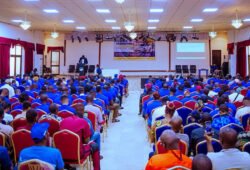
During the Namibian Oil and Gas Conference, NCDMB officials also discussed supplier development, skills transfer and enterprise growth with regional stakeholders.
The board said the success of Pan African local content would ultimately depend on implementation, policy coordination and commercial partnerships rather than declarations alone.