Stakeholders across Nigeria’s maritime, banking, insurance and legal sectors have unveiled a legal and financial framework meant to de risk the disbursement of the roughly $700 million Cabotage Vessel Financing Fund, warning that lessons from the failure of the fund’s first lending window must shape how the next one is implemented.
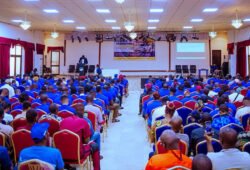
The recommendations emerged from the maiden Maritime Policy Roundtable organised by Olisa Agbakoba Legal in Lagos, where industry leaders examined the legal, financial and operational structures needed to sustain vessel financing and deepen indigenous participation in Nigeria’s maritime sector, with participants agreeing that the fund’s success depends on rigorous credit assessment, robust legal due diligence, effective risk management, enforceable security arrangements and specialised maritime finance expertise protecting both lenders and borrowers. Olisa Agbakoba Legal Managing Partner Yvonne Ezekiel, opening the roundtable, stressed the need for stronger collaboration among banks, maritime operators, lawyers and regulators to tackle longstanding obstacles to vessel financing, while Senior Partner Olisa Agbakoba traced the fund’s history back to the Coastal and Inland Shipping Cabotage Act 2003, which established it to help indigenous shipping operators acquire vessels and expand Nigerian participation in coastal trade, reviewing earlier initiatives like the Nigerian National Shipping Line and stressing the need for a financing model capable of sustaining indigenous shipping businesses long term.
Presenting a legal and credit risk framework, OAL Partner Collins Okeke identified independent credit assessment, corporate and regulatory due diligence, effective security structuring and clearly defined recovery mechanisms as essential safeguards against non performing loans, arguing banks should independently verify applicants’ financial capacity, operational competence, debt profile and projected cash flow rather than relying solely on information the applicants themselves provide, alongside verifying beneficial ownership, regulatory compliance and the source of mandatory equity contributions before approving any facility. To protect lenders further, he proposed enforceable mortgages over financed vessels, assignment of vessel generated income and receivables, comprehensive insurance cover and clearly defined restructuring mechanisms for borrowers in distress. NBC Maritime Managing Director Nicolas Bernard highlighted professional ship management as critical to preserving financed vessels’ value, noting acquisition is only the first stage of the investment cycle and sustainable returns depend on efficient technical management, preventive maintenance, crew administration, regulatory compliance, procurement, financial oversight and digital monitoring, advocating involving professional ship managers from the acquisition stage onward to strengthen technical due diligence, improve compliance, cut operating costs and minimise vessel downtime.
Participants urged authorities to critically review what undermined the CVFF’s Series 1 lending programme before launching Series 2, arguing sustainable ship financing requires active commercial bank participation backed by an enabling regulatory framework, continuous credit monitoring and specialised maritime finance expertise throughout each facility’s life, and underscored the importance of cargo reservation systems, since guaranteed cargo volumes would significantly improve banks’ willingness to finance vessel acquisitions on commercially viable terms. Beyond the fund’s immediate implementation, the roundtable explored broader strategies for building a sustainable maritime financing ecosystem, including cargo backed financing and long term Contracts of Affreightment to create predictable revenue streams and strengthen indigenous operators’ repayment capacity, and resolved to expand the forum’s membership to include ship managers, marine insurers, surveyors, engineers and valuers, nominating Fidelity Bank’s Wale Mesioye as coordinator to work with Olisa Agbakoba Legal building institutional capacity in maritime finance while encouraging participating banks to establish dedicated maritime finance units. Representatives of Fidelity Bank, Zenith Bank, TAJBank, Lotus Bank, the Bank of Industry, SUNU Assurances Nigeria, Capstone Insurance Brokers, NBC Maritime and Seamate Group attended. Closing the event, Agbakoba announced future editions of the roundtable would include shipowners, additional financial institutions and officials of the Federal Ministry of Marine and Blue Economy as stakeholders continue developing practical solutions for sustainable maritime financing.