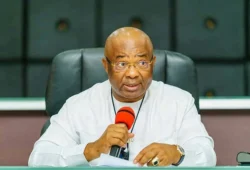
Nigeria Democratic Congress governorship candidate in Rivers State, Chief Dumo Lulu Briggs, has unveiled a long term economic plan that he says could expand the state’s economy from an estimated $20 billion to $200 billion within 15 years.
Speaking during a media interaction in Buguma, Asari Toru Local Government Area, Lulu Briggs said his Reset Rivers State agenda would seek to reduce dependence on oil revenues and federal allocations by building a broader production and investment economy.
He identified reliable power, logistics, serviced industrial land, tourism, agriculture, fisheries, the blue economy, creative industries, skills development and stronger environmental governance as major pillars of the proposal.
Lulu Briggs acknowledged the scale of the target, saying it could require annual economic growth of about 16.7 per cent over the period. He argued that Rivers possessed sufficient human and natural resources to pursue the transformation if it attracted sustained private investment and improved governance.
The candidate also addressed his decision not to continue what he described as a prolonged legal battle over the 2023 governorship election. He said disputes surrounding party nomination, electoral violence and concerns about the safety of residents influenced his decision to avoid further escalation.
He said his current campaign was intended to replace political confrontation with accountable administration. His six point agenda covers politics, public institutions, the economy, opportunity, public trust and environmental protection.
Lulu Briggs promised greater transparency and stronger institutions, saying public projects should be assessed on economic and social value rather than political ownership. He also said access to jobs, finance and economic opportunity should depend less on political connections.
He described the $200 billion target as a long term ambition rather than a promise that could be completed within a single administration, saying the immediate responsibility would be to build the foundation and publish evidence by which voters could judge performance.