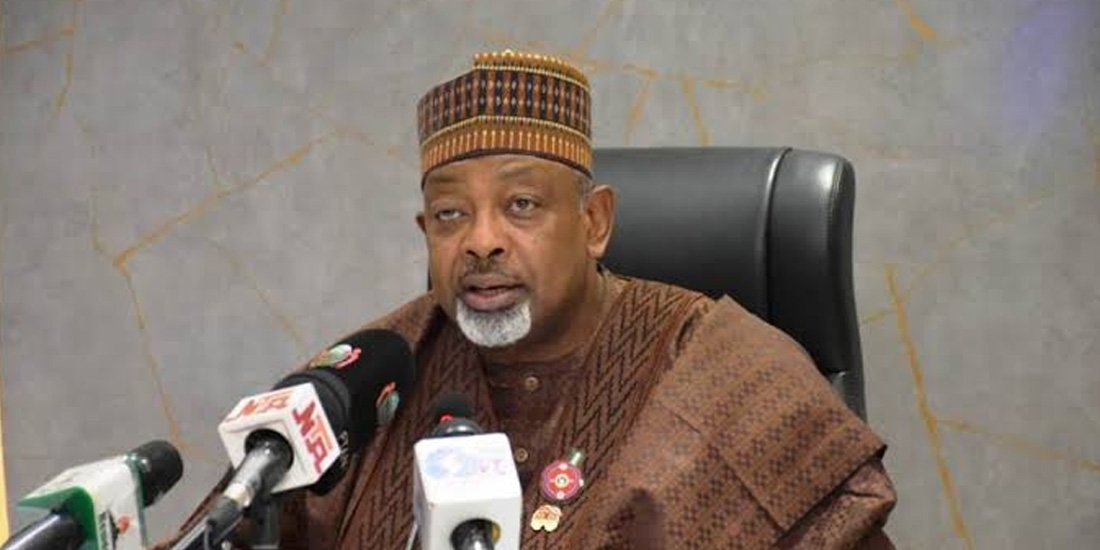
The federal government is seeking a more coordinated agricultural system in which states concentrate investment and production around their comparative advantages instead of attempting to produce every commodity, Minister of Agriculture and Food Security Abubakar Kyari has said.
Kyari said the country could no longer afford fragmented policies, duplicated programmes and uncoordinated spending across federal and state governments. He argued that budgets, infrastructure, private investment and production plans must be aligned if Nigeria is to build a more productive agrifood economy.
Speaking at a Community of Practice meeting on implementation of the Comprehensive Africa Agriculture Development Programme Kampala Declaration in Maiduguri, the minister said different parts of the country should build on their natural resources, infrastructure and market potential.
He said the ten year National Agrifood System Strategy and Action Plan was designed to establish clearer responsibilities, timelines and accountability while bringing federal and state budgets around agreed priorities.
The strategy also incorporates the programme’s biennial review indicators into national planning and reporting, allowing governments to assess the cost and effectiveness of interventions and determine which programmes can be expanded.
Kyari said the approach reflected the wider Kampala framework for 2026 to 2035, which goes beyond primary production to include finance, trade, nutrition, resilience, inclusion and governance.
The minister also disclosed that early procurement under the Presidential Fertilizer Initiative had produced N61.58 billion in savings and helped secure inputs for the 2026 farming season. The government, he said, was working towards a 1.1 million metric tonne fertilizer programme for the year.
Mechanization is another priority. Kyari said the National Agricultural Mechanization Policy and its investment strategy were intended to replace scattered equipment interventions with a more sustainable system. A proposed tractor assembly plant is expected to have capacity for between 2,000 and 4,000 tractors annually.
He identified irrigation, improved seeds, research, extension services, rural infrastructure, finance and post harvest management as essential parts of the agricultural value chain.
Special Agro Industrial Processing Zones are also expected to connect production areas with processors and markets, allowing more value to be retained locally rather than lost through limited processing.
Kyari said government measures had contributed to reductions of about 50 per cent in the prices of some essential food commodities, but stressed that the immediate challenge was to sustain and deepen the gains.
He urged states to develop practical plans covering rural infrastructure, credit, extension, quality inputs, labour saving technology, climate resilience and reduction of post harvest losses. He also called for stronger participation by women and young people and better conditions for private investment and development finance.