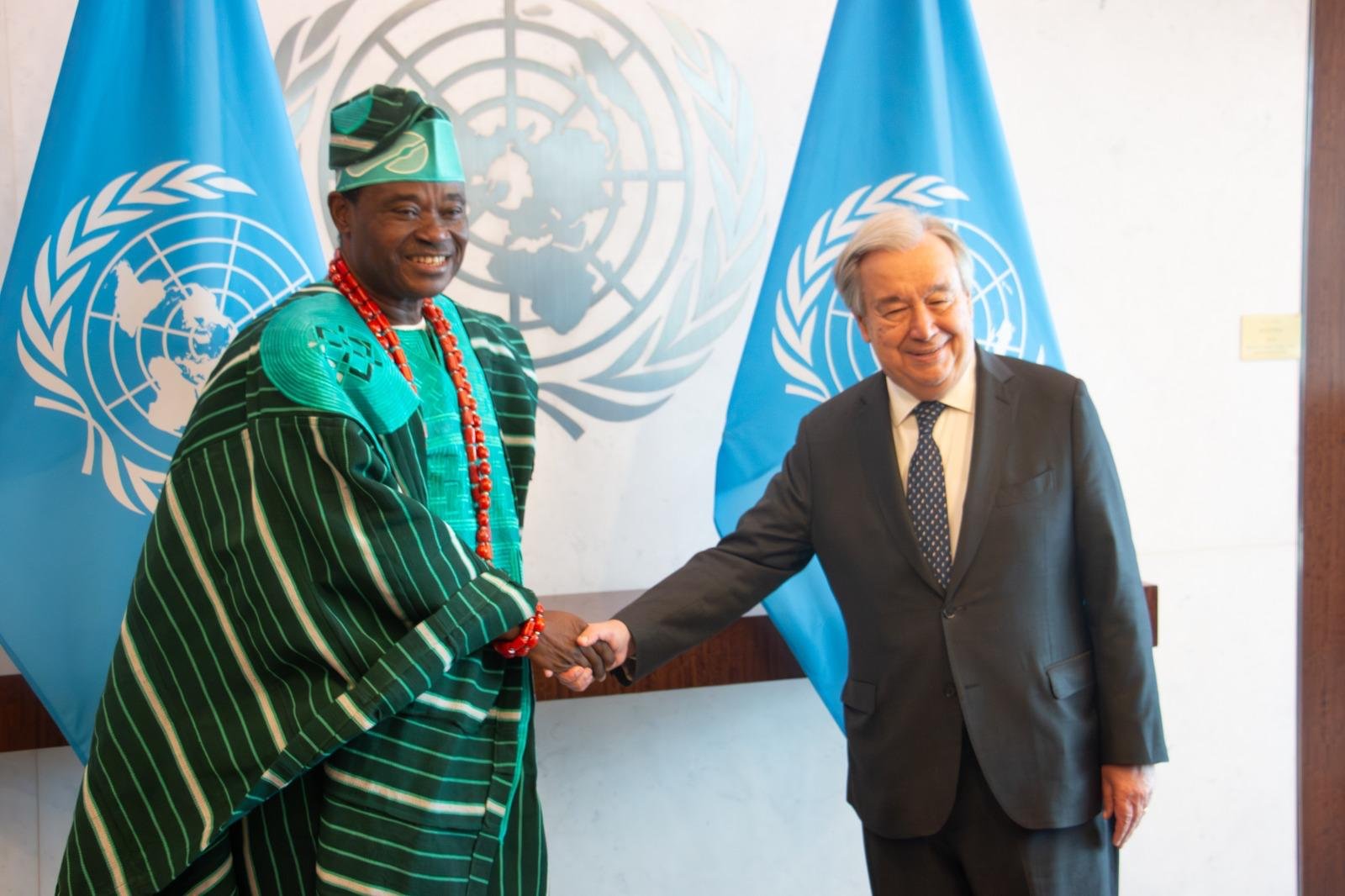
Nigeria’s newly appointed Permanent Representative to the United Nations, Jimoh Ibrahim, has formally assumed office after presenting his letter of credence to UN Secretary-General António Guterres.
The presentation ceremony, held on Monday at the UN headquarters, officially marks the commencement of Ibrahim’s diplomatic assignment as Nigeria’s chief envoy to the multilateral body.
Ibrahim’s accreditation follows the issuance of his letter of credence by Nigeria’s Ministry of Foreign Affairs on April 1, clearing the way for him to resume duties in New York.
In a statement released by Temitope Ajayi, Senior Special Assistant to President Bola Tinubu on Media and Publicity, the envoy conveyed assurances of Nigeria’s commitment to addressing long-standing national challenges. He also pledged to strengthen engagement with the international community in pursuit of sustainable solutions.
According to the statement, Ibrahim called for greater cooperation from global partners, expressing optimism that Nigeria would continue to play an active and constructive role within the United Nations system.
However, his appointment has not been without controversy. Several civil society organisations have criticised the nomination, citing ongoing legal concerns and urging both the Nigerian government and the UN to review the decision.
In petitions addressed to President Tinubu and the UN Secretary-General, the groups described the appointment as one with significant national and international implications, calling for greater scrutiny.
Despite the objections, Ibrahim’s accreditation signals Nigeria’s readiness to maintain its diplomatic presence and influence at the global stage, where key issues such as peacekeeping, development, and international cooperation remain central to its foreign policy agenda.
As he begins his tenure, attention is expected to focus on how Nigeria navigates its diplomatic priorities at the UN under his leadership, particularly amid evolving global challenges and regional security concerns.