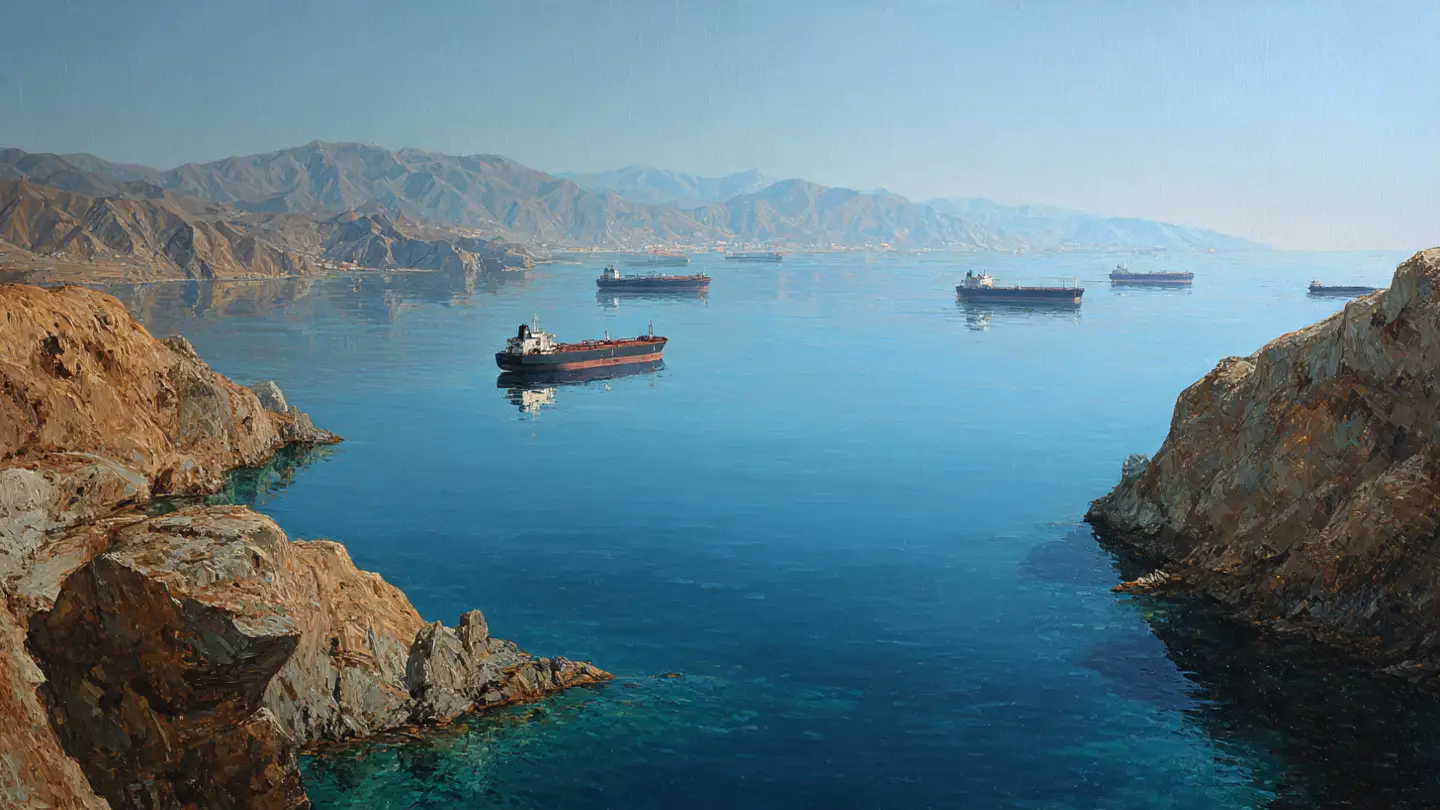
Tensions in the Middle East have escalated sharply after Iran reimposed strict controls on vessel movement through the Strait of Hormuz, just a day after announcing a partial reopening of the critical waterway.
The sudden reversal has heightened fears of a fresh confrontation between Tehran and the United States, while also sending ripples across global energy markets that depend heavily on uninterrupted oil shipments through the narrow maritime corridor.
Iranian military authorities said the decision to restore tight restrictions was in response to what they described as an ongoing “blockade” of Iranian ports by the United States. In a statement, officials maintained that Tehran had initially agreed to allow limited passage of oil tankers and commercial vessels as a goodwill gesture during ongoing negotiations.
“The Islamic Republic of Iran, following previous agreements, had permitted the managed passage of a limited number of vessels through the Strait of Hormuz,” the statement said. “However, due to continued pressure and restrictions imposed by the United States, the strait has now returned to strict control under Iranian armed forces.”
The development raises concerns for international shipping, as the Strait of Hormuz remains one of the world’s most vital oil transit routes, accounting for a significant share of global crude and liquefied natural gas shipments.
From Washington, President Donald Trump dismissed Iran’s stance, signalling that the United States would not yield to pressure from Tehran.
According to Iranian authorities, the renewed restrictions will remain in place indefinitely unless the US guarantees full and unrestricted maritime access for Iranian vessels.
“As long as the United States does not ensure complete freedom of passage for Iranian shipping, the situation in the Strait will remain under strict control,” officials said.
The move has intensified uncertainty in global oil markets, with analysts warning that any prolonged disruption could push up energy prices and strain supply chains worldwide.
The Strait of Hormuz, which lies between Iran and Oman, serves as a key gateway linking the Persian Gulf to the open ocean. Any instability in the region typically has immediate global economic implications, particularly for countries reliant on energy imports.
Diplomatic efforts to ease tensions are expected to continue, but the latest development underscores the fragile state of negotiations and the potential for further escalation if both sides fail to reach a compromise.