
The Independent National Electoral Commission (INEC) has pledged to conduct the 2027 general elections impartially, assuring Nigerians that it will not favour any political party or candidate outside the provisions of the law.
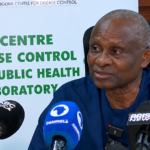
INEC Chairman, Prof. Joash Amupitan (SAN), gave the assurance while delivering a keynote address at the Second Public Lecture of the Ezinwanne Leadership Foundation in Owerri, Imo State. The event was themed “Democratic Governance and the Challenge of Electoral Credibility in Nigeria.”
Amupitan, who was represented by the Imo State Resident Electoral Commissioner, Chukwuemeka Ibeziakor, said the legal framework governing the elections includes the 1999 Constitution, as amended, the Electoral Act 2026, INEC’s regulations and guidelines, and binding judicial decisions.
He stressed that the commission’s compliance with these legal provisions was mandatory, describing it as an obligation that “remains absolute and not optional.”
The INEC chairman said the commission’s independence must be reflected in its freedom from improper political interference, access to adequate and timely resources, professionalism among election personnel and the willingness to make difficult decisions in accordance with the law.
He, however, noted that independence must go hand in hand with accountability, explaining that the commission was expected to justify its procedures, maintain verifiable records, submit to lawful judicial scrutiny and sustain an open relationship with citizens and stakeholders.
According to him, independence without accountability would be insufficient, while accountability without independence would be ineffective.
Amupitan maintained that credible elections could not be achieved by INEC alone, urging political parties and other stakeholders to play their part in strengthening the electoral process.
“No electoral commission, however diligent, can single-handedly deliver credible elections,” he said.
He explained that the quality of elections was significantly influenced by the conduct of political parties before election day, particularly in the areas of transparent candidate selection, compliance with internal party rules and responsible management of disputes.
He warned that manipulated primaries, unreliable membership registers and nominations conducted in violation of the law could trigger disputes capable of disrupting the electoral timetable.
Amupitan said the Electoral Act 2026 imposes obligations on political parties regarding membership registers and candidate nominations, adding that INEC would apply the law and relevant judicial interpretations to the facts and records presented to it.
He urged political parties to view compliance with electoral laws as a continuing responsibility rather than a last-minute requirement.
The INEC chairman also appealed to party leaders and aspirants to strengthen internal democracy, observe statutory deadlines, avoid inflammatory rhetoric and pursue grievances through lawful channels.
He emphasised that political competition was legitimate, but intimidation, inducement and violence had no place in a democratic process.
Amupitan said the commission had published the timetable and schedule of activities for the 2027 general elections. Under the revised schedule announced in his address, the presidential and National Assembly elections are slated for January 16, 2027, while governorship and State Houses of Assembly elections are scheduled for February 6, 2027.
Delivering the lecture, Prof. Nnamdi Obiaraeri (SAN) called on INEC to introduce continuous voter registration instead of opening and closing registration within designated periods.
He also advocated the electronic transmission of polling-unit results, the establishment of an Electoral Offences Commission by the National Assembly, diaspora voting and greater transparency throughout the electoral process.
The chairman of the occasion, Chief Mike Ahamba (SAN), urged lawyers to live up to public expectations, particularly when entrusted with national responsibilities.
Earlier, the foundation’s President and Founder, C. O. C. Akaolisa, reviewed governorship elections in Imo State since 1999 and criticised what he described as lapses by INEC, urging the commission to improve its performance ahead of future elections.
Akaolisa also urged governorship aspirants in the state to stop waiting for Governor Hope Uzodimma to endorse them, insisting that the governor was not prepared to do so.