
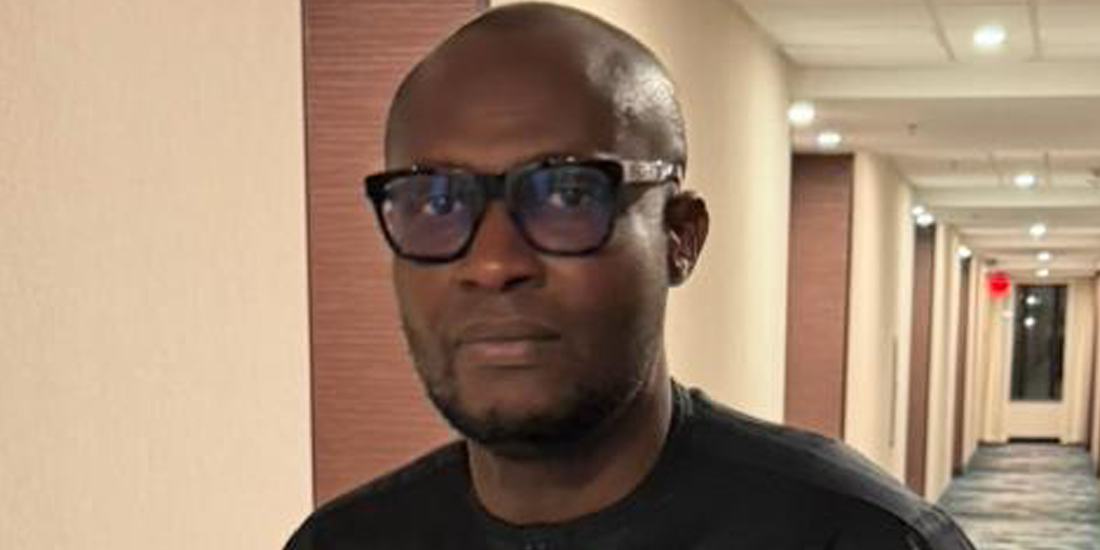
Despite the end of colonial rule, Africa remains trapped by debt, economic dependence and the relentless loss of its most talented people to foreign countries.
By Walter Anuku, PhD, DBA
A strange silence descends upon a people who have grown accustomed to their chains. After generations in captivity, the enslaved no longer recoil at the rattle of their fetters. They adjust them, polish them, perhaps give them another name. The chains remain, but familiarity disguises their weight.
That, in many respects, is the story of modern Africa, a continent that traded the visible chains of colonialism for the invisible, but no less restrictive, chains of economic dependence.
The words of the Psalmist still echo across the centuries: “By the rivers of Babylon, there we sat down, yea, we wept, when we remembered Zion.” (Psalm 137:1)
Today, Africa’s rivers of Babylon may be found along the Thames, the Seine and the Rhine. But the continent does not merely mourn a distant homeland. It mourns the home it has been unable to build, because many of its builders have left, its wealth has been extracted, and its sovereignty mortgaged to foreign creditors.
The Exodus That Never Happened
The Book of Exodus recounts the suffering of the Israelites in Egypt: “They made their lives bitter with hard bondage, in mortar, and in brick, and in all manner of service in the field.” (Exodus 1:14)
The Israelites became builders of an empire they did not own. Their labour raised the cities of Pithom and Rameses for a Pharaoh who neither valued nor recognized their humanity.
The comparison with contemporary Africa is not merely poetic. It is structural. African nations produce raw materials for foreign industries, borrow heavily from external institutions, and surrender significant portions of their revenue to debt servicing. Their most talented citizens leave to strengthen the economies of countries that did not pay for their upbringing or education.
The numbers tell their own story. Africa’s total external debt servicing reportedly exceeded $89 billion in 2025, and sub Saharan African countries alone owe the IMF and World Bank roughly $100 billion. The combined external debt of just ten African countries was estimated at $543.58 billion in 2025, led by South Africa at approximately $200.31 billion, followed by Egypt ($163.91 billion) and Nigeria ($51.86 billion).
These figures are more than entries in financial statements. They represent an enormous transfer of resources from some of the world’s poorest societies to wealthier international creditors.
Professor Toyin Falola, one of Africa’s most prominent historians, captures the dilemma clearly: a nation that cannot feed its people, educate its children or develop its industries without external approval cannot claim to be truly sovereign. It is a nation in chains.
Structural Adjustment and the Architecture of Dependence
The Structural Adjustment Programmes imposed across Africa by the IMF and World Bank in the 1980s and 1990s were presented as pathways to economic recovery. African governments were required to cut public spending, privatize state institutions, liberalize trade and devalue their currencies. In theory, these policies would stimulate growth and improve efficiency. In practice, their harshest consequences fell on ordinary citizens: social services deteriorated, public institutions weakened, local industries buckled under foreign competition, prices rose and wages lost value.
Falola argues that these programmes eroded the capacity of African states to invest adequately in their people, their education systems and their domestic industries. What was billed as economic medicine often deepened the illness.
Senegalese development economist Ndongo Samba Sylla has a name for the political systems this arrangement produced: “choice less democracies.” Elections may offer voters several candidates, but the country’s economic direction often stays the same regardless of who wins. A ballot may list ten names, but each is frequently bound to the same austerity policies, the same privatization agenda, the same trade liberalization framework. Citizens are free to change their leaders, but not necessarily the economic system that governs their lives.
This is the great contradiction of African democracy: political choice is celebrated, while the decisions that matter most economically may already have been made elsewhere.
Seen this way, the IMF and World Bank are not simply financial institutions. They are pillars of a wider global economic order that keeps African states dependent on external funding and approval.
Yet foreign institutions alone cannot bear the blame. African leaders have repeatedly renewed unfavorable arrangements, borrowed without sufficient accountability, and adopted imported economic models without weighing their long term consequences. One side may impose a bad deal, but the other side keeps renewing it.
Exporting Excellence, Importing Mentality
Perhaps the most painful expression of Africa’s continuing subjugation is the migration of its brightest minds. For decades, the continent has lost doctors, nurses, engineers, scientists, academics and technology specialists to Europe, North America, Australia and the Middle East.
This is more than a brain drain. It is the loss of the knowledge, expertise and skilled hands needed to build industries, strengthen institutions, create jobs and transform local economies. The African Union Development Agency estimates that roughly 70,000 skilled professionals leave the continent every year, taking with them one of Africa’s most valuable resources: its human capital.
African governments spend heavily to train professionals who then relocate to countries offering better wages, better working conditions and more stable institutions. The health sector has suffered especially. Nigeria, for example, has lost thousands of doctors to the UK’s National Health Service, while its own doctor to patient ratio remains far below World Health Organization recommendations. Across the continent, millions still lack access to quality healthcare.
But the tragedy rarely ends with departure. It often deepens on arrival. Many highly educated African migrants discover that the promised land is a mirage. Their qualifications are questioned, their experience discounted, their skills underused.
Marie, a human rights lawyer who fled Burundi in 2017, now works in the stockroom of a clothing store in a Brussels suburb. Emmanuel, who once coordinated agricultural projects in Burundi and later earned a master’s degree in Belgium, stacks shelves at one of the country’s largest supermarket chains. These are not isolated stories; they reflect a systemic pattern. Research on African migrants in Belgium and Sweden shows that highly educated Africans routinely face discrimination, struggle to have their qualifications recognized, and hit other barriers to professional employment. In 2025, non EU citizens reportedly recorded an over qualification rate of 41.4 per cent, and immigrants earned considerably less than native born workers of the same age and sex entering the labour market.
The message is unsettling: Africa’s most talented people are welcomed to fill labour shortages, but not always accepted as professional equals. They leave home as doctors, lawyers, engineers and project managers, only to end up cleaning buildings, driving taxis or stocking shelves, work far below their qualifications.
There is dignity in every form of honest labour. The injustice lies not in the work itself, but in the systemic rejection and devaluation of the knowledge and competence these migrants carry. Africa loses the benefit of their expertise, while their host countries refuse to use that expertise fully. Everyone loses, except an economic system sustained by cheap, underutilized labour.
The Economics of Dependence
This pattern is not an accident of history. It is the result of a system.
Debt is not merely an economic instrument; it can also function as a mechanism of political and ideological control, especially within longstanding colonial and postcolonial inequalities. When a country depends on foreign loans to fund its budget, stabilize its currency or provide essential services, its ability to set its own priorities becomes severely constrained.
The United Nations estimates that financing the Sustainable Development Goals and the African Union’s Agenda 2063 will require between $1.3 trillion and $1.6 trillion annually. Yet many of the proposed ways of closing this gap, more loans, conditional aid, recycled financial commitments, risk perpetuating the same cycle of dependency. Financing should be an instrument of sovereignty, not a mechanism of submission.
Africa cannot become economically sovereign while its most valuable human resources keep leaving. Nor can it achieve meaningful independence while its natural wealth is exported largely in raw form, only for its countries to borrow money to import the finished products made from those same resources.
In 2024, Africans living abroad reportedly sent about $100 billion in remittances to the continent, supporting more than 200 million people, many in rural communities, more than official development assistance and foreign direct investment combined. These transfers have paid school fees, funded medical treatment, put food on tables and kept families out of extreme poverty. Their importance cannot be dismissed.
But remittances mostly keep households alive; they do not transform national economies. They are a palliative, not a cure, a measure of the endurance of those left behind, not evidence of sustainable development. A country cannot build lasting prosperity by exporting its professionals and depending on them to send money home.
Confronting Africa’s Pharaohs
The Book of Exodus records that the children of Israel cried out because of their bondage, and that God heard their groaning. But deliverance did not come through passive waiting. It came through confrontation, sacrifice, and the willingness to trade the temporary comforts of Egypt for the uncertainty of the wilderness.
Africa must also confront its Pharaohs. Some are external: creditors and international institutions that impose economic prescriptions without bearing their human consequences. Others are internal: political leaders who renew bad agreements, misuse borrowed funds, weaken public institutions, and fail to create the conditions citizens need to prosper at home.
Africa’s liberation will not be delivered from Washington, London, Paris or Brussels. It must emerge from Accra, Lagos, Nairobi, Johannesburg, Addis Ababa and every African capital where citizens decide that the continent’s future is no longer for sale.
Africa must build strong educational and research institutions. It must create economic opportunities that make staying at home a rewarding choice, offering professionals competitive wages, dignified working conditions and credible paths to advancement. The continent must also negotiate fairer international partnerships, so that when African professionals are trained or employed abroad, those arrangements yield reciprocal benefits at home, through knowledge transfer, institutional partnerships and investment.
Agenda 2063 imagines an Africa with far greater control over its own economic and financial resources. Realizing that vision will require strong, accountable institutions and sovereign financing mechanisms capable of directing Africa’s wealth toward African priorities. The continent reportedly holds more than $2.5 trillion in domestic capital; what it lacks are effective, trustworthy systems for mobilizing and deploying it. But institutions cannot be built without people, and people cannot be retained without hope.
Breaking the Invisible Chains
The migration of African professionals must no longer be treated as an inevitable or natural movement of labour. It must be recognized as an existential threat to the continent’s development.
The chains of economic dependence are invisible, but they are no less real than the iron fetters of antiquity. Africa remains bound by debt, foreign economic dictates, weak institutions, and a global order that extracts its wealth while undervaluing its people. The African professional sweeping floors in Brussels, driving a taxi in London or restocking shelves in Belgium evokes the Israelite laboring with mortar and brick in ancient Egypt, a builder of foreign prosperity who may never fully share in it.
Yet the story of Exodus is not only a story of bondage; it is also a story of hope. It reminds us that even the most entrenched systems of oppression can be defeated.
Africa’s freedom will not simply be granted. It must be claimed. That requires the courage to challenge external exploitation and the integrity to hold internal leaders accountable. It demands sustained investment in education, industry, healthcare, research, technology and infrastructure.
Above all, African professionals must no longer be regarded primarily as commodities for export. They must be recognized as the architects of the continent’s future.
The rivers of Babylon may continue to flow, but Africa does not have to remain seated on their banks, weeping. It is time to remember Zion, and to build it with African hands, on African soil.
“For I know the thoughts that I think toward you, says the Lord, thoughts of peace and not of evil, to give you a future and a hope.” (Jeremiah 29:11)
Africa’s future is not in the stockrooms of Brussels, or only in the medical facilities of London. It lies in the cities, towns and villages of a continent that must finally resolve to build its own house, and create the conditions necessary to keep its builders at home.

DR WALTER HAS CONTINUED TO BLAZE THE TRAIL IN AFRICA’S ECONOMIC RENAISSANCE.
THIS IS CRITICAL TO THE NEW ECONOMIC DIRECTION FOLLOWING OVER 450 YEARS OF MISREPRESENTING THE TRUE AFRICAN VALUES MISCOMMUNICATED (BY SUCCESSIVE COLONIZERS) TO THE PRESENT DAY.
KUDOS, DR WALTER