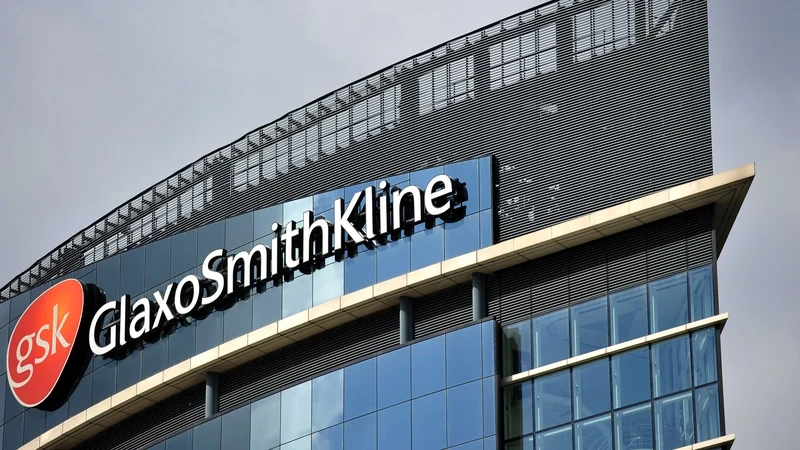
GlaxoSmithKline has moved decisively to reshape itself as a serious competitor in cancer medicine, agreeing to pay $10.6 billion in cash for US drug developer Nuvalent in a transaction that represents the British pharmaceutical company’s largest acquisition in more than ten years and confirms the strategic direction that new chief executive Luke Miels has set for the business since taking charge at the start of 2026.
The deal was priced at approximately $124 per share, representing a 40 percent premium to Nuvalent’s last closing share price before the announcement. Markets reacted with the predictable asymmetry of such transactions: Nuvalent shares climbed sharply toward the offer price in pre-market trading while GSK shares slipped more than 3 percent in London as investors weighed the strategic logic against the scale of capital being deployed.
The attraction was straightforward to articulate. Nuvalent had developed two lung cancer drugs, zidesamtinib and neladalkib, that were approaching the end of their regulatory review processes with US decisions expected in September and November 2026 respectively. Adding two near-launch assets of that profile to GSK’s existing oncology pipeline in a single transaction was the kind of strategic acceleration that years of smaller bolt-on acquisitions would have struggled to deliver at equivalent speed.
Miels described the purchase as a multi-product deal that also created a platform for expanding GSK’s experimental antibody-drug conjugate through the development infrastructure and clinical expertise that Nuvalent brought with it. He said the company had tracked Nuvalent for over a year and that clinical data presented at a major medical conference in the days before the announcement provided the evidence base that convinced him the moment for a definitive move had arrived.
GSK’s oncology revenues grew 43 percent in 2025 to just under £2 billion, a strong rate of growth but one that still left cancer medicine representing only 6 percent of the company’s total sales of £32.7 billion. The contrast with AstraZeneca, where oncology drove 44 percent of revenue, illustrated how far GSK had to travel to claim genuine leadership in the therapeutic area. Analysts at Barclays noted that the Nuvalent acquisition added late-stage assets in territory where GSK already operated, providing strategic coherence as well as near-term commercial opportunity.
The deal also addressed a specific vulnerability in GSK’s product portfolio. The company’s key HIV medicine dolutegravir faced patent expiry in 2028, creating a revenue cliff that management had been under pressure to plan around. New oncology assets generating meaningful sales before that expiry date would help manage the transition, and the Nuvalent drugs were timed appropriately given the regulatory calendar.
GSK said the deal was expected to contribute to sales and operating profit in 2027 and to add to core earnings per share by 2029. Net of cash acquired, the effective investment stood at $9.4 billion.