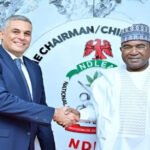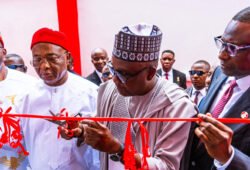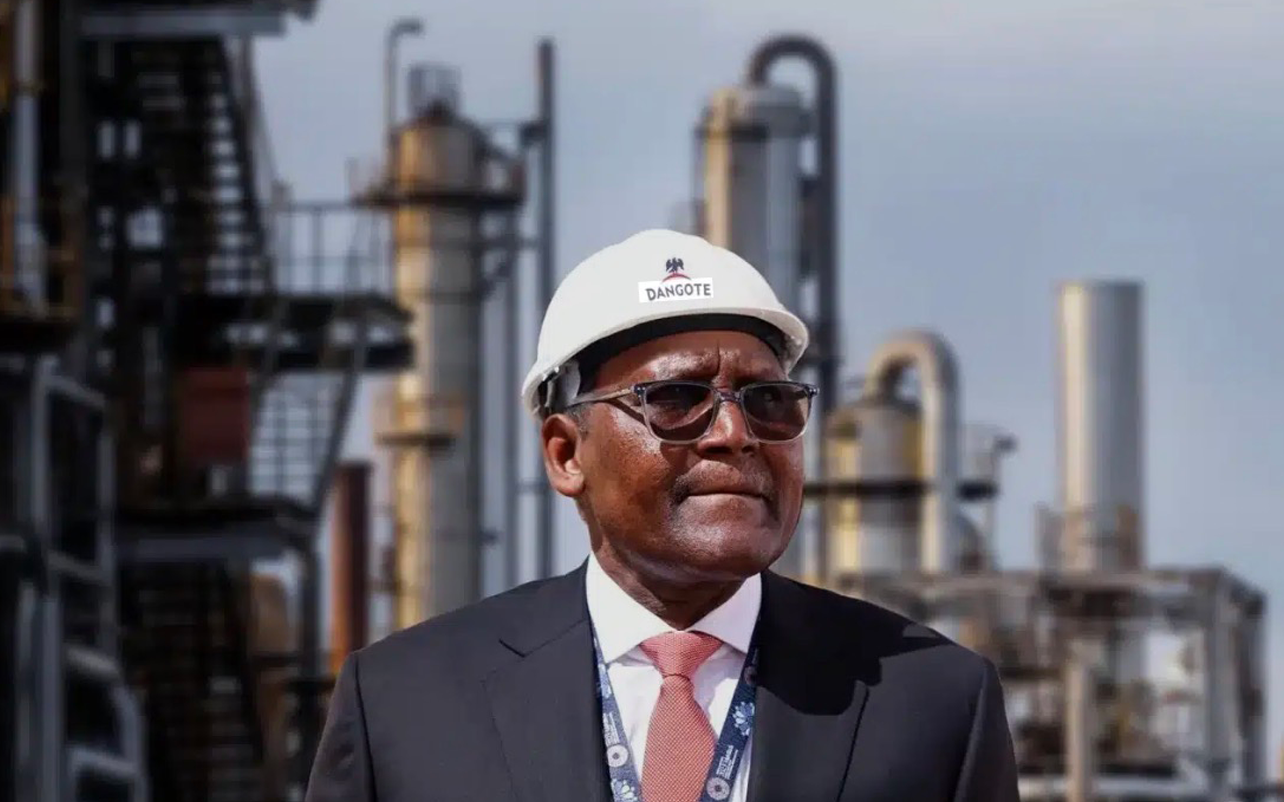
The federal government has described the Dangote Petroleum Refinery and Petrochemicals as a source of national pride and one of Nigeria’s most transformative industrial investments, pledging continued policy and regulatory support during a visit to the Lekki facility by Minister of State for Petroleum Resources, Gas, Ekperikpe Ekpo, alongside Minister of State for Petroleum Resources, Oil, Heineken Lokpobiri, and leadership of the Nigerian Upstream Petroleum Regulatory Commission.
Touring the refinery, Ekpo called it compelling evidence of what Nigerian enterprise can achieve, deserving the full backing of government institutions. What we have come to see today is an eye opener, he said, a Nigerian has taken us to this level, whether in terms of employment or providing for the needs of the nation, this is something we should all be proud of, assuring the refinery of continued collaboration from policymakers and regulators. NUPRC Board Chairman Magnus Abe called the refinery one of the most remarkable industrial accomplishments ever undertaken in Nigeria, saying its scale represents an achievement many Nigerians have yet to fully appreciate. I don’t think any of us fully appreciates what has been achieved here by Nigerians in Nigeria, he said, we are all very proud of this accomplishment.
Dangote Industries Group Vice President for Oil and Gas Devakumar Edwin, who led the tour despite heavy rainfall, said the refinery was conceived as part of Aliko Dangote’s vision to ensure Nigeria adds value to its natural resources rather than exporting raw materials and importing finished products, part of the Group’s Vision 2030 to lead Africa’s industrial transformation by building globally competitive businesses that make the continent more self sufficient. He said the refinery was designed as one of the world’s most environmentally advanced refining complexes, meeting stringent European Union and US Environmental Protection Agency standards, equipped with ambient air quality monitoring stations, mobile environmental monitoring systems and advanced emissions control technology. Our objective has never been simply to build the largest refinery in Africa, he said, it has always been to build one of the world’s best, producing cleaner fuels that improve public health, protect the environment and position Nigeria as a leading global refining and manufacturing hub.
Separately, Nigeria has approved an enhanced production linked tax credit for Shell Plc’s $20 billion Bonga Southwest Aparo deepwater project, according to a Bloomberg report citing sources familiar with the matter, part of efforts to accelerate upstream investment and boost crude production. The incentive, approved by President Tinubu, grants Shell and its partners a tax rebate of $11.50 per barrel produced, more than double the standard incentive previously available for comparable projects, and is expected to extend to other international oil companies pursuing new deepwater developments through at least 2029. The Bonga Southwest Aparo project, one of Nigeria’s largest planned offshore developments, is projected to draw about $20 billion in foreign direct investment and produce roughly 150,000 barrels a day once complete, according to earlier NNPC projections; a Shell spokesperson told Bloomberg the company continues advancing the project toward development and will share material updates through official channels. The incentive forms part of a broader package of fiscal reforms the Tinubu administration has introduced since 2023 to revive an oil industry hit by declining investment, crude theft, pipeline vandalism and ageing infrastructure, reforms that replace an earlier executive order capping production tax credits at 20 percent of a licence holder’s annual tax liability, a threshold the federal government considered relatively high by international standards. The report also pointed to signs of recovery in the sector, with crude production rising to an average of 1.56 million barrels per day in June, the highest monthly output since April 2020, according to NUPRC figures.
Shell Companies in Nigeria separately disclosed awarding $518 million in contracts to indigenous companies last year, engaging 123 Nigerian companies across its value chain in the same period, according to Shell Vice President of Commercial Rohan D’Souza, commenting on figures published in the company’s 2025 Payments to Governments Report. The payments show a strong support for Nigerian service providers in our operations, D’Souza said in a statement from Country Communications Manager Gladys Afam Anadu, adding that developing Nigerian companies goes beyond legal compliance, forming an integral part of a longstanding strategy to build a win win relationship with indigenous firms and help them create more value in the oil and gas industry both within and outside the country. Roughly a fortnight earlier, Shell Nigeria Exploration and Production Company launched a $3 billion Contract Finance Facility with nine leading Nigerian banks, available in both naira and dollars, to support indigenous contractors executing its operations. When you consider that Shell also paid about $2.016 billion through production entitlements, royalties, taxes and statutory fees to the Nigerian government in 2025 alone, D’Souza said, you get an idea of the enduring partnership we have forged in the country since we set foot here more than 60 years ago.