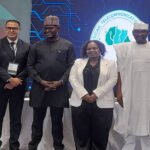
The federal government has completed a high level Credit Ratings Needs Assessment Mission with the United Nations Development Programme under the Africa Credit Ratings Initiative, alongside the European Union Delegation to Nigeria and ECOWAS and the Government of Canada, part of a push to strengthen investor confidence, improve Nigeria’s sovereign rating, lower borrowing costs and attract development finance.
Briefing a debriefing meeting in Abuja after the three day mission, Minister of Finance and Coordinating Minister of the Economy Taiwo Oyedele, represented by Permanent Secretary Mohammed Sanusi, said securing investment grade status is a strategic economic imperative, with expert analysis suggesting it could cut Nigeria’s borrowing costs by 100 to 150 basis points, generating estimated savings of about N5.84 trillion that could instead fund infrastructure, healthcare, education and social protection. He noted that African countries have long carried what is often called the African Premium, a perception gap estimated to cost the continent more than $74.5 billion annually in extra borrowing costs, but said Nigeria’s current focus is not on lamenting that global financial architecture but on strengthening its own institutions, improving engagement with rating agencies, and ensuring its sovereign ratings accurately reflect the economy’s actual resilience and potential.
Oyedele thanked UNDP for its Sovereign Credit Ratings Initiative and for assembling global experts to support African countries, thanked the European Union for its steadfast partnership throughout Nigeria’s Integrated National Financing Framework journey, and thanked Canada for its participation and support, calling its presence alongside other partners a reflection of growing international confidence in Nigeria’s reform agenda. He recalled that the federal government has spent the past three years implementing one of the most ambitious economic reform programmes in the country’s history, pointing to recent rating actions from Moody’s, Fitch and S&P Global, alongside a favourable IMF Article IV assessment, as evidence of growing confidence, while stressing that sovereign ratings depend not just on macroeconomic performance but on data quality, institutional coordination, policy credibility and sustained engagement with rating agencies, which is exactly why the mission mattered. He said government welcomes UNDP’s support in strengthening institutional capacity, improving data quality and deepening engagement with rating agencies, and looks forward to drawing lessons from countries like the Philippines and Vietnam, whose coordinated reforms significantly improved their own sovereign ratings. UNDP Africa Bureau Chief Economist Raymond Gilpin said declining Official Development Assistance has hurt African countries’ access to affordable financing, since many nations have graduated to middle income status and lost access to concessional funding even as their financing needs keep growing, forcing governments to choose between debt servicing and investment in infrastructure, poverty reduction and technology. Credit ratings determine how global investors assess the risks of investing in developing countries, he said, improving those ratings is therefore essential to attracting affordable capital and unlocking long term development financing. He explained the Africa Credit Ratings Initiative was established by UNDP alongside the African Development Bank, the UN Economic Commission for Africa, the Africa Centre for Economic Transformation and the African Peer Review Mechanism specifically to help African governments strengthen rating agency engagement, improve data quality and build institutional capacity, noting UNDP recently sponsored 22 senior officials from 11 African countries to study how the Philippines moved from non investment grade to investment grade, and expressed confidence Nigeria’s reforms, combined with recent ratings improvements, have put the country on a credible path toward investment grade status. Canadian High Commissioner Pasquale Salvaggio reaffirmed Canada’s commitment to deepening economic ties with Nigeria, noting non oil trade between the two countries has grown 50 percent, making Nigeria Canada’s second largest trading partner in Africa, and pledged Canada would also work with the Nigerian diaspora to raise investment in the country’s economy