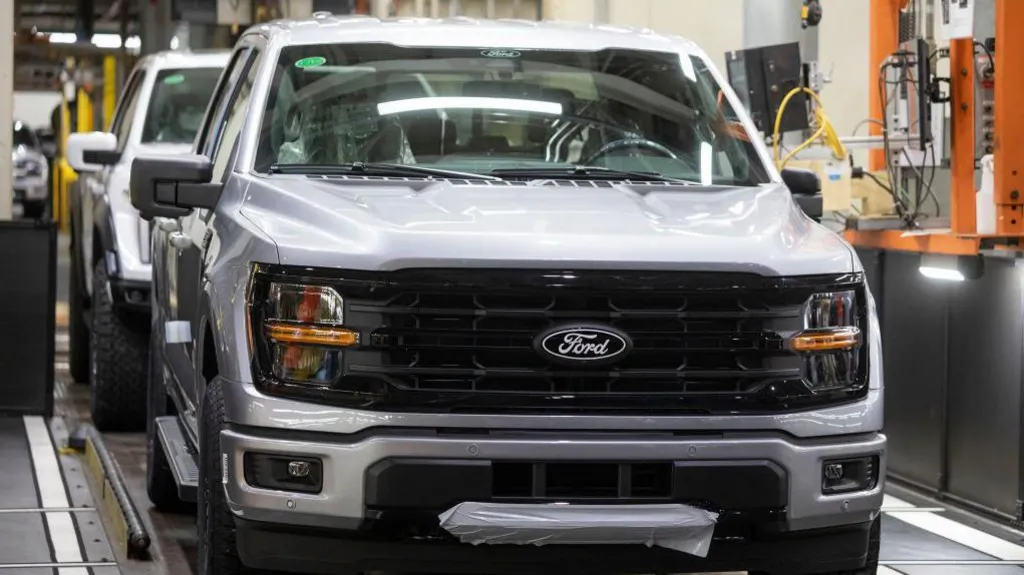
Ford Motor Company has rehired more than 300 experienced quality engineers after artificial intelligence failed to deliver the level of precision needed for vehicle quality inspections, highlighting the continued importance of human expertise in advanced manufacturing.
The US automaker had expanded the use of AI across its operations in recent years, hoping to improve efficiency, reduce costs and strengthen quality control. However, company executives now say the technology could not fully replicate the knowledge and judgment of seasoned engineers.
“Artificial intelligence is a fantastic tool, but it’s only as good as the information you use to train it,” Charles Poon, Ford’s vice president of vehicle hardware engineering, told reporters.
He acknowledged that the company underestimated the value of its most experienced engineers, many of whom had spent decades working through multiple vehicle development cycles.
“Over prior years, we didn’t pay as much attention as we should have to the experience of our most knowledgeable engineers that have been with us through many product cycles,” Poon said.
AI Could Not Replace Human Experience
Ford has been among the major manufacturers embracing artificial intelligence as companies across industries seek to boost productivity and improve profit margins.
Chief Executive Officer Jim Farley has previously described AI as a technology that will significantly reshape white-collar jobs, while Chief Operating Officer Kumar Galhotra said last year the company was deploying AI throughout its manufacturing operations.
Ford introduced around 900 AI-powered cameras at its production facilities to detect defects early and reduce supply chain disruptions. Despite the investment, executives admitted the automated quality systems failed to meet expectations.
“Mistakenly, we thought that by just introducing artificial intelligence and ingesting the design requirements that we had, that would produce a high-quality product,” Poon said.
According to the company, the AI systems lacked the practical knowledge accumulated by veteran technicians whose expertise had not been adequately incorporated into the technology before many left the business.
Veteran Engineers Return to Train AI Systems
To address the shortcomings, Ford brought back hundreds of experienced engineers who are now helping improve the company’s AI and machine-learning tools while mentoring younger employees.
“We recognised that for us to enhance some of our automation and machine learning and artificial intelligence tools, we needed to ensure that they were trained by the most experienced individuals,” Poon said.
The move reflects a growing recognition across industries that AI performs best when combined with human expertise rather than replacing it entirely.
Quality Improvements Deliver Results
Ford’s acknowledgment of AI’s limitations came as the automaker celebrated a major quality milestone.
The company reclaimed the top spot among mainstream automakers in the latest J.D. Power Initial Quality Study, marking its first time leading the industry benchmark since 2010.
In a statement announcing the achievement, Ford said attaining best-in-class quality required a broad talent overhaul, including leadership changes across engineering, manufacturing and supply chain operations, as well as the recruitment of approximately 300 veteran engineers whose decades of experience have strengthened the company’s product development and quality standards.