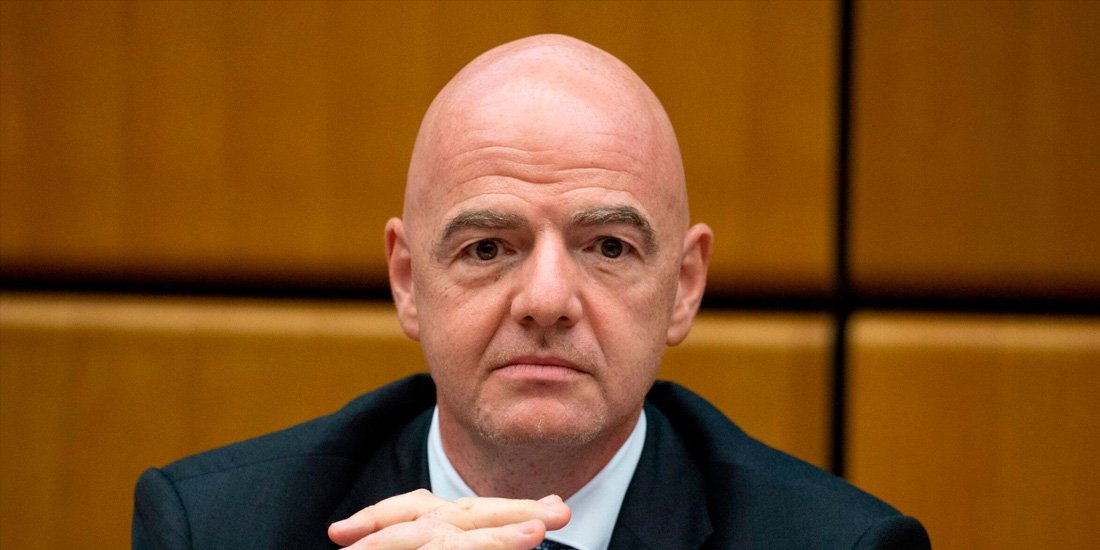
FIFA has accused UEFA of conducting a “misinformation campaign” aimed at influencing the upcoming FIFA presidential election, as the world football governing body moved to block a legal request filed by European football’s governing body in a United States court.
The dispute centres on a controversial and now-abandoned proposal to transfer FIFA’s World Cup commercial rights into a subsidiary known as FIFA Forward Enterprise (FFE). UEFA last month sought permission from a US federal court to obtain documents and testimony for use in a planned criminal complaint in Switzerland against FIFA President Gianni Infantino.
In its response before the Southern District of Florida, FIFA rejected UEFA’s allegations and claimed the court filing contained “numerous false or misleading statements” about both the organisation and Infantino.
FIFA strongly denied suggestions that its president stood to gain personally from the proposed investment structure.
“With no basis whatsoever, UEFA suggests that Mr Infantino sought to profit personally from the FFE proposal,” FIFA stated in its filing, insisting that such allegations were unfounded.
According to FIFA, the FFE proposal would have required approval from the FIFA Council and member associations, while the subsidiary itself would have remained subject to oversight from the governing body’s established structures. The organisation argued that claims of legal or ethical violations by Infantino were “categorically without merit.”
UEFA, however, alleged that the FIFA president developed the proposal behind closed doors with a limited group of advisers and investors, bypassing established governance procedures. The European body claimed key stakeholders, including the FIFA Council, regional confederations and member associations, were not adequately consulted during the process.
As part of its legal action, UEFA asked the US court to authorise discovery from FIFA (Americas), Inc. and FWC2026 US, Inc., two FIFA-linked entities based in Florida.
The disagreement also extends to the valuation of the proposed commercial venture. UEFA claimed investors were prepared to pay $4.2 billion for a stake in FFE, implying a valuation of approximately $20 billion, which it argued significantly undervalued FIFA’s commercial assets. UEFA further alleged that the valuation was not subjected to an open bidding process or assessed by an independent evaluator.
FIFA dismissed the claim, accusing UEFA of misrepresenting the financial figures.
“UEFA, whether deliberately or through ignorance, conflates equity value with enterprise value,” FIFA said.
The governing body explained that the $20 billion figure represented FFE’s equity value, while documentation provided to member associations indicated the enterprise value of the business exceeded $30 billion.
The FFE project was ultimately shelved in July after facing opposition from several football confederations, including UEFA, CONCACAF and the Asian Football Confederation, amid concerns over consultation and governance procedures.
The controversy has intensified scrutiny of FIFA’s leadership and governance framework. In response, Infantino recently wrote to FIFA’s 211 member associations proposing an independent review of the organisation’s decision-making processes.
With FIFA’s presidential election scheduled for March, the dispute has taken on added political significance. Infantino is seeking another term in office, and FIFA has alleged that UEFA’s legal action is strategically timed to affect the outcome of the vote.
“Just before FIFA’s election, UEFA filed this application and others spreading misinformation regarding Mr Infantino,” FIFA said, urging the court to reject what it described as an attempt to influence the presidential election through legal proceedings.
The latest standoff underscores growing tensions between FIFA and UEFA over governance, transparency and the future direction of world football, setting the stage for further confrontation ahead of next year’s presidential election.