The Federal Government has outlined plans to raise available electricity supply to Lagos State toward 3,500 megawatts as part of a broader effort to reduce persistent blackouts and strengthen the state’s power market.
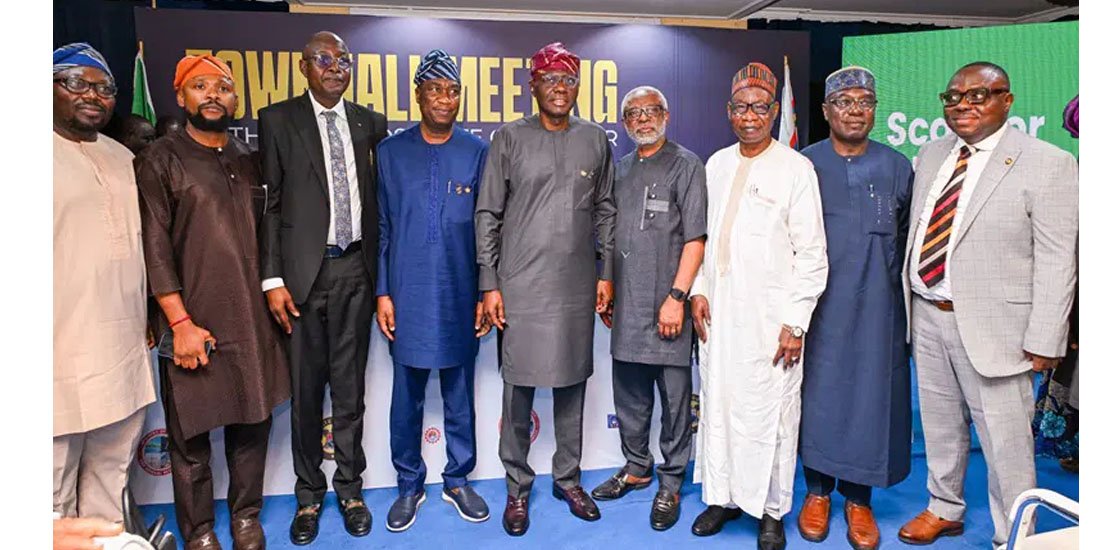
Power Minister Joseph Tegbe announced the plan at a high level strategic power town hall at Lagos House, Marina.
The meeting brought together federal and state officials, regulators and operators across the electricity value chain.
Represented by the Director of Distribution Services, Baba Mustapha, the minister said Lagos required more than 6,000MW but currently received far less from the national grid.
He said government intended to address the shortfall through coordinated action involving generation, transmission, distribution and metering.
Mustapha stressed that additional generation would have limited value if transmission and distribution infrastructure could not move the electricity to homes and businesses.
He identified gas supply, generation capacity, transmission constraints, distribution bottlenecks and metering as critical areas requiring attention.
Lagos has already secured about 400MW from private producers and is being encouraged to expand gas fired, embedded and renewable generation.
Governor Babajide Sanwo Olu called for stronger coordination among stakeholders and said the state needed better metering, data management, enforcement and revenue assurance.
He proposed another review meeting within five to six months to measure whether agreed actions were being implemented.
Energy and Mineral Resources Commissioner Abiodun Ogunleye said Lagos was determined to end what he described as a culture of blackout.
He said the state currently received less than one gigawatt from the national grid despite the Transmission Company of Nigeria having about 3.5GW of wheeling capacity serving the Lagos axis.
The immediate objective, he said, was to add roughly 2GW to existing supply and move available power closer to 3.5GW.
Ogunleye also argued that improved service and payment discipline had to move together, saying consumers should not be expected to pay for electricity they did not receive.
Presidential power adviser Rilwan Babalola said the challenge extended beyond simply adding more megawatts.
He said Nigeria needed a functioning electricity market in which energy, contracts and money flowed predictably across the value chain.
Lagos is being positioned as a testing ground for the Clean Lagos Electricity Market, which is expected to incorporate demand aggregation, bilateral contracts, open access, payment assurance and transparent settlement.
Babalola said an initial 500MW should first demonstrate that power could be generated, delivered, metered, accounted for and paid for before the model was expanded.
Officials also stressed that decentralization of electricity markets should not lead to fragmentation and called for close coordination between federal and state regulators.
The wider objective is to move from announced capacity to actual electricity delivered to consumers and from repeated government intervention to a sustainable electricity market.